If you are trying to figure out exactly how to water succulents indoors without instantly turning them into a mushy, rotting mess, you are in the perfect place. Most beginners buy a cute little desert plant, give it a tiny sip of water every day, and then watch in horror as it completely collapses a week later.
-
Quick SGE Summary:
-
Always let the soil dry completely to the very bottom of the pot before watering again.
-
Use the “soak and dry” method by drenching the soil until water pours out of the drainage holes.
-
Plant your succulents in unglazed terra cotta pots with at least one drainage hole.
-
Cut your watering frequency in half during the dark, dormant winter months.
The Biggest Mistake Beginners Make
I killed my first three succulents. Honestly, it was a massacre. I thought I was doing them a favor by giving them a tiny splash of water from my drinking glass every single morning.
I was wrong. Dead wrong.
Here is the thing. Succulents store water in their fleshy leaves. They are built to survive intense, brutal droughts. When you give them tiny sips of water every day, you keep the top layer of soil constantly wet.
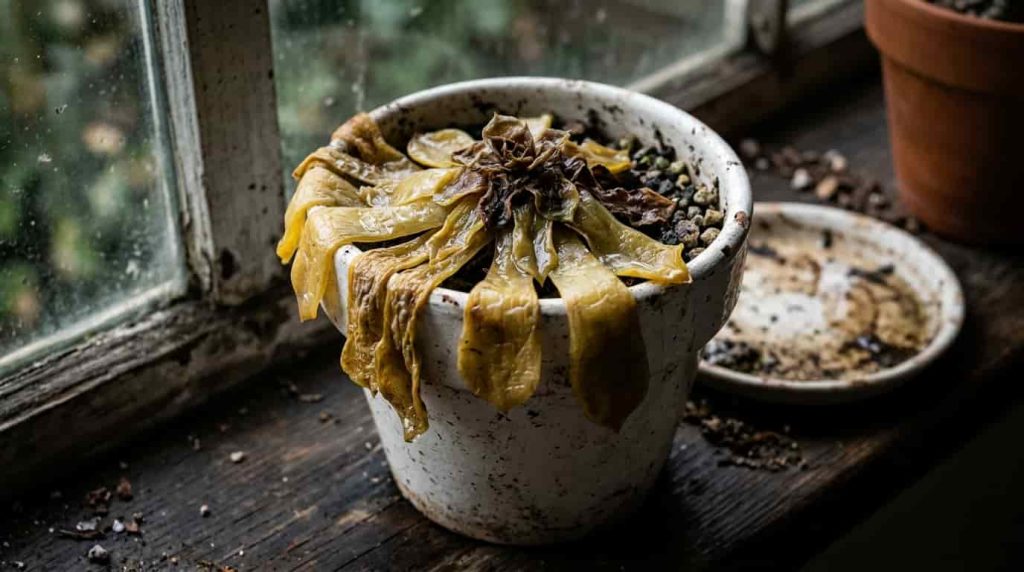
The roots never reach down deep, and they eventually drown. Zero oxygen gets to the root system. The plant turns to literal mush.
How to Water Succulents Indoors: The Golden Rules
Learning how to water succulents indoors comes down to one non-negotiable philosophy: the Soak and Dry method. This mimics their natural desert habitat. Think about it.
In the desert, it does not rain often. But when it does, it completely pours.
You need to recreate that flash flood in your living room. Take your pot to the sink. Pour room-temperature water over the soil until it freely flows out of the bottom drainage holes.
Let it drain completely. (Source: [Iowa State University Extension on Succulent Care]). Do not let the pot sit in a saucer of standing water. Empty that saucer immediately.
Then, you do absolutely nothing. You wait. You do not water it again until the soil is bone dry all the way to the bottom.
How do you know it is dry? Use a wooden skewer. Stick it all the way down into the soil. If it comes out clean, it is time to water. If it has wet dirt clinging to it, wait another week.
Top Watering vs. Bottom Watering
There is a massive debate in the houseplant community about how the water should actually hit the dirt. Let’s settle it.
Top watering is exactly what it sounds like. You pour water onto the top of the soil using a watering can with a long, narrow spout. It flushes out salt build-up from tap water. Just keep the water off the actual leaves, especially for fuzzy succulents or rosette-shaped Echeverias, because sitting water causes crown rot.
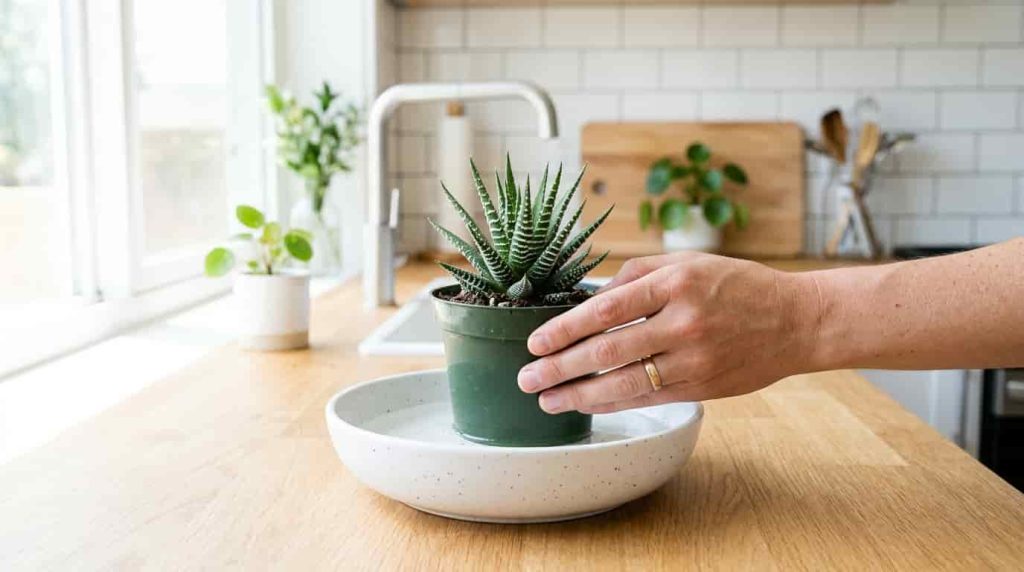
Bottom watering is a neat trick. You fill a bowl with a few inches of water and set your nursery pot inside it.
The dry soil soaks up the water through the drainage holes via capillary action. Leave it for 20 to 30 minutes until the top of the soil feels slightly damp, then pull it out.
-
Top Watering Pros: Fast, flushes out mineral salts, mimics natural rain.
-
Top Watering Cons: Can compact the soil over time, risky if you splash the leaves.
-
Bottom Watering Pros: Encourages deep root growth, keeps leaves perfectly dry.
-
Bottom Watering Cons: Takes much longer, does not flush out built-up tap water minerals.
The Pot Material Trap: Terra Cotta vs. Plastic
Look, the pot you choose drastically changes how to water succulents indoors. It is not just about aesthetics (and believe me, my living room looked like a jungle of mismatched plastic at first).
Plastic pots and glazed ceramic pots hold onto moisture for dear life. They do not breathe. If you water a succulent in a plastic pot, that soil might stay wet for three straight weeks in a typical indoor environment.
Unglazed terra cotta is completely different. It is porous. It breathes.
Moisture evaporates directly through the walls of the clay pot. If you are a heavy waterer who just cannot resist playing with your plants, you absolutely must use terra cotta. It acts as an incredible safety net against root rot.
No drainage hole? No deal. Never plant a succulent in a cute glass jar or a coffee mug without drilling a hole in the bottom first.
The Perfect Indoor Soil Mix Recipe
You cannot just buy a bag of generic potting soil, throw a cactus in it, and hope for the best. Standard indoor potting soil is formulated to retain moisture. That is a death sentence for your desert plants.
Even the commercial “cactus and citrus” bags you buy at the big box stores are often too rich and dense for indoor environments. Indoors, we do not have the wind and intense solar radiation to dry the soil out quickly.
You need to make your own gritty mix. It is incredibly easy.
-
2 Parts standard potting soil (just the cheap stuff).
-
1 Part coarse perlite or pumice (for intense aeration).
-
1 Part coarse builder’s sand or poultry grit (do not use fine play sand, it turns to cement).
Mix it all together in a big bucket. When you water this mix, the water should rip straight through it and pour out the bottom almost instantly.
Seasonal Watering Schedules (Summer vs. Winter)
Succulents do not act the same way in December as they do in July. They are highly seasonal creatures.
During the spring and summer, your indoor succulents are actively growing. They are pushing out new roots, new leaves, and maybe even a flower stalk. Because they are working hard and sitting in warmer temperatures, they are incredibly thirsty. You might find yourself doing the soak and dry method every 10 to 14 days.
Winter is a totally different story.
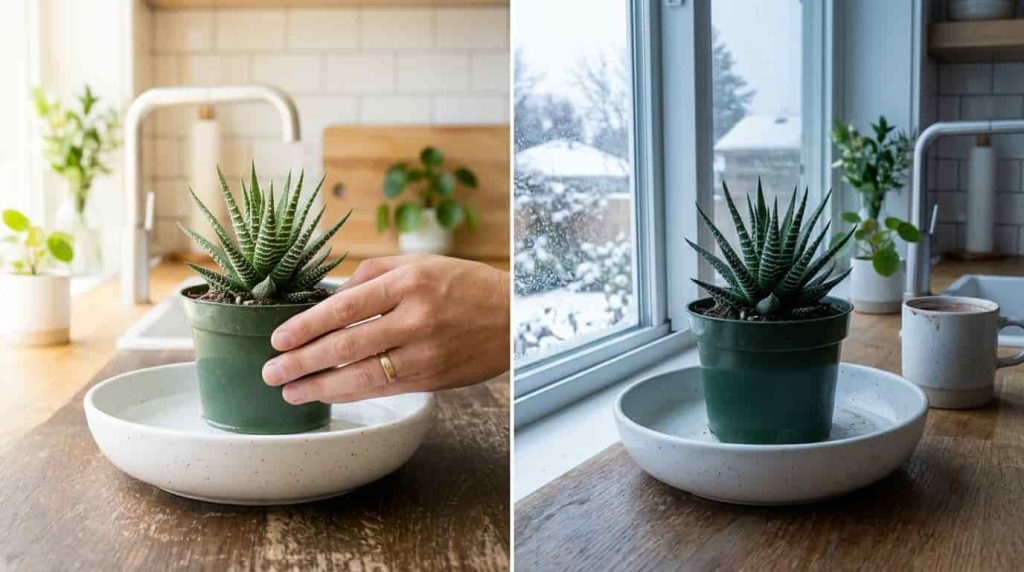
When the days get short and the light drops, most succulents go completely dormant. They shut down. They stop growing.
If you keep up your summer watering schedule during the winter, they will rot. You need to drastically pull back. (Source: [University of Minnesota Extension on Winter Plant Care]). I usually only water my indoor succulents once every four to six weeks during the winter.
SOS: How to Rescue an Overwatered Succulent
It happens. You slipped up. You gave it too much water, the soil didn’t drain, and now your beautiful plant is looking sick.
The signs are obvious. The leaves turn translucent, squishy, and yellow. They fall off the stem if you barely bump them.
Do not panic. You can save it if you act right now.
First, pull the entire plant out of the wet dirt immediately. Do not wait for the soil to dry on its own. Use your fingers to gently crumble all the soggy, foul-smelling dirt away from the root system.
Inspect the roots. Healthy roots are white or light tan and firm. Rotting roots are black, slimy, and smell like a swamp.
Take a sterilized pair of scissors and ruthlessly snip away every single black, slimy root. Cut until you only see healthy tissue.
Leave the bare plant sitting out on a paper towel in a bright, dry room for three to five full days. Yes, just sitting there naked. This allows the cuts to callous over and heal. Finally, repot it in completely fresh, dry, gritty soil, and do not water it for another full week.
Read: Snake Plant Care: The Ultimate No-BS Guide to Thriving Sansevieria
Frequently Asked Questions
How often should I water my indoor succulents?
There is no strict calendar schedule. You should only water them when the soil is 100% dry from top to bottom. Depending on your home’s humidity and the season, this could be anywhere from every 10 days in the summer to once a month in the winter.
Should I mist my succulents with a spray bottle?
No way. Put the spray bottle down immediately. Misting increases humidity around the leaves, which causes fungal infections and rot. Succulents need deep drinks at their roots, not tiny droplets on their foliage.
What does an underwatered succulent look like?
Underwatered succulents will look wrinkled, deflated, and crispy. The leaves will lose their plumpness and start to curl inward as the plant consumes its own stored water to survive. Give it a deep soak, and it will plump back up in a few days.
Does the type of water matter?
Tap water is usually fine, but if you have very hard water, the minerals can build up in the soil and burn the roots over time. If you notice a white crust on the top of your soil, switch to filtered water or collect rainwater for a healthier root system.
Final Thoughts on Indoor Succulent Care
Mastering how to water succulents indoors doesn’t require a botany degree. It just requires a shift in mindset. You have to ignore the urge to fuss over them every day.
Give them the brightest window in your house. Plant them in gritty, rocky dirt. Use a terra cotta pot with a giant hole in the bottom.
And most importantly? Neglect them just a little bit. Wait until that soil is bone dry, give them an absolute downpour, and then walk away. Your living room desert oasis will thank you.
2 thoughts on “How to Water Succulents Indoors: The Ultimate Survival Guide”