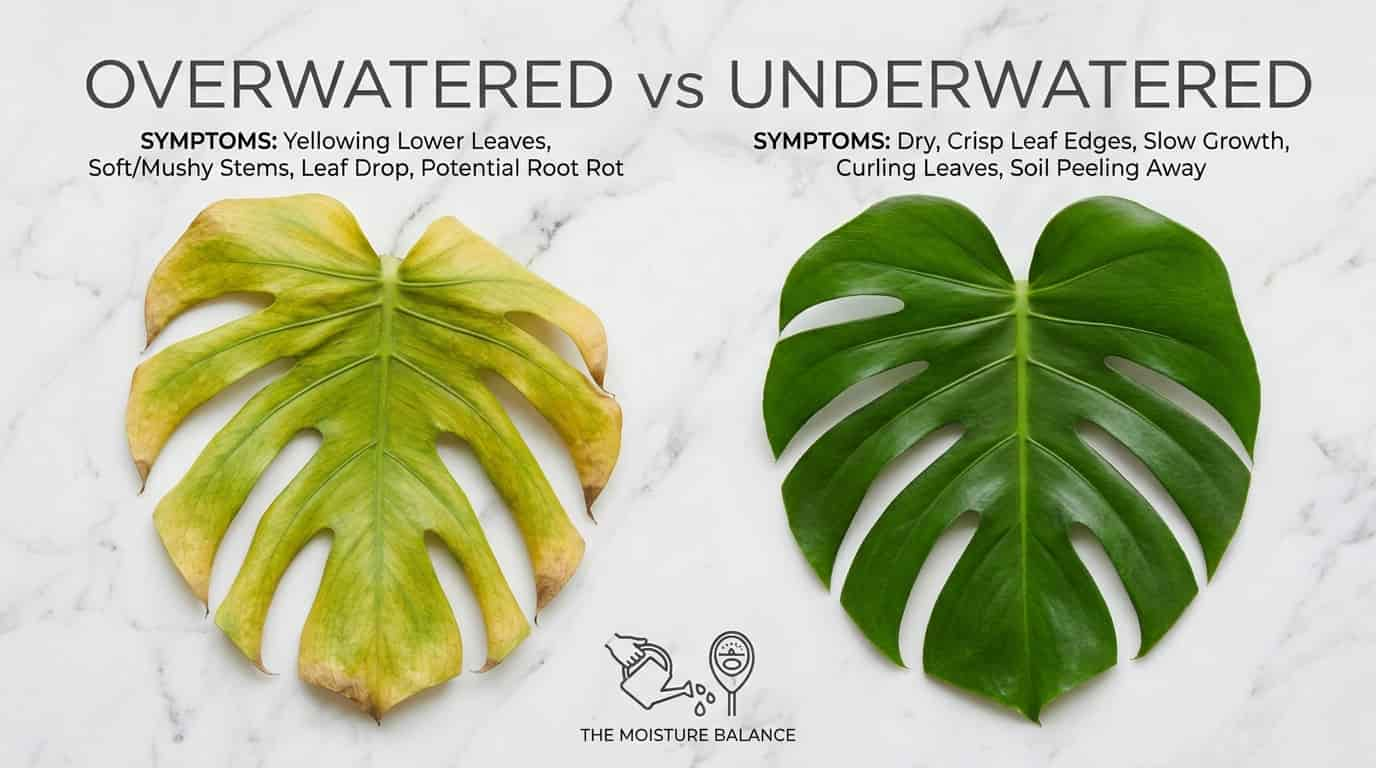
Figuring out if you have an overwatered vs underwatered plant is the single most frustrating part of indoor gardening, mostly because the symptoms look exactly the same to the untrained eye. Your favorite Monstera starts drooping, leaves turn a funky shade of yellow, and suddenly you are completely paralyzed wondering if you should drown it or let it dry to a crisp.
-
The Soil Test: An overwatered plant sits in heavy, cold, muddy soil, while an underwatered plant has dry, dusty soil that pulls away from the pot edges.
-
The Leaf Test: Overwatering causes soft, squishy yellow leaves that drop easily; underwatering causes crispy, dry, curling leaves with brown edges.
-
The Root Check: Healthy roots are firm and white. Overwatered roots turn black, slimy, and mushy, indicating dangerous root rot.
-
The Quick Fix: Underwatered plants need a deep bottom-watering soak, whereas overwatered plants require immediate unpotting, root trimming, and fresh airy soil.
Why They Look the Same (The Wilting Illusion)
I get it. You stare at a drooping plant and panic.
But here is the thing. A drowning plant and a thirsty plant both wilt for the exact same biological reason. They cannot move water up to their leaves.
When the soil is bone dry, there is literally no moisture for the roots to drink. Zero.
But when a plant sits in soggy soil, the roots suffocate. They drown, die, and rot away. Dead roots can’t drink water either.
So the plant wilts. It looks thirsty. And if you water a drowning plant, you just nailed its coffin shut.
How to Diagnose an Overwatered vs Underwatered Plant
You need to play detective. The stakes are high.
An overwatered vs underwatered plant requires two completely opposite treatments. Guessing wrong is a death sentence.
First, ignore the drooping leaves for a second. We need to look at the soil, the pot weight, and eventually, the root system.
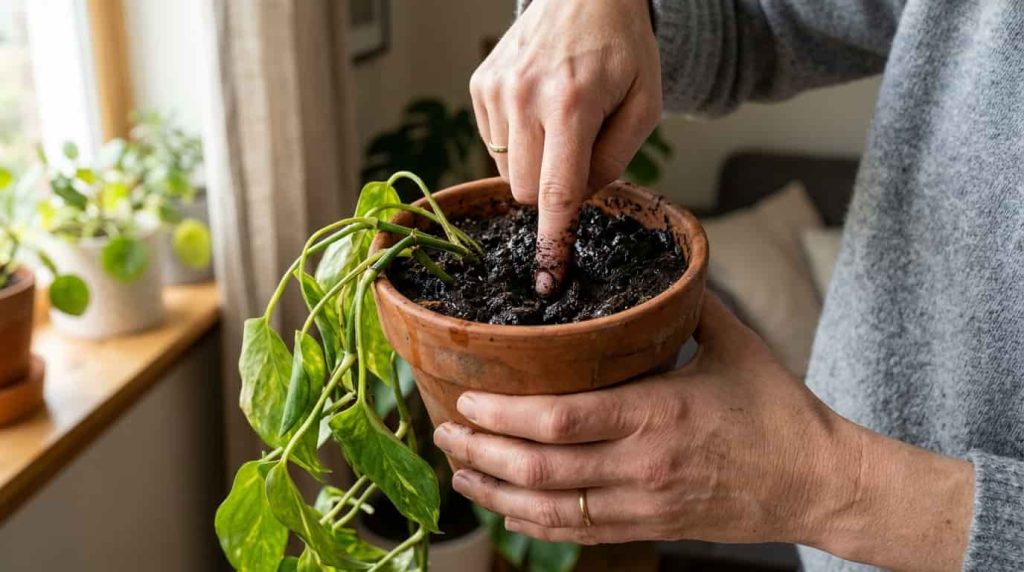
The “Lift and Poke” Soil Method
Forget the fancy gadgets. The best tool you have is your own hands.
Pick up the pot. Does it feel like a heavy brick? If it’s been days since you watered and it still feels incredibly heavy, that soil is waterlogged.
If you lift it and almost throw it into the ceiling because it’s so incredibly light? You have an underwatered plant.
Next, do the finger test. Push your index finger two inches deep into the soil. Don’t just touch the surface, because the surface lies.
If your finger hits cold, wet mud, stop. Do not add water. If it feels dusty and the soil has pulled away from the plastic nursery pot, it is time to soak it.
You can also use a moisture meter. If it reads an 8 or above a week after watering, you have a massive drainage issue. (Source: [University of Maryland Extension on Soil Moisture]).
Leaf Symptoms: Mushy Yellow vs Crispy Brown
Let’s talk about foliage. Leaves tell a story if you know how to read them.
An overwatered plant will usually drop its lower leaves first. They turn a sickly, soft yellow. If you rub the leaf between your fingers, it feels squishy and limp.
Sometimes, they just fall off the stem completely unprovoked. I was wrong about this in my early gardening days, thinking they just needed more fertilizer.
An underwatered plant acts totally differently. The leaves will curl inward to conserve moisture.
The edges turn brown and crispy. If you squeeze a dying leaf on a thirsty plant, it will literally crackle and crumble into dust in your hand.
[Internal Link: Check out our guide on Diagnosing Yellow Houseplant Leaves]
Root Inspection and Rot Surgery
Okay, things are bad. The soil is swampy, it smells like rotten eggs, and your plant is melting.
We need to check the roots. Gently pull the plant out of its pot.
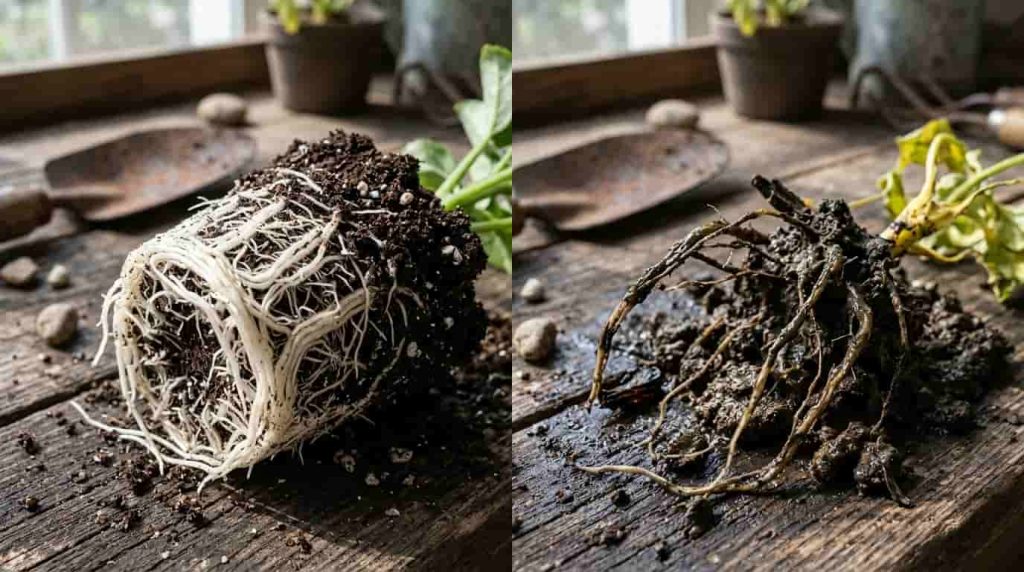
Healthy roots are firm, pale, and smell like fresh earth. They look like strong little noodles.
Overwatered roots are black, slimy, and slide right off the inner root thread if you tug them. It is gross. Honestly, it smells terrible.
Grab some sterile scissors. You have to cut away every single piece of black, mushy root. Be brutal.
Leaving even a tiny bit of rot will let the bacteria spread. Think about it. It’s an infection.
After trimming, dip the remaining healthy roots in a mixture of one part 3% hydrogen peroxide and three parts water. This kills the lingering fungal spores.
Fixing the Thirsty Plant (Bottom Watering)
Let’s pivot to the easier problem. Your plant is just severely dehydrated.
When potting mix gets bone dry, it actually becomes hydrophobic. It repels water.
If you pour water over the top, it just runs down the sides of the pot and out the bottom. You think you watered it, but the root ball is still totally dry inside.
Not quite. We need to bottom-water.
Fill a bowl or your sink with a few inches of room-temperature water. Set the pot directly into the water.
Let it sit there for 45 minutes to an hour. The soil will slowly wick the moisture up from the bottom drainage holes, rehydrating the entire root ball evenly.
Once the top of the soil feels moist, take it out. Let it drain completely. Your plant will perk up in a few hours.
The Soil Mix Recovery Recipe
You cannot put an overwatered plant back into the same heavy, muddy soil. It will just rot again.
Most store-bought potting soils are way too dense. They hold too much moisture for typical indoor conditions.
You need to mix your own airy rescue blend. It is actually super easy.
Mix 50% high-quality potting soil, 30% chunky orchid bark, and 20% coarse perlite.
This chunky mix creates massive air pockets. Roots need oxygen just as much as they need water.
When you water this new mix, the excess will drain out immediately. No more swampy bottoms.
Lighting and Humidity During Recovery
Your plant just went through major surgery. It needs time in the ICU.
Do not put a recovering plant in direct, scorching sunlight. The harsh rays will stress out the already weakened root system.
Instead, find a spot with bright, indirect light. A few feet back from an east-facing window is perfect.
You also need to bump up the humidity (and believe me, my living room looked like a jungle while I was rehabbing my Calatheas).
Place a humidifier nearby or set the pot on a pebble tray filled with water. This helps the leaves absorb ambient moisture while the roots heal.
Perfecting Your Watering Routine
Throw away your watering schedule. Seriously.
Plants do not care that it is Sunday. Watering on a strict weekly schedule is the fastest way to kill your indoor garden.
Water usage depends on temperature, humidity, and how much sunlight the plant got that week.
Always test the soil before watering. Wait for the top two inches to dry out for tropicals, and wait for the soil to dry completely for succulents.
Give them a deep, thorough soaking until water pours out the bottom. Then, empty the saucer. Never let a plant sit in standing water.
FAQ About Watering Issues
How long does it take an overwatered plant to recover?
It can take weeks or even months. If you had to trim away a lot of rotted roots, the plant has to spend its energy regrowing its root system before it pushes out new leaves. Keep it in a warm, bright spot out of direct sunlight while it heals.
Should I cut off the yellow leaves?
Yes. Once a leaf turns yellow, it will never turn green again. The plant is just wasting energy trying to keep it alive. Snip it off near the base of the stem with sterile scissors.
Can an underwatered plant survive?
Absolutely. Plants bounce back from underwatering much faster than overwatering. Give it a deep bottom-water soak. As long as the stems are still green and pliable, it will usually perk up within 24 hours.
Why is my plant drooping after I just repotted it?
This is transplant shock, not necessarily a watering issue. Repotting damages tiny microscopic root hairs. Keep the soil slightly moist and give it high humidity for a week or two while it adjusts to its new home.
Final Thoughts on Your Plant’s Survival
Dealing with an overwatered vs underwatered plant is a rite of passage. We have all killed a plant or two.
I certainly have. Lots of them.
The trick is simply paying closer attention. Stop hovering with the watering can every single day.
Let your plants breathe. Let them dry out a bit.
Get your hands dirty. Check the soil weight. Look at the leaves.
Once you learn to actually listen to what the plant is telling you, keeping them alive becomes second nature. You’ve got this.
1 thought on “Overwatered vs Underwatered Plant: The Ultimate Rescue Guide”