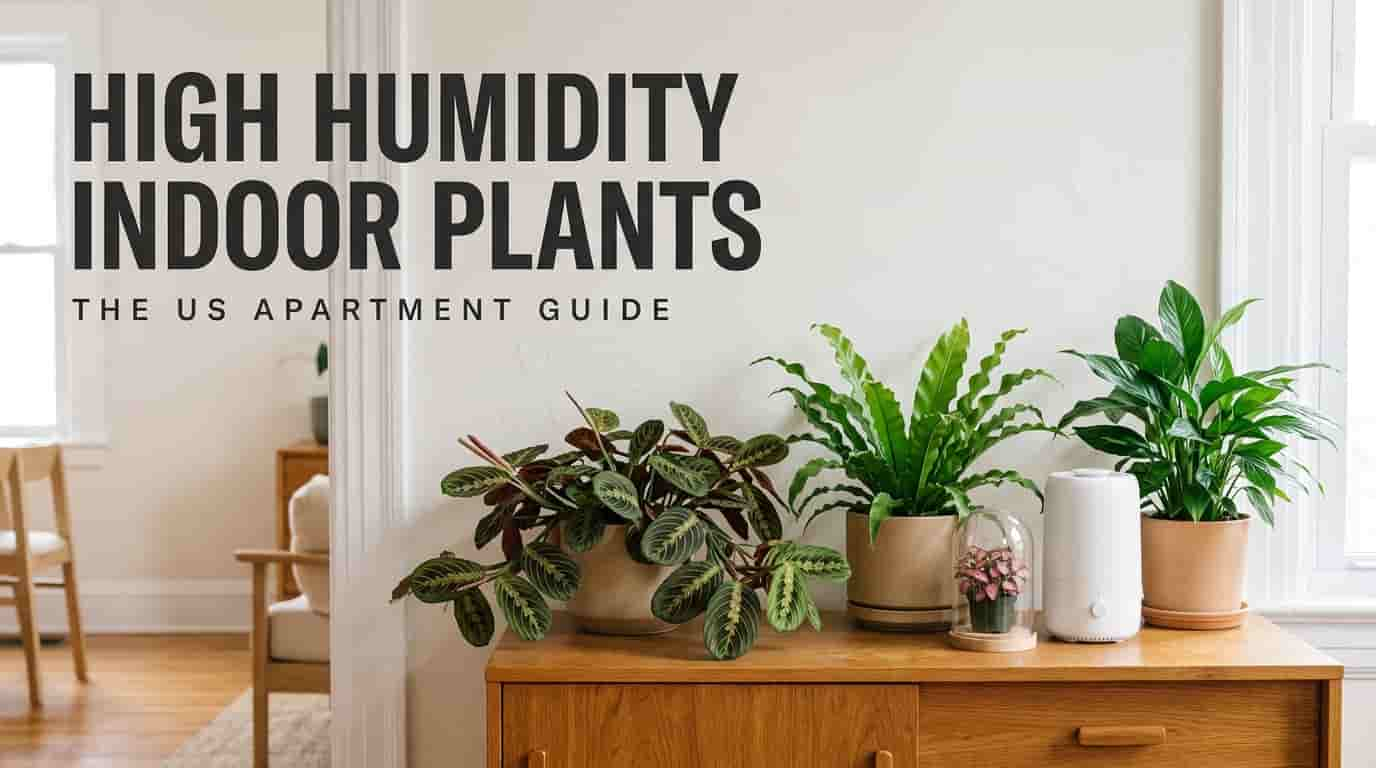
You walk out of a steamy local nursery holding a glossy Calathea or a cascading fern, convinced your living room is about to look like a botanical conservatory. Ten days later, the leaf edges feel like dry cornflakes.
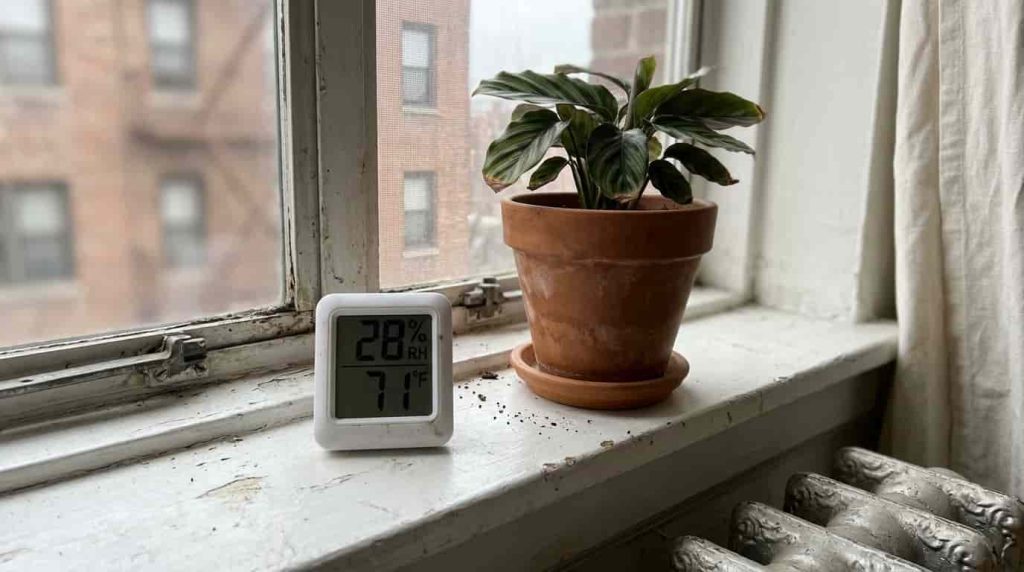
Welcome to the mismatch between commercial greenhouses and US rental apartments. Growing high humidity indoor plants indoors isn’t hard because you lack a green thumb—it’s hard because central forced-air furnaces and clanking steam radiators regularly push winter apartment air below 30% relative humidity. In older buildings across the Midwest and Northeast, I’ve watched my hygrometer bottom out at 19% in January.
The trick isn’t fighting physics with a spray bottle three times a day. It’s matching the plant to the humidity tier your apartment can realistically hold without peeling your landlord’s paint.
The easiest high humidity indoor plants for standard US apartments (50%–60% RH) are peace lilies, heartleaf philodendrons, bird’s nest ferns, and Monstera deliciosa. True moisture lovers like prayer plants, Goeppertia (Calathea), and Boston ferns need 60%–75% RH via a dedicated room humidifier or a sunlit bathroom. Save 75%+ cloud-forest plants—like maidenhair ferns and nerve plants—for glass cloches or enclosed cabinets so you don’t create mold on your drywall.
Why Most High Humidity Indoor Plants Struggle in US Apartments
Plants don’t drink ambient moisture through their leaves the way people often assume. What humid air actually controls is the speed of transpiration—how fast water vapor escapes through tiny leaf pores called stomata.
When warm apartment air sits at 25% relative humidity, that dry air acts like a sponge, pulling water out of paper-thin tropical leaves faster than the roots can pump it upward from the pot. Cells along the leaf margins and tips collapse first. That’s why your fern or prayer plant develops crispy brown edges even when the potting soil still feels cool and damp to your finger.
Then there’s the classic “just stick it in the bathroom” advice floating around every plant blog. Honestly, that advice fails in about 80% of US rentals. Most apartment bathrooms either have zero windows or a single frosted glass pane facing a brick alley five feet away—delivering maybe 15 to 25 foot-candles of light. Humidity doesn’t replace photosynthesis. Worse, a ten-minute hot shower spikes bathroom humidity to 85%, and twenty minutes after the exhaust fan kicks on, the air crashes right back down to 35%. Tropicals hate violent roller-coaster swings almost as much as steady dry air.
Before buying a single moisture-hungry plant, spend twelve bucks on a basic digital hygrometer and set it where the pot will actually live. Leave it there for three days. You might find your kitchen counter holds 48% RH naturally while the shelf above your radiator bakes at 22%.
Tier 1: Forgiving High Humidity Indoor Plants (50%–60% RH)
If you live in a moderately humid region—or run a single standard bedroom humidifier during winter—start here. These species come from tropical understories and genuinely reward extra moisture with bigger, cleaner foliage, yet they won’t collapse into dramatic crisps if your room dips to 45% for a week.
Peace Lily (Spathiphyllum spp.)
Peace lilies are famous for tolerating dim corners, though they look twice as lush near an east-facing window pulling 150 to 300 foot-candles. Aim for 50%–70% RH. Below 40%, the glossy dark leaves lose their sheen and the tips start scorching brown.
One warning from hard apartment experience: people blame dry air every time a peace lily flops over, when the real culprit is often root stress after moving it into a fresh pot. If yours collapsed right after a soil refresh, check out [Peace Lily Drooping After Repotting: How to Diagnose the Pot and Save It Fast] before cranking a humidifier up to max. Also keep these well away from chewing pets—according to the ASPCA Animal Poison Control: Peace Lily Toxicity Guide, Spathiphyllum contains insoluble calcium oxalates that cause intense mouth burning, drooling, and vomiting in cats and dogs.
Bird’s Nest Fern (Asplenium nidus)
Forget the reputation of ferns as messy carpet-ruiners. Unlike feathery parlor ferns, the bird’s nest fern grows thick, leathery, rippled fronds from a fuzzy dark center rosette. Because its leaf cuticle is waxy and substantial, it holds moisture far better in a 50% RH living room. Just pour water directly onto the soil around the rim rather than straight into the center crown, or that central rosette can rot out fast.
Heartleaf Philodendron (Philodendron hederaceum) & Monstera deliciosa
Both are Central and South American rainforest climbers that love 60%–80% humidity in the wild. Inside a regular apartment, though, they adapt surprisingly well to 50%–55%. You’ll notice the difference mostly when new leaves emerge: in bone-dry winter air, unfurling Monstera leaves sometimes stick inside their sheaths and tear. Give them steady 55% RH and bright indirect light (400–800 foot-candles), and those fenestrated leaves open cleanly without help.
Polka Dot Begonia (Begonia maculata)
Cane begonias sit in a neat middle ground. They prefer 50%–65% RH and develop crispy silver-spotted tips when forced-air heat blasts them, yet they’re miles tougher than finicky rex begonias. Keep them at least three feet away from heating vents, water when the top inch of soil dries, and never mist their leaves—standing water droplets trigger powdery mildew on begonia foliage almost overnight.
Tier 2: True Moisture Lovers for Humidifiers and Windowed Baths (60%–75% RH)
Now we’re stepping into plants that actually mean business. If your apartment sits at 35% RH all winter and you don’t plan on running a humidifier nearby, skip this tier. Buying these without humidity support just turns into an expensive cycle of slow leaf decline.
Prayer Plant (Maranta leuconeura)
Native to Brazilian rainforest floors, red-veined and lemon-lime prayer plants stay compact—rarely getting taller than 12 to 15 inches—which makes them brilliant for tight apartment side tables and bookshelves. They fold their patterned leaves straight up after sunset and relax them again at dawn.
Keep ambient air between 60% and 70% RH and temperatures safely above 60°F. Even better for renters with curious cats: Maranta species are completely non-toxic to dogs and cats. One quirk trips up almost every owner, though. Even at 65% humidity, prayer plants frequently get brown leaf tips from tap-water minerals like fluoride and chloramine. Switching to filtered water, rainwater, or distilled water fixes mysterious tip burn faster than buying a second humidifier.
Calathea / Goeppertia (Goeppertia makoyana, G. lancifolia)
Botanists reclassified most houseplant “Calatheas” into the genus Goeppertia, though garden centers still slap Calathea on every plastic pot. They’re stunning—and notoriously dramatic.
Not all varieties are equally stubborn. The Peacock Plant (G. makoyana) and Rattlesnake Plant (G. lancifolia) handle 55%–65% RH reasonably well if you keep their potting soil evenly damp (like a wrung-out sponge, never soup) and shield them from cold drafts near single-pane apartment windows. By contrast, broad-leafed G. orbifolia and variegated ‘White Fusion’ demand steady 65%–75% air and punish even brief dry spells with curling edges.
Boston Fern (Nephrolepis exaltata)
Nothing fills an empty apartment corner like a lush hanging Boston fern, and nothing drops more crunchy tan debris onto your floorboards when your furnace kicks on in November. They thrive between 60% and 80% RH with consistently moist, peaty soil and bright, filtered light—an unobstructed north or east window works well.
They’re pet-safe, which is a relief when fronds drape within swatting distance of a cat. And here’s a little-known recovery trick if winter dryness wipes yours out: per the Missouri Botanical Garden: Nephrolepis exaltata Plant Finder Profile, if a Boston fern dries out and sheds its fronds, you can shear all the dead growth down to about 2 inches above the soil line, maintain steady moisture and humidity, and let it regenerate fresh green fiddleheads from the base.
Velvet-Leaf Alocasias (Alocasia reginula, A. micholitziana)
Black Velvet and Frydek alocasias look surreal on a coffee table, yet their leaves shed moisture rapidly in dry apartments. Worse, low humidity is an open invitation for spider mites—those microscopic sap-suckers multiply fast in warm, dry 30% RH rooms and hide along the pale undersides of alocasia leaves. Keep RH steady around 65% and temperatures between 68°F and 78°F. If your apartment drops below 60°F at night in winter, don’t panic if an alocasia drops every leaf; it’s often just retreating into dormancy inside its underground corm until spring warms up.
Tier 3: Terrarium and Glass-Cabinet High Humidity Indoor Plants (75%+ RH)
Let’s be completely honest about rental physics. If you try to hold your entire 700-square-foot apartment at 80% relative humidity, your windows will sweat puddles onto the wooden sills, your closet clothes will smell musty, and black mold will eventually creep behind your bookcase.
That doesn’t mean you can’t grow cloud-forest stunners. You just have to shrink the room.
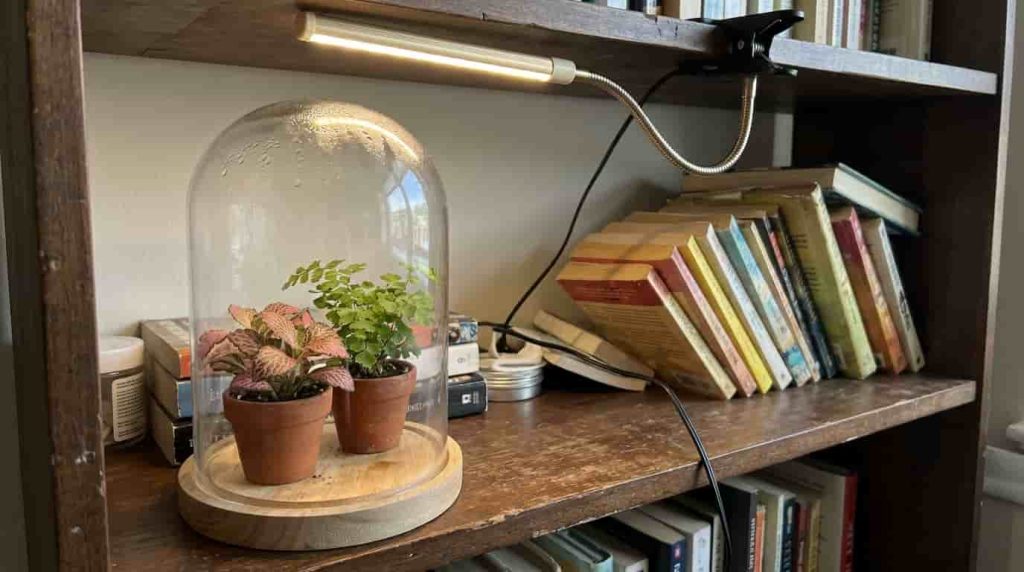
Enclosing the microclimate inside a $15 wide-mouth glass cookie jar, an unused 10-gallon aquarium, or a weather-stripped IKEA glass display cabinet lets you hold 75%–90% RH effortlessly while the rest of your living room stays at a comfortable 45%.
-
Maidenhair Fern (Adiantum raddianum): Paper-thin, delicate lime fronds on wiry black stems. In open 40% apartment air, one missed watering turns the entire plant to ash in 24 hours. Inside a vented glass terrarium under a gentle LED strip, it stays pillowy green for years.
-
Nerve Plant (Fittonia albivenis): Compact, brightly veined pink or white foliage that faints flat on the soil if it dries out—and stays crisp and turgid inside a glass cloche.
-
Jewel Orchids (Ludisia discolor and Macodes petola): Grown for dark velvety leaves striped with shimmering copper or gold veins rather than showy blooms. They stay small, prefer moderate light (150–300 foot-candles), and thrive in humid enclosures with chunky bark-and-sphagnum mixes.
-
Tropical Pitcher Plants (Nepenthes hybrids): Epiphytic carnivorous vines that refuse to inflate their hanging “pitchers” unless humidity stays near 70%–80% alongside bright filtered light and mineral-free distilled water.
One non-negotiable detail for glass enclosures: airflow matters. Stagnant 85% humidity breeds crown rot and gray mold (Botrytis) fast. If you use a closed cloche or jar, lift the lid for ten minutes every couple of days to cycle fresh air. Inside a tall glass cabinet, clip in a quiet 5V USB computer fan running on low so air circulates continuously across the foliage.
Quick-Reference Apartment Matrix: Light, RH, and Pet Safety
| Plant Species | Ideal Apartment RH | Light Need (Window / Foot-Candles) | Pet Safety (ASPCA) | Real-World Apartment Quirk |
| Peace Lily (Spathiphyllum) | 50%–65% | East/North • 150–300 FC | Toxic (calcium oxalates) | Dramatic droop signals dry roots or pot shock |
| Bird’s Nest Fern (Asplenium nidus) | 50%–60% | East/North • 150–350 FC | Non-Toxic | Never pour water into the center crown |
| Monstera Deliciosa | 50%–65% | South/West (filtered) • 400–800 FC | Toxic | New leaves tear while unfurling below 40% RH |
| Prayer Plant (Maranta leuconeura) | 60%–70% | East/Shaded West • 200–400 FC | Non-Toxic | Tap-water fluoride burns tips even at high RH |
| Peacock Calathea (Goeppertia makoyana) | 60%–70% | East/North • 150–350 FC | Non-Toxic | Hates cold drafts near winter window glass |
| Boston Fern (Nephrolepis exaltata) | 60%–80% | Bright Indirect • 250–500 FC | Non-Toxic | Drops dry leaflets fast; recovers if trimmed to 2″ |
| Black Velvet Alocasia (A. reginula) | 65%–75% | Bright Indirect • 300–600 FC | Toxic | Spider mite magnet if RH drops below 45% |
| Nerve Plant (Fittonia albivenis) | 70%–85% | Medium Indirect • 150–300 FC | Non-Toxic | Best kept under a glass cloche or terrarium |
Raising Humidity Without Turning Your Rental Into a Mold Trap
Scroll through houseplant social media for five minutes and you’ll see plenty of pretty brass misters and shallow saucers packed with river stones. Save your money.
According to Penn State Extension: Humidity and Houseplants, misting only nudges moisture upward for a few minutes until the droplets evaporate, doing virtually nothing for sustained ambient humidity. Wet pebble trays run into the exact same wall of physics: the small amount of water evaporating off a saucer diffuses across the entire room immediately rather than hovering in a neat column around your plant. Meanwhile, spraying water onto fuzzy or tight-clustered foliage in dim winter rooms actively spreads bacterial and fungal leaf spots.
Here is what actually moves the needle in a real US apartment.
Picking the Right Humidifier (Ultrasonic vs. Evaporative)
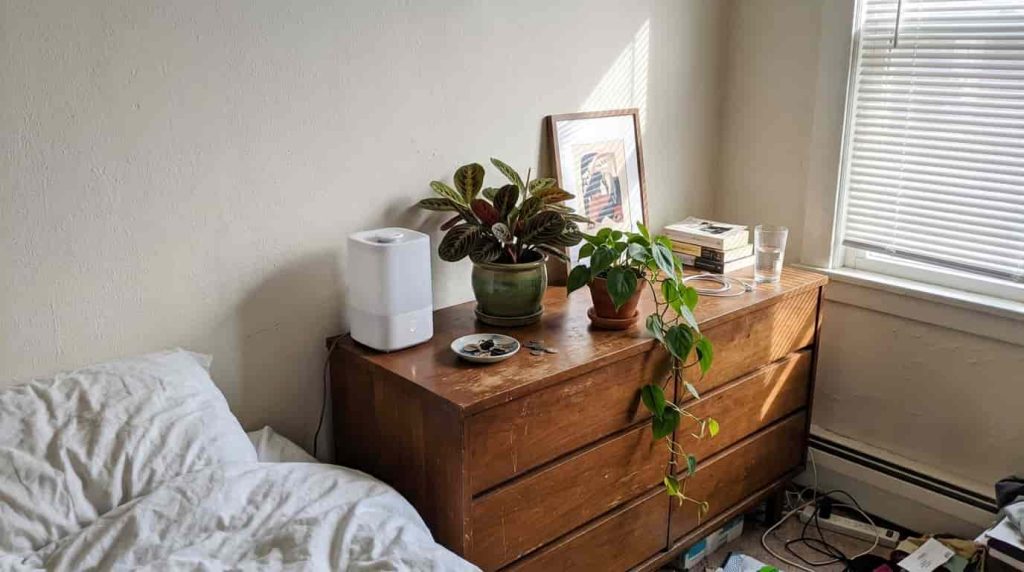
If you want to keep Tier 2 plants happy in a 200-square-foot living room or bedroom, buy a real humidifier with a built-in humidistat and set the target between 52% and 58% RH. That’s the apartment sweet spot—plenty comfortable for tropical foliage without making cold exterior windowpanes sweat.
Pay close attention to the two main machine styles before clicking buy:
-
Ultrasonic cool-mist humidifiers are whisper-quiet and cheap to purchase. The hidden catch? If you fill them with normal US municipal tap water, the vibrating disc blasts dissolved calcium and magnesium right into the air as fine “white dust.” Within a week, your plant leaves, TV screen, and bookshelves look like someone shook powdered sugar over them. Running an ultrasonic unit cleanly means buying distilled water—and at $1.30 to $1.60 per gallon every two days, that adds up fast.
-
Evaporative wick humidifiers pull room air through a wet paper filter using a small fan. Because mineral salts stay trapped in the wick instead of entering the air, you can fill them straight from your kitchen faucet with zero white dust. They produce a soft white-noise hum (honestly nice in a bedroom) and self-regulate naturally as the air grows damper. You just rinse the tank weekly and swap the $10 wick every 6 to 8 weeks.
Smart Grouping (And What to Keep Far Away)
Clustering six to ten moisture-loving plants tightly together on one plant stand genuinely creates a slight localized boost as water transpires from multiple leaf canopies and damp pots simultaneously. In my own apartment, a tight corner grouping next to an east window reads 5% to 7% higher on a hygrometer tucked inside the foliage than the hallway ten feet away.
Just don’t drag your desert plants into that same cozy cluster. Succulents and cacti evolved for dry 20%–40% air. Sitting beside a running humidifier slows their pot drying time to a crawl, inviting mushy roots and burst cells (edema). Even worse, an overwatered succulent in humid air can develop limp, deflated leaves that trick people into watering it more—a mix-up broken down in detail in [Wrinkly Succulent Leaves Meaning & How to Fix Them Fast]. Keep your arid pots on the driest, brightest south or west sill, far away from your tropical plant shelf.
The Hidden High-Humidity Side Effect: Soggy Soil and Fungus Gnats
Almost nobody warns you about this until tiny black flies start bouncing off your laptop screen during Zoom calls.
Caring for high humidity indoor plants changes how often you reach for the watering can. When room humidity climbs from 28% to 58%, surface moisture evaporates out of your pots nearly twice as slowly. That 6-inch nursery pot of dense peat moss that dried out in five days last month might suddenly stay soggy for eleven days.
Warm, continuously damp topsoil is a five-star breeding resort for fungus gnats—their larvae chew on tender root hairs while adults buzz around your coffee mug. Whenever you bump up indoor humidity, do two things immediately: stop watering on a rigid weekly calendar (always dig your finger two inches deep first), and swap heavy, peat-packed nursery dirt for an airy, fast-draining blend. If tiny flies are already hovering over your humidified shelf, upgrading your substrate using [The Best Indoor Potting Mix to Prevent Fungus Gnats in Your Apartment] shuts down the breeding cycle without forcing you to turn off your humidifier.
Common Questions About High Humidity Indoor Plants in Apartments
What is the safest humidity level for both indoor plants and apartment walls?
Aim for 50% to 58% relative humidity in open living areas. That range keeps almost all Tier 1 and most Tier 2 tropicals growing cleanly while staying below the 60%+ threshold where condensation forms on cold winter glass and encourages mildew along baseboards or closet drywall. If your windows start fogging up on freezing mornings, dial the humidifier down to 45%–50% until the cold snap passes.
Can I keep high humidity indoor plants in a windowless apartment bathroom?
Only if you add a dedicated grow light on a 10-to-12-hour outlet timer. Shower steam gives a nice short moisture bump, yet standard vanity bulbs put out the wrong spectrum and far too little intensity for foliage to photosynthesize. Screw a 10-watt full-spectrum LED grow bulb into an existing fixture or clip a small bar light near the counter, and pick forgiving picks like a heartleaf philodendron or bird’s nest fern rather than a fussy maidenhair.
Why are my Calathea and fern tips still browning even with a humidifier?
Two common culprits hide right behind humidity. First, check your water source: prayer plants and Calatheas react badly to dissolved salts, fluoride, and chloramine in US tap water, developing crisp tan margins even at 65% RH. Second, look at placement—being four feet from a heating register or touching a freezing single-pane windowpane at night causes thermal shock that mimics dry-air damage.
Do high humidity indoor plants actually humidify a dry apartment?
Not in any noticeable way on a realistic apartment scale. While plants do release water vapor through transpiration, a handful of potted palms or spider plants in a 250-square-foot room with standard HVAC airflow won’t move your digital hygrometer more than 1% or 2%. You’d have to pack dozens of massive, heavily watered plants wall-to-wall in a tightly sealed room to rival a single $40 tabletop humidifier.
Should I use tap water or distilled water in my plant humidifier?
Match the water to the machine. Use distilled or reverse-osmosis water in ultrasonic cool-mist humidifiers so you don’t coat your foliage and furniture in chalky mineral dust. If you run an evaporative wick humidifier, regular tap water is completely fine—just rinse the base tray with a splash of white vinegar every week or two to stop mineral scale and pink slime buildup.
How do I transition tropical plants when my apartment heat turns on in November?
Start bumping up humidity a week before you expect the radiators or furnace to kick on, rather than waiting until leaves start curling. Move sensitive pots at least four to five feet away from vents and drafty window glass, wipe dust off leaves with a damp cloth so they capture dimmer autumn sunlight efficiently, and cut back on fertilizing until growth resumes in March.
Once you stop trying to recreate the Amazon across an entire dry rental—and start matching your high humidity indoor plants to the light, airflow, and moisture pockets your home actually holds—winter care stops feeling like damage control. Grab a cheap hygrometer, start with one or two forgiving Tier 1 species or a simple glass cloche, and let your real apartment conditions guide what you bring home next.