
You walk by your favorite windowsill plant and notice something is off. Those normally plump, juicy leaves are suddenly looking like tiny green raisins.
What is the Wrinkly Succulent Leaves Meaning?
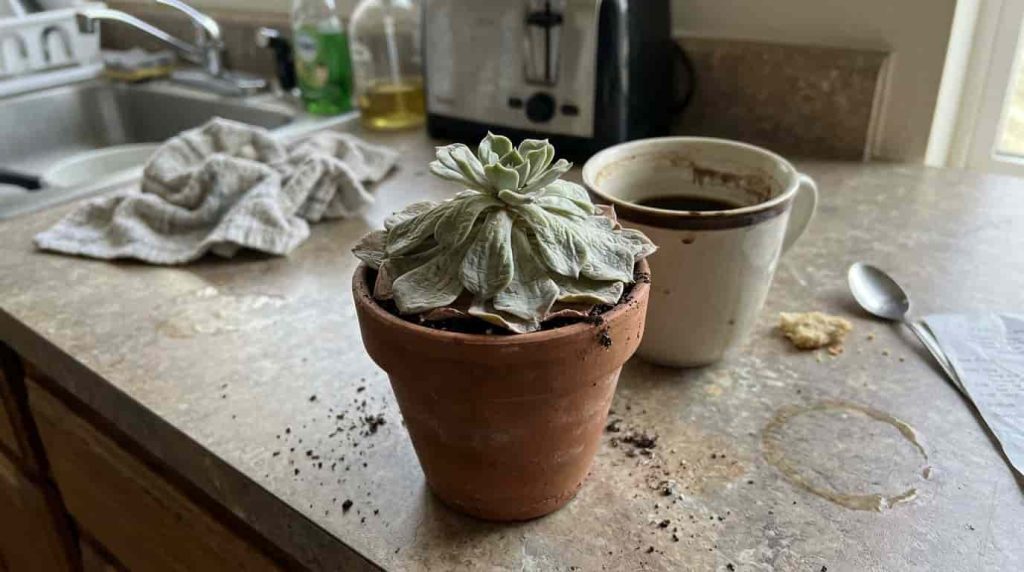
Wrinkly succulent leaves usually mean your plant is severely dehydrated and needs a deep soak. However, if those wrinkled leaves feel mushy, translucent, or turn yellow, it indicates overwatering and root rot. If only the very bottom leaves are wrinkly, it’s normal plant aging.
The Three Reasons Your Succulent is Wrinkling
Indoor temperatures in most US apartments hover between 65°F and 75°F. In this environment, succulents rely on stored water to maintain turgor pressure. When that pressure drops, the plant physically deflates.
Let’s figure out exactly what your plant is trying to tell you.
1. Severe Underwatering (The Most Common Cause)
Succulents store water in their fleshy leaves. When the soil goes bone dry for too long, they start drinking into their own reserves.
If your plant is thirsty, the leaves will feel thin, rubbery, and deflated. They might even look a little crispy at the very tips. The soil in the pot will likely feel rock hard or pull away from the sides of the planter.
2. Overwatering and Root Rot
This is the silent killer of indoor plants. Overwatering suffocates the root system.
When roots sit in damp, poorly aerated soil, they rot and die. Ironically, the dead roots can no longer absorb water. The plant dehydrates from the top down, even though the soil is soaking wet.
These leaves won’t just be wrinkled. They will look translucent, feel mushy to the touch, and often turn a sickly yellow.
3. Normal Plant Aging
Plants shed old foliage. It happens to all of them.
If your plant looks perfectly healthy on top but has one or two wrinkly, dried-up leaves at the very base near the soil, do not panic. The plant is simply absorbing the nutrients from those old leaves to grow new ones.
Quick Diagnosis Guide
| Symptom | Soil Condition | Likely Cause | Immediate Action to Take |
| Thin, rubbery, deflated leaves | Bone dry, pulling away from pot | Underwatering | Deep bottom-watering soak |
| Mushy, translucent, yellow leaves | Damp, smells slightly sour | Overwatering / Root Rot | Unpot, trim dead roots, repot |
| Crispy, dry bottom leaves only | Normal | Natural Aging | Leave them alone until they fall off |
The “Just a Few Drops” Apartment Gardening Myth
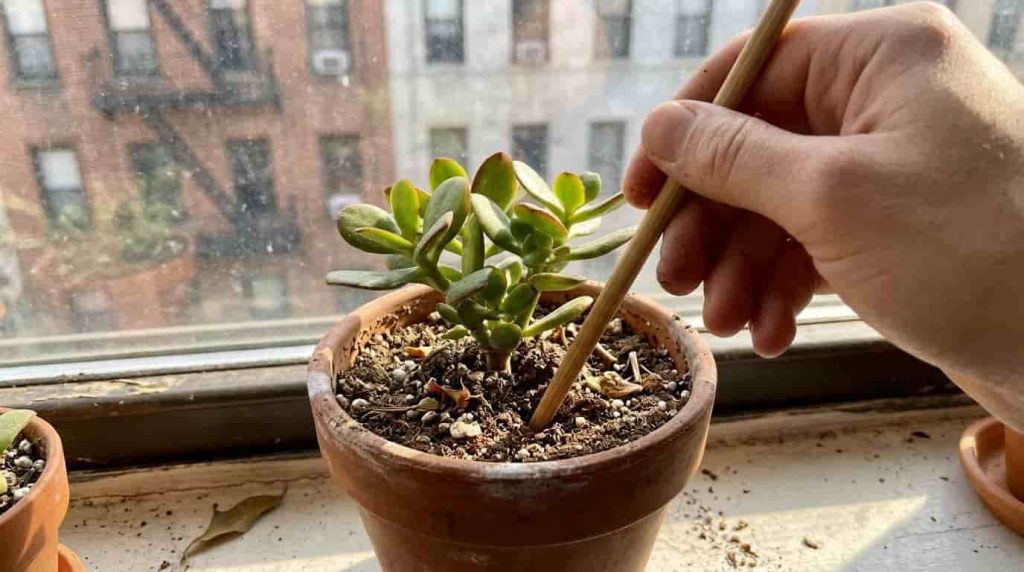
Many people buy an Aloe vera or Crassula ovata (Jade plant) and think they only need a teaspoon of water a month. This is a massive mistake.
In the wild, desert plants experience long droughts followed by massive, drenching rainstorms. Misting your succulents or giving them tiny sips of water encourages shallow, weak root systems.
When it is time to water, you must drench the soil completely. Water should pour freely out of the bottom drainage holes. After that, you ignore the plant until the soil is 100% dry all the way through.
Rule of Thumb: Always water succulents deeply until water runs out the bottom, then let the soil dry out completely before watering again.
Read: Using Epsom Salt Fertilizer for Peace Lily Plants: My Secret to Massive Blooms
How to Fix a Wrinkly, Dehydrated Succulent
If you confirmed your plant is underwatered, you need to rehydrate it. Bottom watering is the best method for extremely dry soil.
Dry peat-based potting mixes often become hydrophobic. Water will just run down the sides of the pot and miss the roots entirely.
Fill a small bowl or your kitchen sink with about two inches of room-temperature water. Set your nursery pot directly into the water. Let it sit there for 30 to 45 minutes so the soil can wick the moisture up to the roots.
Rule of Thumb: If the wrinkled leaves are thin and rubbery, add water; if they are yellow and mushy, unpot the plant to check for root rot.
A Quick Note on Pets and Light
Keep in mind that while saving your plants, pets might get curious. Aloe vera is toxic to cats and dogs according to the ASPCA, while Haworthia varieties are completely pet-safe.
Also, ensure your plant gets enough light. Aim for a bright south-facing or west-facing window. Without adequate light (low PPFD), succulents will etiolate, stretching out and growing weak, floppy leaves that wrinkle easily.
Frequently Asked Questions
How long does it take for a wrinkled succulent to recover?
If the plant was underwatered, you should see the leaves plump back up within one to three days after a deep watering. If it was overwatered, recovery takes weeks of careful drying and root regrowth.
Should I pull off wrinkly succulent leaves?
No. Never pull off green, rubbery leaves that are just thirsty. Only remove the very bottom leaves once they are completely brown, dry, and papery thin.
Why is my Jade plant wrinkly after repotting?
This is transplant shock. When you repot a succulent, tiny microscopic root hairs get damaged. The plant temporarily stops absorbing water while it heals, causing a slight wrinkling that resolves in a week or two.
Can a succulent recover from severe wrinkling?
Yes, a severely dehydrated succulent can bounce back beautifully after a good soak. However, if the wrinkling is caused by advanced root rot, you may need to cut off the healthy top of the plant and propagate it in fresh soil.
2 thoughts on “Wrinkly Succulent Leaves Meaning & How to Fix Them Fast”