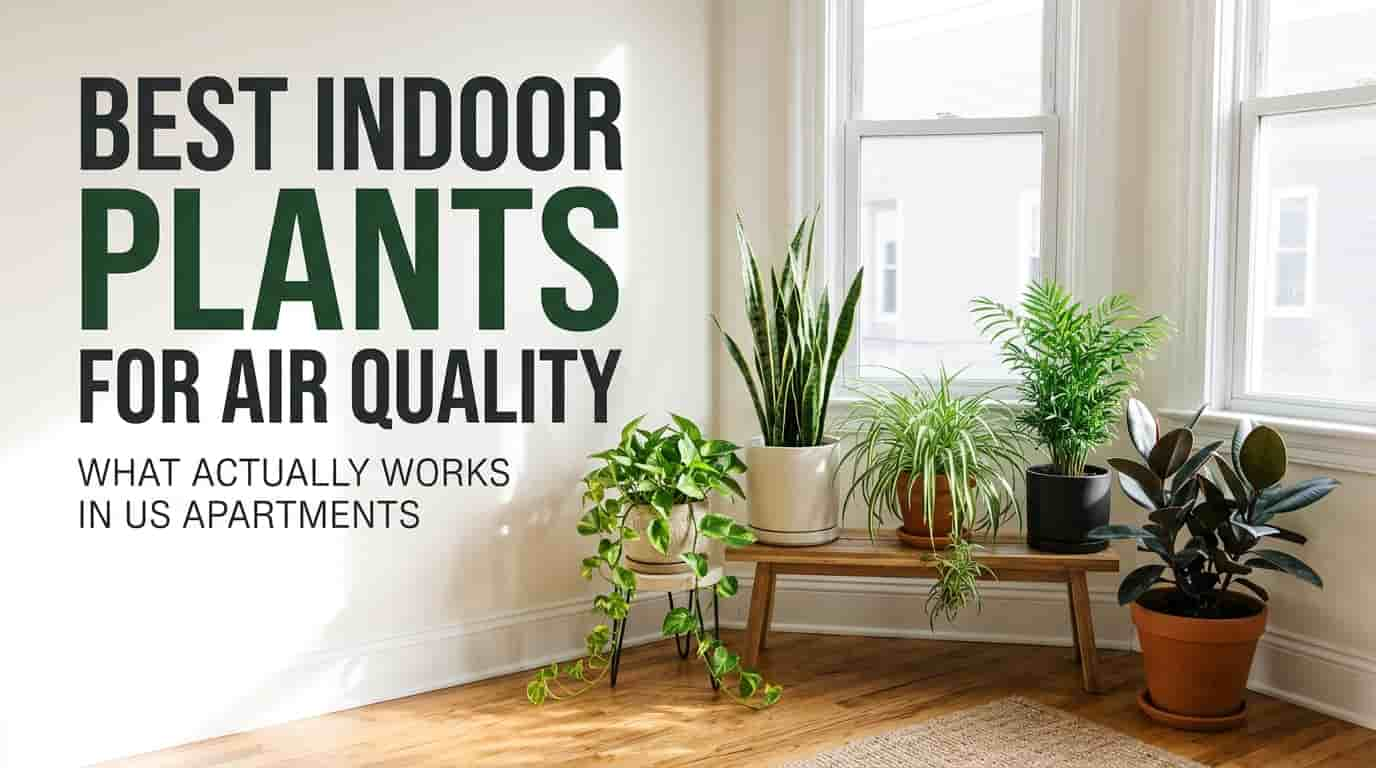
If you bought a $25 peace lily expecting it to scrub wildfire smoke or paint fumes out of a 650-square-foot apartment, you’ve been sold half a story. Selecting the best indoor plants for air quality starts with separating genuine plant biology from 35-year-old marketing copy. Houseplants won’t replace a mechanical HEPA purifier, yet the right species do measurably improve how an apartment feels and breathes—by trapping settled dust on broad leaves, releasing clean moisture into bone-dry winter air, and hosting root-zone microbes that break down trace volatile organic compounds (VOCs).
Which Houseplants Actually Help Apartment Air?
For real US apartments, the best indoor plants for air quality are high-transpiration and broad-leafed species that tolerate indoor light and low winter humidity: Spider Plant (Chlorophytum comosum), Snake Plant (Dracaena trifasciata), Golden Pothos (Epipremnum aureum), Parlor Palm (Chamaedorea elegans), Rubber Plant (Ficus elastica), and Peace Lily (Spathiphyllum wallisii). If you live with cats or dogs, stick to Spider Plants, Parlor Palms, Areca Palms, and Boston Ferns, as pothos, snake plants, and peace lilies are toxic when chewed.
Why Most Lists of the Best Indoor Plants for Air Quality Get the Science Half-Right
Almost every houseplant roundup traces back to NASA’s 1989 Clean Air Study. Researchers sealed individual potted plants inside airtight plexiglass chambers roughly the size of a chest freezer, pumped in high concentrations of benzene, formaldehyde, or trichloroethylene, and measured how much gas disappeared over 24 hours. The numbers looked dramatic.
Apartments aren’t airtight plexiglass boxes. Even a tightly weather-stripped 1920s brick walk-up or a modern high-rise exchanges indoor air with outdoor air through window gaps, bathroom exhaust fans, and HVAC returns. In 2019, environmental engineers Bryan Cummings and Michael Waring at Drexel University reviewed three decades of chamber studies and converted those numbers into Clean Air Delivery Rates (CADR). Their findings, detailed in the Drexel University Indoor Air Quality Review: Cummings & Waring (2019) Analysis of Potted Plants vs. Building Air Exchange, showed that standard residential air exchange dilutes VOCs far faster than foliage—meaning you would need roughly 10 to 1,000 plants per square meter of floor space just to match normal building ventilation.
Does that mean keeping plants for cleaner air is pointless? Not at all. It simply changes what you should look for at the nursery.
Three physical mechanisms actually matter inside a lived-in apartment:
-
Rhizosphere Microbe Activity: Leaves absorb tiny amounts of gaseous pollutants through microscopic pores called stomata, yet the real breakdown happens underground. Bacteria and fungi living around the plant’s roots metabolize trace VOCs drawn into porous potting media.
-
Passive Moisture via Transpiration: When baseboard radiators or forced-air furnaces kick on in January, indoor relative humidity in northern US apartments frequently drops to 20% or 25%. Dry mucous membranes get irritated fast. Broad-leafed tropicals pull water from their pots and release clean, mineral-free vapor through their leaves without leaving the white mineral dust that ultrasonic cool-mist humidifiers spray onto furniture.
-
Particulate Interception: Waxy, wide leaves act like passive dust shelves. Airborne lint, pollen, and coarse particulate matter settle onto foliage instead of circulating back into the room—provided you actually wipe the leaves down every couple of weeks.
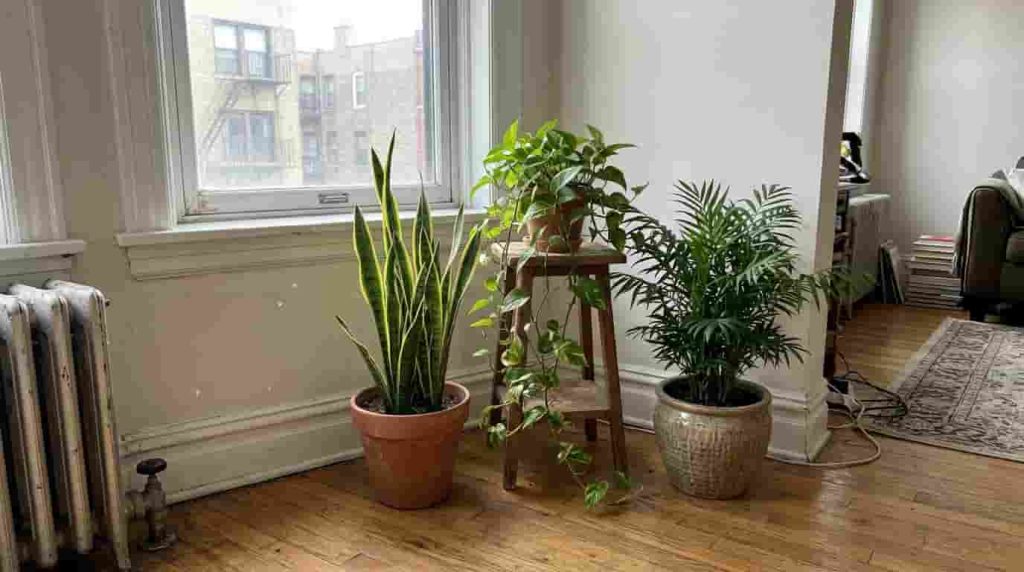
Quick-Compare Matrix: Best Indoor Plants for Air Quality by Apartment Light and Pet Safety
Before picking plants based on looks, match them to your actual window exposure and household pets. A high-transpiration fern shoved into a dark hallway won’t clean anything—it’ll just drop crispy brown fronds onto your rug.
| Plant Name (Botanical) | Minimum Apartment Light | Primary Air-Quality Strength | Winter Dry-Air Tolerance (25%–35% RH) | ASPCA Pet Safety (Cats & Dogs) |
| Spider Plant (Chlorophytum comosum) | Bright indirect (150–300 fc); tolerates medium light | Fast stomatal gas exchange; steady transpiration | High (brown tips if tap water has high fluoride) | Non-toxic |
| Snake Plant (Dracaena trifasciata) | Low to bright (50–400 fc) | Nighttime oxygen release (CAM photosynthesis); zero-fuss | Very high | Toxic (saponins cause GI upset) |
| Golden Pothos (Epipremnum aureum) | Low to bright indirect (75–350 fc) | Dense leaf surface area for dust capture; vigorous root mass | High | Toxic (insoluble calcium oxalates) |
| Parlor Palm (Chamaedorea elegans) | Medium indirect (100–250 fc) | Gentle transpiration in tight spaces; compact footprint | Moderate | Non-toxic |
| Peace Lily (Spathiphyllum wallisii) | Low to medium indirect (75–200 fc) | High moisture output; strong rhizosphere microbe support | Moderate (droops dramatically when thirsty) | Toxic (insoluble calcium oxalates) |
| Rubber Plant (Ficus elastica) | Bright indirect (250–500 fc) | Large, thick waxy leaves trap heavy airborne dust | High once acclimated | Toxic (milky sap irritates mouth/stomach) |
| Areca Palm (Dypsis lutescens) | Bright indirect (300+ fc) | Heavyweight natural humidifier for dry living rooms | Low to moderate (needs consistent moisture) | Non-toxic |
| Boston Fern (Nephrolepis exaltata) | Bright filtered light (200–350 fc) | High transpiration rate; dense frond surface area | Low (sheds leaflets below 40% RH) | Non-toxic |
| Chinese Evergreen (Aglaonema spp.) | Low to medium indirect (50–200 fc) | Thrives in dim inner rooms where most plants stall | High | Toxic (insoluble calcium oxalates) |
The Best Indoor Plants for Air Quality That Thrive in Real US Apartments
Catalogs love ranking plants from one to ten as if every renter lives in a sunlit conservatory. Real apartments have north-facing windows blocked by brick buildings across the alley, dry heating vents under every sill, and curious cats that chew anything green within reach. Grouping the best indoor plants for air quality by how they actually behave in specific apartment setups saves money and dead foliage.
Low-Light Workhorses for North-Facing Windows and Dim Corners
Most plants go dormant when light drops below 100 foot-candles. Dormant plants close their stomata, stop pulling water through their roots, and contribute almost nothing to indoor air. These three species keep metabolizing even in dimmer rooms.
Snake Plant (Dracaena trifasciata, formerly Sansevieria) If your bedroom gets weak morning light or sits several feet back from a window, start here. Unlike standard broadleaf plants that open their stomata during daylight hours, snake plants use Crassulacean Acid Metabolism (CAM) photosynthesis—meaning they open their pores at night to take in carbon dioxide and release small amounts of oxygen while you sleep. They handle 65°F bedroom drafts and dry winter radiators without flinching. Water thoroughly only when the soil dries completely to the bottom of the pot, usually every three to four weeks in winter.
Golden Pothos (Epipremnum aureum) A single mature pothos trained along a bookshelf or hanging near a kitchen window packs dozens of heart-shaped leaves into a tiny footprint. More leaf surface area means more dust interception and steady transpiration. Stick to the classic green-and-gold cultivar rather than heavily variegated varieties like ‘Marble Queen’ or ‘Manjula’ if light is limited; darker chlorophyll-rich leaves photosynthesize far more efficiently in 75–100 foot-candles of ambient room light.
Chinese Evergreen (Aglaonema ‘Silver Bay’ or ‘Maria’) When apartment growers ask for a floor-level plant that won’t drop leaves in a windowless foyer or dim living room corner, Aglaonema beats almost every palm or ficus. Keep away from cold drafts below 60°F and let the top 2 inches of soil dry between waterings.
Pet-Safe Air Fresheners That Won’t Trigger a Vet Visit
Roughly half of the classic plants listed on university reference sheets—such as the UConn Home & Garden Education Center: Houseplants for Healthier Indoor Air—contain insoluble calcium oxalate crystals or saponins. Before bringing home any foliage if you share your lease with pets, cross-check the botanical name against the ASPCA Animal Poison Control: Toxic and Non-Toxic Plants Database.
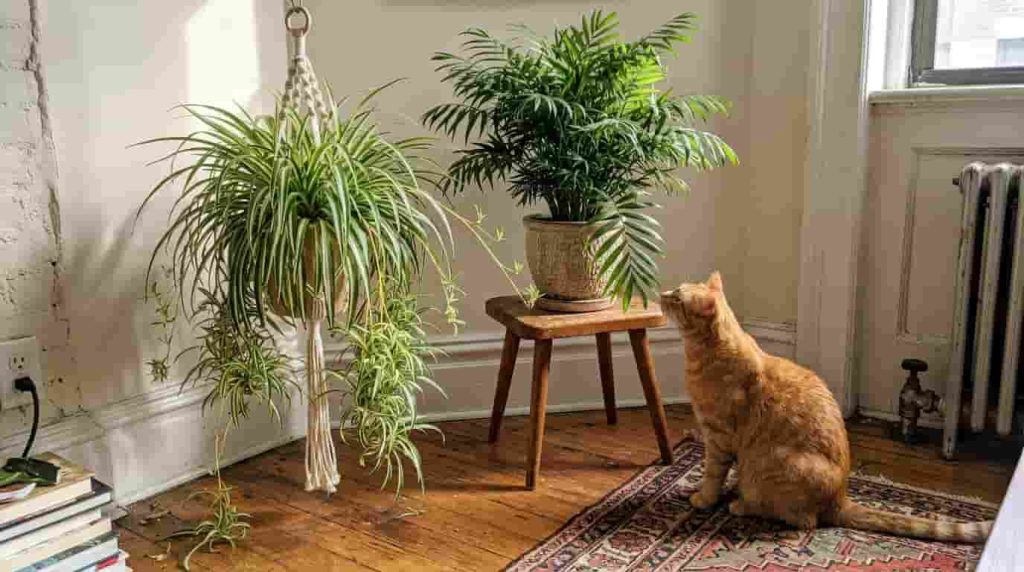
Spider Plant (Chlorophytum comosum) Spider plants grow rapidly in bright to medium indirect light, sending out arching runners covered in baby plantlets that multiply total leaf mass within a single summer. Because they grow fast, their stomata stay active and their root systems stay dense. One quirk in US cities: municipal tap water treated with fluoride or chloramine often turns the leaf tips brown. Letting tap water sit out overnight won’t remove fluoride, so using filtered pitcher water or collected rainwater keeps the foliage clean.
Parlor Palm (Chamaedorea elegans) Unlike larger tropical palms that demand 500 foot-candles and 60% humidity to survive, the parlor palm evolved as a forest understory plant. It stays compact—usually 2 to 4 feet tall in a 6-inch or 8-inch pot—and fits cleanly beside a desk or reading chair without blocking narrow apartment walkways.
Boston Fern (Nephrolepis exaltata) and Areca Palm (Dypsis lutescens) Both species are powerhouse moisture emitters, releasing noticeably more water vapor per square foot of foliage than succulents or aroids. The catch? Both throw tantrums in dry winter apartments. If your heat runs constantly from November through March, check out our guide to [ High Humidity Indoor Plants That Actually Survive Dry US Apartments] before putting a Boston fern near a heating vent, or group your palms together over a wide pebble tray filled with water to create a localized microclimate.
Broadleaf Dust Catchers and Transpiration Boosters for Bright Living Rooms
If you have an unobstructed south- or west-facing window, larger-leafed plants give you the biggest visual and physical return per pot.
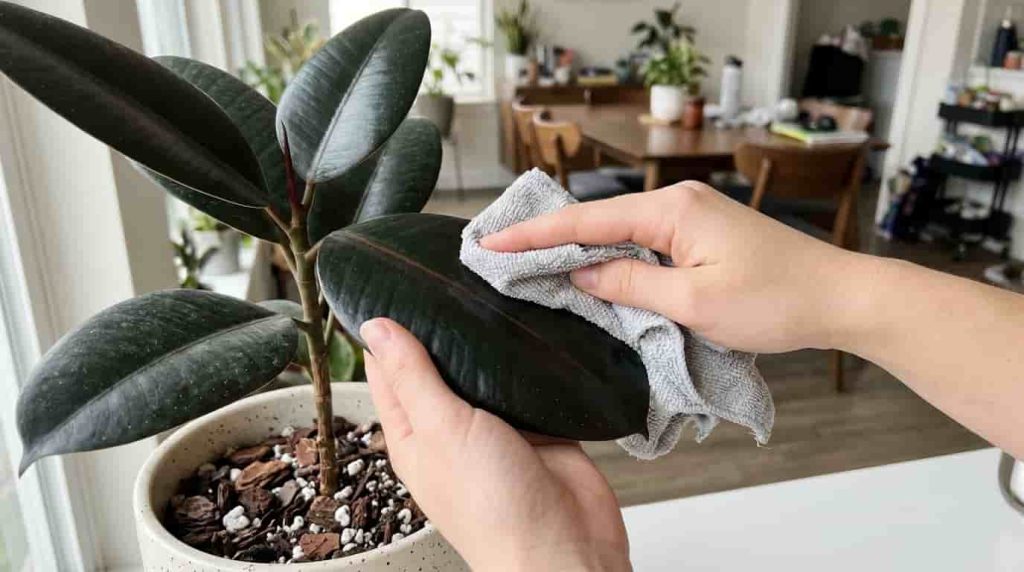
Rubber Plant (Ficus elastica ‘Burgundy’ or ‘Robusta’) Look at the sheer surface area of a mature rubber plant leaf—often 8 to 12 inches long and 5 inches wide. Those thick, glossy blades collect fine household dust, pet dander, and kitchen aerosol residue out of the air column. Once a month, support each leaf with one hand and wipe both the top and underside with a damp microfiber cloth. Dust clogs stomata and blocks light absorption; a clean leaf breathes twice as well as a dusty one.
Peace Lily (Spathiphyllum wallisii) Peace lilies are famous for dramatic wilting when thirsty and bouncing back an hour after watering. That high water throughput is exactly why they boost local humidity around a dry home office desk. Keep them out of harsh afternoon sun, which scorches their leaves, and away from cats—even a small bite causes immediate oral irritation.
How Soil Health and Airflow Determine Whether Your Plants Help or Hurt Apartment Air
Here is the side of indoor gardening almost nobody brings up when discussing the best indoor plants for air quality: a poorly managed pot can actively degrade the air in your apartment.
Standard bagged potting mix sold at big-box hardware stores is mostly dense peat moss. In an outdoor garden with wind and sun, peat dries out fast. Inside an apartment with stagnant air, heavy peat stays soggy for weeks, suffocating roots and turning into a breeding ground for Sciaridae (fungus gnats) and white surface mold (saprophytic fungi). Mold spores floating off damp soil are far worse for indoor air quality than the trace VOCs a plant removes.
Three habits keep your potting media working as a clean biofilter rather than a spore factory:
-
Amend Your Mix for Oxygen: Root-zone microbes need oxygen to break down organic compounds cleanly. Blend standard indoor potting soil with 25% to 30% coarse perlite and fine orchid bark so water drains rapidly and air pockets remain around the roots. If you’ve already noticed tiny black flies hovering near your coffee mug, follow our breakdown of [The Best Indoor Potting Mix to Prevent Fungus Gnats in Your Apartment] to swap out compacted peat before larvae take over.
-
Let the Top 1.5 to 2 Inches Dry Completely: Aside from moisture-loving ferns and peace lilies, almost every houseplant on this list prefers a wet-dry cycle. Testing soil moisture with your index finger—or a cheap wooden chopstick pushed halfway down the pot—prevents the chronic overwatering that triggers root rot and musty odors.
-
Empty Catch Saucers After 20 Minutes: Standing water at the bottom of a decorative cachepot goes anaerobic within 48 hours, smelling like swamp gas and inviting bacterial buildup.
Pairing the Best Indoor Plants for Air Quality With a HEPA Purifier
The smartest setup in a US city apartment isn’t choosing between houseplants and technology—it’s letting each handle what it’s built for.
During summer wildfire smoke events, spring pollen spikes, or heavy cooking sessions, run a true HEPA air purifier with an activated carbon filter. A decent tabletop HEPA unit turns over all the air in a 300-square-foot bedroom four to five times an hour, stripping out 99.97% of fine particulate matter (PM2.5) and cooking odors in minutes.
Use your best indoor plants for air quality to handle the baseline environment around the clock:
-
Keep a 3-Foot Buffer From Heating & AC Vents: Forced-air floor registers and steam radiators blast 110°F+ dry air straight upward, desiccating foliage overnight and scattering soil dust into the airstream. Position floor plants at least 3 to 4 feet to the side of vents.
-
Watch Winter Window Glass Temperatures: Single-pane windows in older Northeast and Midwest apartments can drop below 40°F on January nights even when your thermostat reads 70°F. Pull tropical leaves back 6 to 8 inches from cold glass so leaf tissue doesn’t suffer chill damage.
-
Run a Small Oscillating Fan on Low: Gentle air circulation across your plant shelf prevents stagnant humidity pockets on leaf surfaces, strengthens stems, and moves room air past the foliage and soil surface continuously.
When you match tough, light-appropriate species with airy soil, clean leaves, and realistic expectations, the best indoor plants for air quality turn a stale apartment into a calmer, noticeably fresher place to live.
Frequently Asked Questions About the Best Indoor Plants for Air Quality
How many plants do I actually need to improve air quality in an apartment?
If your goal is noticeable VOC reduction on par with mechanical ventilation, peer-reviewed building science shows you would need dozens to hundreds of plants per room. For practical apartment benefits—gentler winter humidity, lower settled dust, and calmer indoor spaces—grouping 4 to 6 medium-to-large plants (in 6-inch to 10-inch pots) in a 250- to 350-square-foot living room creates a clear, comfortable difference without turning your floor into an obstacle course.
Are the best indoor plants for air quality safe to keep in a bedroom overnight?
Yes. People sometimes worry that plants release carbon dioxide at night, yet the amount of $\text{CO}_2$ a houseplant respires after dark is tiny—roughly a fraction of what a sleeping pet or partner exhales. Species like Snake Plants (Dracaena trifasciata) and Orchids actually absorb $\text{CO}_2$ and release small amounts of oxygen overnight via CAM photosynthesis.
Which air-cleaning houseplants are 100% safe for cats and dogs?
According to the ASPCA Toxic and Non-Toxic Plants database, Spider Plants (Chlorophytum comosum), Parlor Palms (Chamaedorea elegans), Areca Palms (Dypsis lutescens), Boston Ferns (Nephrolepis exaltata), and Baby Rubber Plants (Peperomia obtusifolia) are non-toxic to both cats and dogs. Avoid Peace Lilies, Golden Pothos, Snake Plants, English Ivy, and Dracaenas if your pets chew leaves.
Can indoor plants remove wildfire smoke, mold spores, or pet dander?
No. Plants do not filter fine particulate matter like PM2.5 wildfire smoke or airborne mold spores out of the air column. Broad, waxy leaves catch coarse settling dust that you later wipe off with a damp cloth, while a true HEPA air purifier is required to capture microscopic smoke particles and allergens.
Why do my air-purifying plants get brown crispy tips every winter?
Dry indoor heating is almost always the culprit. When winter furnaces or radiators drop apartment relative humidity below 30%, moisture evaporates from leaf tips faster than the roots can replace it. Moving plants 3 to 4 feet away from heat registers, grouping pots together, and watering with filtered water (for fluoride-sensitive Spider Plants and Dracaenas) stops most winter tip burn.
Do fake plants or air-purifying sprays work the same way?
Artificial plants collect surface dust that you can wash off in the shower, so they offer visual calm with zero maintenance, yet they cannot transpire moisture, perform gas exchange, or support soil microbes. Living plants paired with clean, well-draining potting mix give you active moisture regulation alongside greenery.