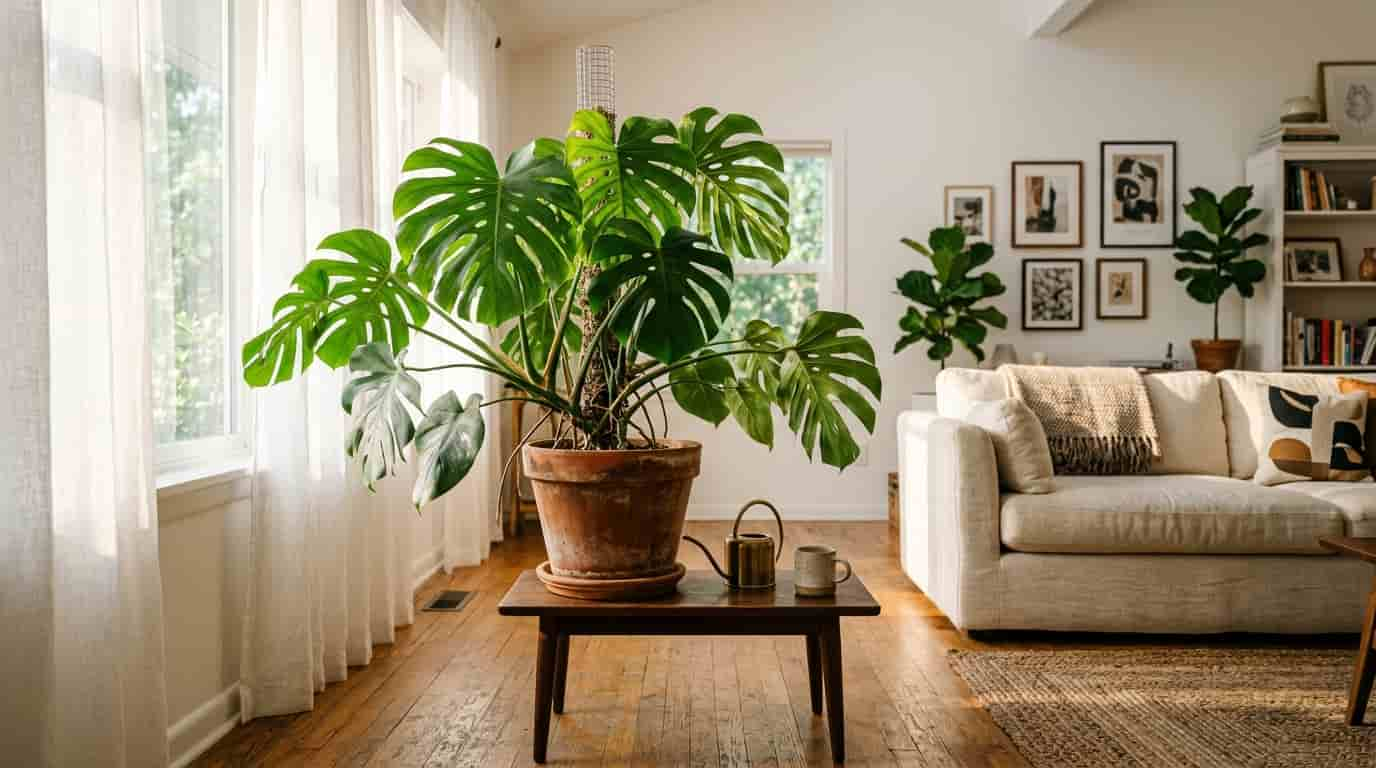
Panic setting in? Stop watering immediately. If you want to know how to fix root rot without repotting, grab a wooden chopstick and gently poke deep holes into the wet soil to let oxygen reach the roots. Remove the plant from any decorative outer pot. Place the bottom of the nursery pot on a thick stack of dry paper towels to physically pull the excess water out through the drainage holes. Finally, flush the soil with a mixture of one part 3% hydrogen peroxide and two parts water to kill the fungal bacteria. Give it bright, indirect sunlight and good airflow.
We have all been there. You walk past your favorite houseplant, and something looks off. The leaves are turning a sad, mushy yellow. The stems are drooping. You touch the top of the potting mix, and it feels like a wet sponge. Then, you lean in close. You smell it. That unmistakable, swampy, decaying odor.
Your plant is drowning.
Repotting is usually the go-to advice. But sometimes, you just can’t. Maybe it’s a massive Ficus that weighs 50 pounds. Maybe you live in a tiny apartment and doing a full soil change on your living room rug sounds like a nightmare. Or maybe the plant is already so stressed that ripping its roots out of the dirt will send it straight to houseplant heaven.
Here at Microgarden, I deal with these exact scenarios all the time. Good news. You don’t always have to tear your plant out of its home to save it. Let’s walk through exactly what is happening under the dirt and how you can reverse the damage right now.
Understanding the Core Problem: Why Roots Rot
Roots need to breathe. Period.
When you overwater a plant, or if your pot lacks proper drainage holes, water fills up every single microscopic air pocket in the potting mix. Oxygen gets entirely pushed out. Without oxygen, the roots literally suffocate.
Once they die, bacteria and fungi that naturally live in the soil throw a massive party. They start eating the dead root tissue. This fungal infection is what we call root rot. The roots turn from firm and white to mushy, black, and foul-smelling strings. Because the roots are dead, they can no longer absorb water or nutrients. Ironically, your plant starts dying of thirst while sitting in a puddle.
To stop this process without changing the soil, we have to do two things fast: dry the soil out and introduce oxygen back into the root zone.
Step-by-Step Hacks: How to Fix Root Rot Without Repotting
If you catch the problem early enough, these methods work wonders. Roll up your sleeves.
1. The Chopstick Aeration Trick
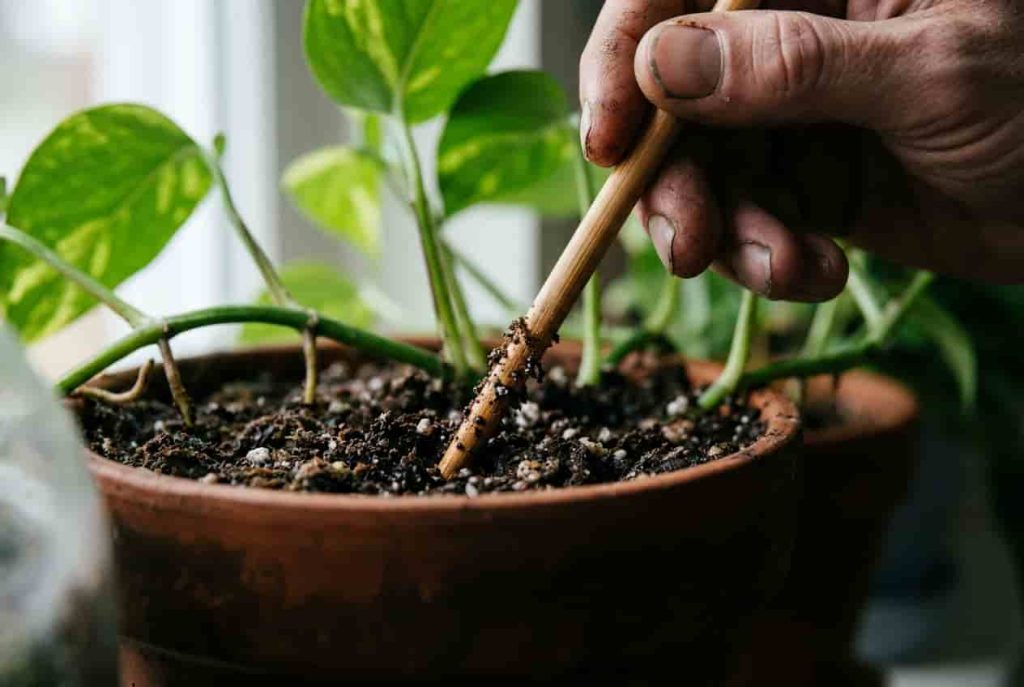
This is my absolute favorite trick. Go to your kitchen and grab a plain wooden chopstick or a bamboo skewer.
Gently poke the chopstick straight down into the soggy potting mix. Push it all the way to the bottom of the pot. Wiggle it around just a little bit to create a tunnel, then pull it out. Repeat this process 10 to 15 times all around the surface of the soil.
What does this do? It instantly creates deep air shafts. Oxygen rushes down into the center of the root ball, breaking the suffocating seal of the wet mud. It also helps the moisture deep inside the pot evaporate much faster. As you pull the chopstick out, wipe it off. If it comes out coated in thick, black mud, you know exactly how wet the bottom of that pot really is.
2. The Paper Towel Wicking Method
Gravity is your best friend right now. If your plant is in a plastic nursery pot sitting inside a fancy decorative pot (a cachepot), take it out immediately. Often, water pools in the bottom of that decorative pot, and your plant has been soaking its feet for weeks.
Get a thick stack of highly absorbent paper towels, newspapers, or a microfiber cloth. Set the plastic pot directly on top of the towels. Ensure the drainage holes are making direct contact with the paper.
Capillary action will take over. The dry paper will actively suck the excess moisture down and out of the soil. Check it after an hour. If the towels are soaking wet, toss them and put a fresh dry stack underneath. Keep doing this until the towels stay mostly dry.
3. The Hydrogen Peroxide Flush
Root rot is a bacterial and fungal infection. To kill the infection without physically cutting the rotting roots away with scissors, we need to treat the soil.
Hydrogen peroxide (H2O2) is water with an extra oxygen atom. When you pour it into the soil, it reacts with organic matter and releases that extra oxygen. This fizzing action literally oxygenates the root zone and kills the anaerobic bacteria causing the rot.
Mix one part 3% hydrogen peroxide (the standard brown bottle from the pharmacy) with two parts water. Slowly pour this mixture evenly over the surface of the potting mix. You might hear a slight fizzing or popping sound. That is a good thing. That is the extra oxygen doing its job. Let all the excess liquid drain completely away.
4. Optimize Light and Airflow
Wet soil stays wet in the dark. Move your struggling plant to a spot with very bright, indirect sunlight. Don’t put it in baking, hot, direct sun—it is too weak to handle that right now. But it needs strong light so the leaves can photosynthesize, which tells the roots to start pulling water up from the soil again.
Turn on a ceiling fan or place a small oscillating fan nearby. Good air circulation drastically speeds up evaporation from the top layer of the soil.
Common Mistakes to Avoid
When trying to save a drowning plant, people tend to panic and make things worse. Do not do these three things:
-
Do not fertilize. A sick plant cannot process nutrients. Fertilizer contains salts that will violently burn the few remaining healthy roots your plant has left. Wait until you see brand-new leaf growth before you even think about feeding it again.
-
Do not mist the leaves. If the roots are rotting, adding more water to the plant’s environment via high humidity will only invite fungal leaf-spot diseases. Keep the leaves dry.
-
Do not plug the drainage holes. Make sure wherever you place the plant while it recovers, water can freely escape the bottom.
Plant Problems & Solutions (Reading the Signs)
Your plant will tell you exactly how it is feeling if you know what to look for.
Problem: The lower leaves are turning completely yellow and dropping off.Solution: This is the classic first sign of overwatering. Snip the completely yellow leaves off with clean scissors. They will never turn green again, and the plant is just wasting energy trying to keep them alive. Focus entirely on drying out the potting mix.
Problem: Tiny black flies are crawling on the soil and flying around my face.Solution: Those are fungus gnats. They lay their eggs exclusively in wet, decaying soil. By using the chopstick method to dry out the top two inches of soil, and applying the hydrogen peroxide flush, you will kill the gnat larvae and eliminate their breeding ground.
Problem: The base of the stem feels soft, mushy, and looks brown.Solution: This is severe stem rot. The infection has traveled up from the roots into the main body of the plant. At this stage, drying the soil might not be enough. You need to take a clean, sharp knife and cut the healthy green top part of the plant entirely off. You can propagate that healthy cutting in fresh water to start over.
Quick Comparison / Care Summary Table
Keep this quick reference guide handy to maintain a healthy environment for your indoor jungle once your plant bounces back.
| Care Factor | What You Should Do | Why It Matters for Plant Health |
| Drainage | Always use pots with holes. Never leave water in the saucer. | Prevents water from pooling at the bottom and suffocating the root system. |
| Watering | Wait until the top 2-3 inches of soil are bone dry before watering again. | Mimics natural rain cycles, allowing roots to breathe between drinks. |
| Soil Mix | Add perlite, orchid bark, or pumice to standard potting soil. | Creates chunky air pockets so excess water drains out instantly. |
| Lighting | Provide bright, indirect sunlight near an east or west-facing window. | Drives photosynthesis, which forces the plant to actually use the water in the soil. |
Frequently Asked Questions (FAQ)
Can a plant recover from root rot on its own? No. If the soil remains saturated and anaerobic, the fungal infection will keep spreading until the plant is dead. You have to intervene by physically drying the soil and getting oxygen to the roots.
What does root rot smell like? Healthy soil smells earthy, like a forest floor after a light rain. Root rot smells sour, sulfurous, and decaying. Think of a swamp, a dirty sponge left in the sink, or rotten eggs. If your dirt smells bad, you have a problem.
How long does it take for indoor potting soil to dry out? It depends entirely on the size of the pot, the type of soil, and the temperature of your house. Generally, a standard 6-inch pot should dry out enough to need water again in about 7 to 10 days. If your soil stays wet for three weeks, you are lacking airflow, lacking light, or your soil is way too dense.
Final Thoughts
Watching a beloved plant struggle is incredibly frustrating. We put so much time and money into making our homes feel alive with greenery. But remember, gardening is a learning process. Getting heavy-handed with the watering can happens to literally everyone.
By taking quick action, aerating the soil, pulling out the excess moisture, and killing the bacteria with peroxide, you give your green friend a fighting chance. Be patient. It might drop a few more leaves while it recovers, but as soon as you see a tiny green spike of new growth, you will know you won the battle.
Got a struggling plant right now? Have more questions about how to fix root rot without repotting? Drop a comment below and let us know what you are dealing with. Here at Microgarden, we love troubleshooting with you!
1 thought on “5 Proven Ways on How to Fix Root Rot Without Repotting”