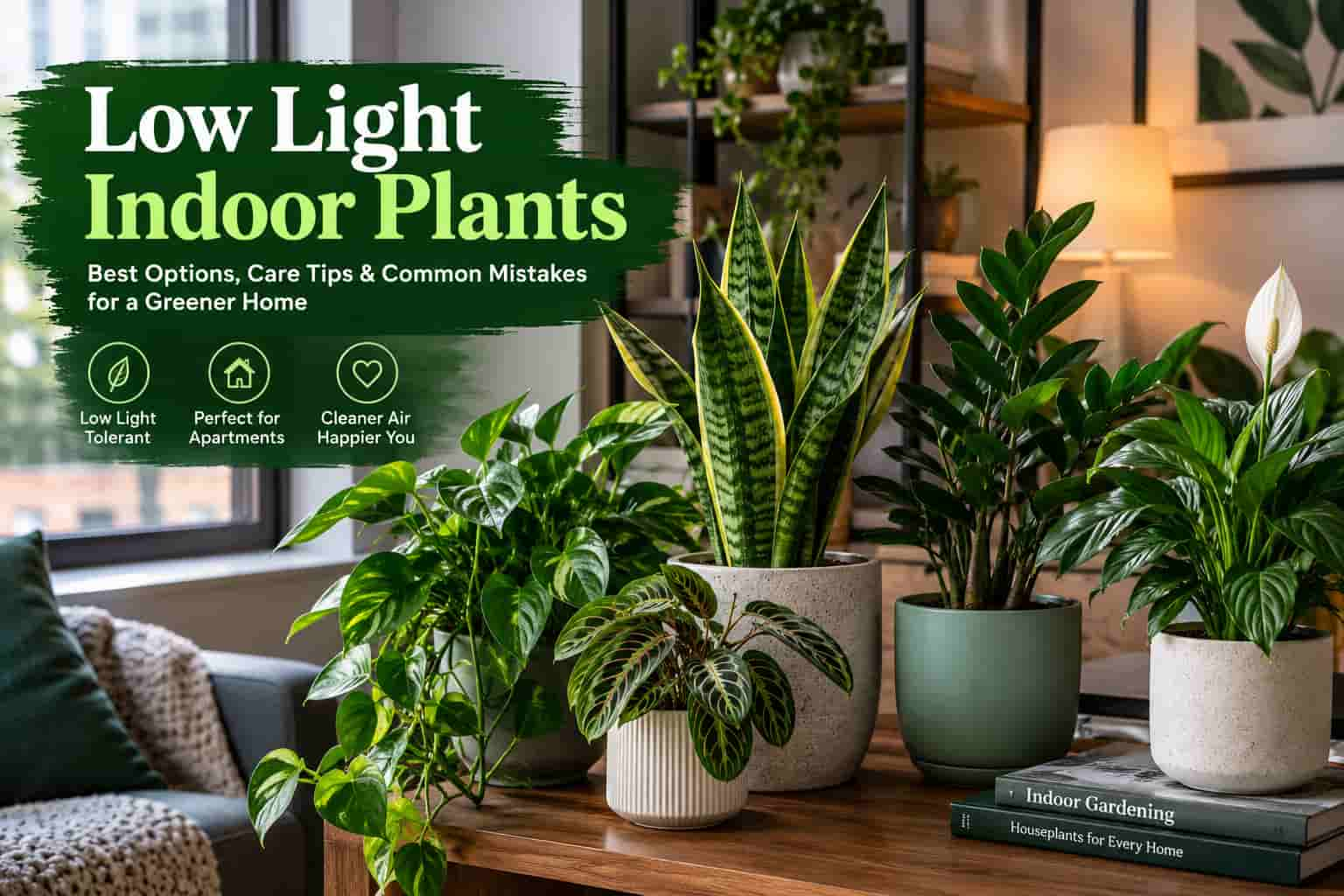
Do you love the look of a leafy green home but worry that your apartment doesn’t get enough sunlight? You’re not alone. Many apartments have north-facing windows, shaded corners, narrow hallways, or rooms that never seem bright enough for a traditional houseplant.
The good news is that you don’t need a sun-drenched living room to enjoy indoor greenery. Several houseplants tolerate lower light levels and can grow happily in homes with indirect light. Some are also forgiving when you occasionally forget to water them.
The secret is choosing plants that match your actual lighting conditions rather than buying a beautiful plant and hoping it adapts.
In this guide, you’ll discover the best low light indoor plants, how to choose the right one for your space, how to care for them, and which common mistakes to avoid.
Quick Answer: What Are the Best Low Light Indoor Plants?
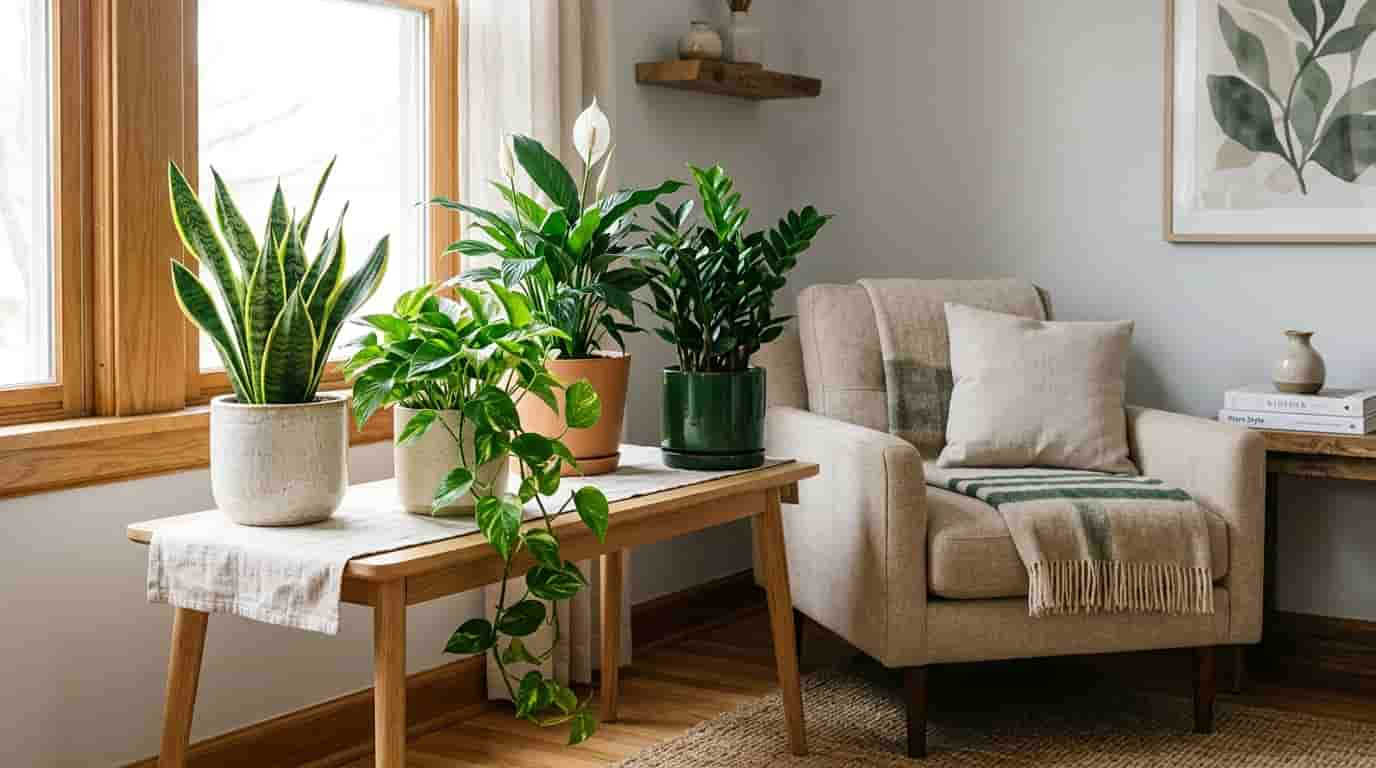
The best low light indoor plants include snake plants, ZZ plants, pothos, heartleaf philodendrons, cast iron plants, and Chinese evergreens. These houseplants tolerate lower-light conditions better than many others, although none can thrive indefinitely in complete darkness. Choose a plant based on available light, watering habits, room temperature, and pet safety.
| Plant | Best Feature | Watering Needs | Beginner-Friendly? |
|---|---|---|---|
| Snake plant | Upright, architectural leaves | Infrequent | Yes |
| ZZ plant | Glossy foliage and drought tolerance | Infrequent | Yes |
| Pothos | Trailing vines | When partly dry | Yes |
| Heartleaf philodendron | Easy trailing growth | When partly dry | Yes |
| Cast iron plant | Tough, adaptable foliage | Moderate to low | Yes |
| Chinese evergreen | Attractive patterned leaves | Moderate | Yes |
| Peace lily | Elegant foliage and flowers | More frequent | Fairly |
| Parlor palm | Soft, tropical appearance | Moderate | Yes |
| Dracaena | Vertical structure | Moderate to low | Yes |
| Spider plant | Arching leaves and baby plantlets | Moderate | Yes |
Important: Low light means limited natural light, not no light. If a room has no usable daylight, provide an appropriate grow light.
1. What Does “Low Light” Actually Mean for Indoor Plants?
Before choosing a plant, it helps to understand what low light means in practical terms.
Low-light conditions usually occur in spaces that receive little direct sunlight and only limited indirect daylight. Examples include rooms with north-facing windows in the United States, areas several feet from a window, or corners shaded by nearby buildings and trees.
However, a room that looks bright to your eyes may still be relatively dark for a plant.
Low light vs. medium light vs. bright indirect light
| Light Level | Typical Indoor Conditions | Suitable Plant Choices |
|---|---|---|
| Low light | Dimmer areas with limited daylight | Snake plant, ZZ plant, cast iron plant |
| Medium indirect light | Comfortable daylight without harsh direct sun | Pothos, philodendron, Chinese evergreen |
| Bright indirect light | Strong filtered daylight near a window | Many tropical foliage plants, spider plant |
| Direct sunlight | Sunbeams strike the leaves | Cacti and many succulents |
These descriptions are practical guidelines, not precise measurements. Window direction, season, weather, curtains, surrounding buildings, and distance from the glass can change the amount of light a plant receives.
How to tell whether your room has enough light
Try these simple checks:
- The newspaper test: Can you comfortably read printed text in the area during the daytime without turning on a lamp? If not, the spot may be too dark for most living plants.
- The shadow test: Hold your hand above a sheet of paper. A very faint shadow suggests lower light, while a distinct but soft-edged shadow often indicates stronger indirect light.
- The window test: A plant sitting near a bright window generally receives more light than one placed across the room, even when both spots look comfortable to you.
These tests are rough estimates. A light meter or plant-light meter can provide a more useful measurement when a plant struggles.
Insider tip: Start by measuring or observing light where the plant’s leaves will sit—not simply by looking at how bright the room feels.
2. The 15 Best Low Light Indoor Plants
1. Snake Plant (Dracaena trifasciata)
Best for: Bedrooms, offices, entryways, and beginners
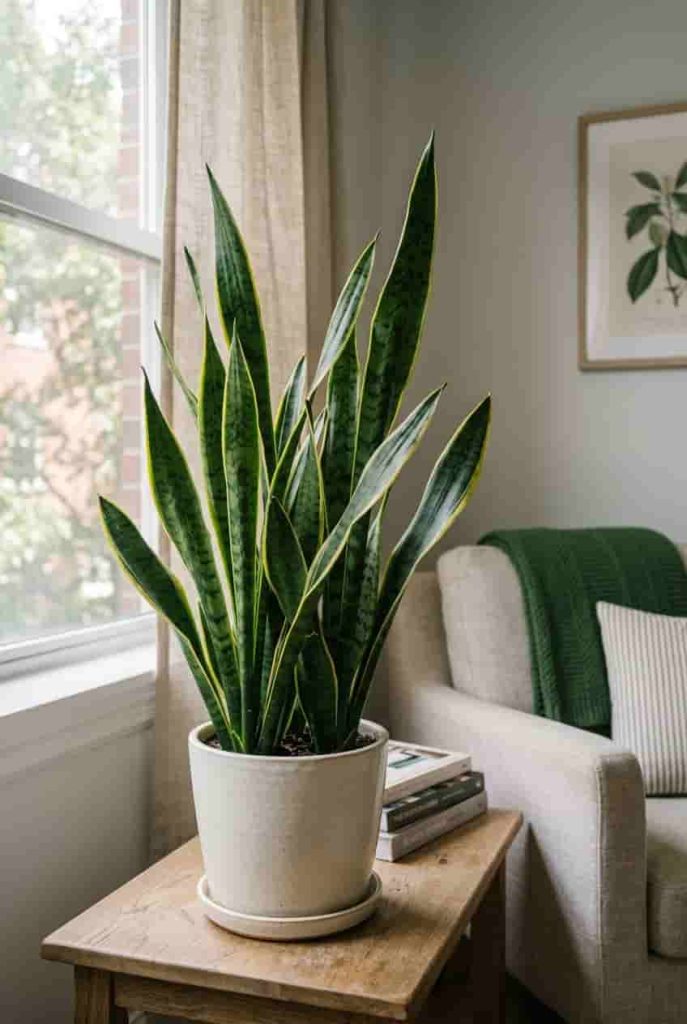
Snake plants are popular for their stiff, sword-shaped leaves and upright growth. Their architectural appearance makes them a good fit for small apartments where floor space is limited.
They tolerate lower light than many houseplants and generally need less frequent watering than tropical plants with thin leaves.
How to care for a snake plant
- Light: Low to bright indirect light.
- Water: Let the potting mix dry out completely or nearly completely before watering again.
- Soil: Use a well-draining indoor potting mix, ideally one suitable for succulents.
- Temperature: Keep it in a comfortably warm indoor environment.
- Container: Choose a pot with drainage holes.
Common mistake: Watering on a fixed weekly schedule. In a dim room, the soil may remain wet for much longer than expected.
Snake plants are a particularly good choice for people who prefer bold greenery without a lot of maintenance. They are, however, toxic if ingested by cats or dogs.
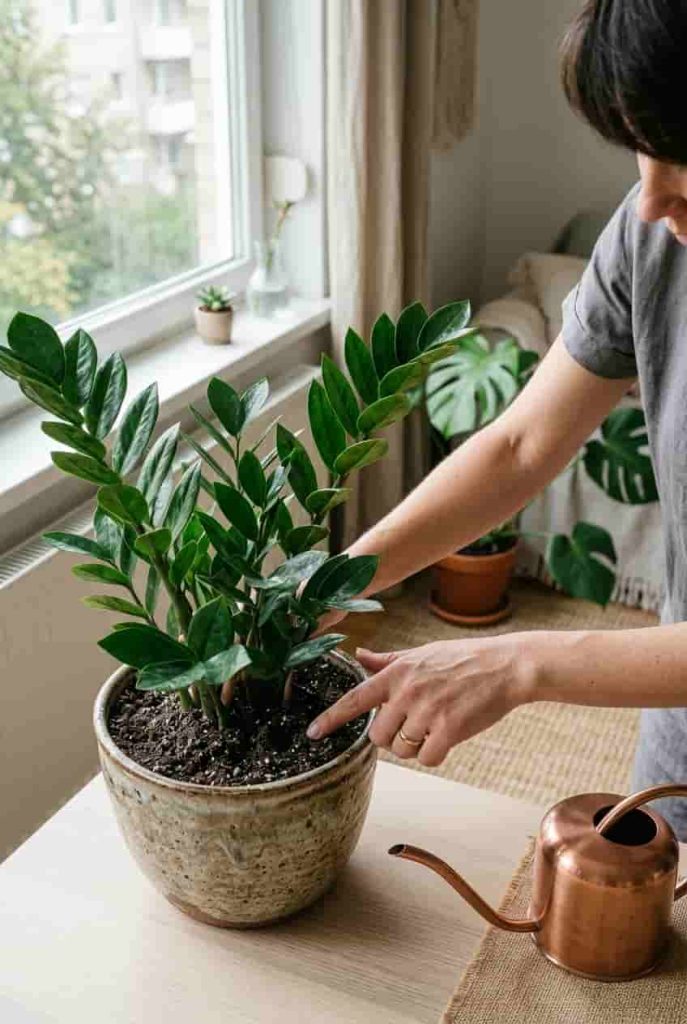
2. ZZ Plant (Zamioculcas zamiifolia)
Best for: Dimmer living rooms, offices, and busy plant owners
The ZZ plant has thick stems and glossy, oval leaflets that give it a polished appearance. Its underground rhizomes store water, allowing it to tolerate periods of dryness.
It can survive in lower-light locations, making it one of the most forgiving choices for an apartment that doesn’t receive much daylight.
Care essentials
- Light: Low to bright indirect light.
- Water: Allow the potting mix to dry substantially before watering.
- Soil: Use a well-draining mix.
- Maintenance: Wipe dusty leaves with a damp cloth.
Pros
- Slow-growing and relatively low-maintenance.
- Attractive, glossy foliage.
- Tolerates occasional missed watering.
Cons
- Growth may be slow in dim conditions.
- Overwatering can cause root or rhizome rot.
- The plant is toxic if chewed or swallowed by pets or people.
A ZZ plant is ideal for someone who wants greenery without constantly checking soil moisture.
3. Golden Pothos (Epipremnum aureum)
Best for: Shelves, bookcases, hanging baskets, and trailing displays
Pothos is one of the easiest ways to introduce a cascading green element into a small home. Its vines can drape over shelves or hang from a basket, creating a lush effect without taking up much floor space.
It tolerates lower light, but there is a trade-off: its leaves may become smaller, and variegated varieties may lose some of their yellow or cream patterning.
Care essentials
- Light: Low to bright indirect light.
- Water: Water when the upper portion of the potting mix has dried.
- Soil: A standard, well-draining indoor potting mix.
- Pruning: Trim long vines to encourage a fuller appearance.
Apartment tip: If the plant grows unevenly toward a window, rotate the pot periodically so different sides receive more balanced light.
Keep pothos out of reach of children and pets who may chew leaves. It contains insoluble calcium oxalate crystals that can cause oral irritation.
4. Heartleaf Philodendron (Philodendron hederaceum)
Best for: Small shelves, desks, and hanging planters
Heartleaf philodendron produces soft, heart-shaped leaves along trailing stems. It resembles pothos at first glance, but its leaves are often thinner and more distinctly heart-shaped.
It adapts well to indirect light and is easy to prune when the vines become too long.
Care essentials
- Light: Low to medium indirect light.
- Water: Water when the upper layer of soil begins to dry.
- Soil: A loose, well-draining houseplant mix.
- Pruning: Trim above a leaf node to manage length and encourage branching.
Common mistake: Placing it in a very dark corner and expecting fast, dense growth. The plant may survive there, but growth will slow and stems may become sparse.
Like pothos, heartleaf philodendron is toxic if chewed or swallowed.
5. Cast Iron Plant (Aspidistra elatior)
Best for: Shady corners and people who prefer a sturdy foliage plant
The cast iron plant earned its reputation through its ability to tolerate less-than-ideal indoor conditions. Its long, dark green leaves create a simple, elegant look without demanding intense light.
It is especially useful when you want a plant that stays relatively composed rather than sending long vines across a room.
Care essentials
- Light: Low to medium indirect light.
- Water: Water after the upper portion of the soil has dried.
- Soil: Well-draining potting mix.
- Maintenance: Remove yellow or damaged leaves at the base.
Its slow growth can be an advantage in a small apartment: you won’t need to repot or prune it constantly.
6. Chinese Evergreen (Aglaonema species)
Best for: Living rooms, bedrooms, and decorative tabletops
Chinese evergreens are valued for their patterned foliage, which may feature shades of green, silver, pink, or red depending on the variety.
Many green-leaved varieties tolerate lower light well. Varieties with more colorful foliage often perform better with brighter indirect light, so check the requirements of the specific cultivar.
Care essentials
- Light: Low to medium indirect light, depending on variety.
- Water: Let the top portion of the potting mix dry before watering.
- Soil: A well-draining houseplant mix.
- Humidity: Average household humidity is often adequate, although some varieties appreciate more.
Avoid assuming that every colorful Chinese evergreen will maintain its best color in a dark room.
Chinese evergreens contain calcium oxalate crystals and should be kept away from pets and children who might chew them.
7. Peace Lily (Spathiphyllum species and hybrids)
Best for: People who like broad leaves and occasional flowers
Peace lilies are known for their dark green foliage and white, leaf-like flower structures called spathes.
They can tolerate lower light, but flowering usually improves when the plant receives enough indirect light. In a particularly dim room, expect more foliage and fewer flowers.
Care essentials
- Light: Low to medium indirect light.
- Water: Water when the upper soil begins to dry, before the plant remains wilted for long periods.
- Soil: Moisture-retentive but well-draining potting mix.
- Maintenance: Remove dead foliage and spent flowers.
Peace lilies are more expressive about water than snake or ZZ plants. Drooping can indicate thirst, but repeated severe wilting stresses the plant.
Important safety note: Peace lilies are toxic if chewed or swallowed by pets or people. Despite their name, they are not true lilies in the genus Lilium, which contains highly dangerous species for cats.
8. Parlor Palm (Chamaedorea elegans)
Best for: Bedrooms, living rooms, and tropical-inspired decor
Parlor palms bring a softer look to indoor spaces with their slender stems and feathery green fronds. They are generally more comfortable in lower indoor light than many sun-loving palms.
A parlor palm can add height and texture without the dramatic spread of a large palm species.
Care essentials
- Light: Low to medium indirect light.
- Water: Water when the upper soil begins to dry; don’t leave the roots sitting in water.
- Soil: Well-draining potting mix.
- Maintenance: Remove completely brown fronds with clean scissors.
Growth is typically slow, so don’t mistake a lack of rapid new leaves for a problem if the existing foliage remains healthy.
Parlor palms are generally considered non-toxic to cats and dogs, making them worth considering for pet-owning households.
9. Dracaena (Dracaena species)
Best for: Vertical greenery in living rooms and home offices
Many dracaena varieties feature upright stems and narrow or strap-like leaves. Their vertical growth is useful in apartments where a plant needs to occupy a narrow footprint.
Several varieties tolerate moderate or lower indirect light, although specific requirements vary.
Care essentials
- Light: Low to medium indirect light, depending on species.
- Water: Allow the upper portion of the soil to dry between waterings.
- Soil: Well-draining potting mix.
- Maintenance: Remove damaged leaves and rotate the pot occasionally.
Dracaenas are toxic to cats and dogs if ingested. If you have pets, verify the exact plant species before buying.
10. Spider Plant (Chlorophytum comosum)
Best for: Hanging baskets and beginner-friendly plant displays
Spider plants have arching, narrow leaves and may produce small plantlets on long stems. These baby plants can be propagated to create new plants for other rooms.
They prefer brighter indirect light for vigorous growth, but they can tolerate some lower-light indoor conditions.
Care essentials
- Light: Medium to bright indirect light is best; lower light is tolerated.
- Water: Water when the upper soil begins to dry.
- Soil: Well-draining potting mix.
- Propagation: Root healthy plantlets in water or moist potting mix.
If the leaves become pale or growth slows, consider moving the plant closer to a window.
Spider plants are generally considered non-toxic to cats and dogs, although chewing large amounts of any plant can upset a pet’s stomach.
11. English Ivy (Hedera helix)
Best for: Elevated shelves and trailing displays
English ivy offers dense foliage and a classic trailing appearance. It can tolerate some lower light, but it often performs better in brighter indirect conditions and may struggle in warm, dry indoor air.
Care essentials
- Light: Medium indirect light is preferable; some lower light may be tolerated.
- Water: Keep the mix lightly moist without waterlogging it.
- Maintenance: Prune regularly to control growth and improve air circulation.
- Pest watch: Inspect for spider mites, particularly in dry indoor conditions.
English ivy is toxic if ingested and may irritate skin in some people. It is not the best choice for households where pets or children can reach the foliage.
12. Bird’s Nest Fern (Asplenium nidus)
Best for: Humid bathrooms and softly lit rooms
Bird’s nest fern forms broad, rippled leaves that emerge from a central rosette. Its tropical appearance makes it an attractive choice for a bathroom with usable natural light.
It prefers more consistent moisture and humidity than snake plants or ZZ plants.
Care essentials
- Light: Medium to low indirect light.
- Water: Keep the potting mix lightly and consistently moist, but not saturated.
- Humidity: Moderate to high humidity is helpful.
- Watering technique: Avoid repeatedly pouring water into the central crown, where moisture can collect.
A completely dark bathroom is not suitable. If natural daylight is inadequate, use a grow light.
Bird’s nest fern is generally considered non-toxic to cats and dogs.
13. Bamboo Palm (Chamaedorea seifrizii)
Best for: Larger living rooms and corners that need height
Bamboo palm has multiple slender stems and feathery fronds. It can create a tropical focal point without requiring direct sunlight.
Although it tolerates lower light, it needs enough indirect light to maintain healthy growth.
Care essentials
- Light: Low to medium indirect light.
- Water: Water when the upper soil begins to dry.
- Soil: Well-draining, moisture-retentive potting mix.
- Maintenance: Remove brown fronds and inspect foliage for pests.
Give the plant enough room for its foliage to spread. Crowding it against a wall can reduce airflow and make routine maintenance more difficult.
Bamboo palm is generally considered non-toxic to cats and dogs.
14. Prayer Plant (Maranta leuconeura)
Best for: Tabletops and decorative indoor plant collections
Prayer plants feature patterned leaves that fold upward at night in response to their daily rhythm. Their colorful markings can brighten a room without relying on direct sunshine.
They are less forgiving of neglect than ZZ plants or snake plants, so they are better for people willing to monitor moisture and humidity.
Care essentials
- Light: Medium to low indirect light.
- Water: Keep the soil evenly moist but never waterlogged.
- Humidity: Moderate to high humidity is beneficial.
- Water quality: If leaf tips brown, review watering consistency, humidity, fertilizer use, and local water quality.
Avoid placing a prayer plant beside heating vents or air-conditioning outlets that create dry drafts.
Prayer plants are generally considered non-toxic to cats and dogs.
15. Peperomia (Peperomia species)
Best for: Small desks, shelves, and compact apartments
Peperomias come in many shapes and colors, from rounded succulent-like leaves to rippled or patterned foliage. Their compact growth makes them suitable for limited space.
Light requirements vary widely across the genus, and many types prefer medium or bright indirect light. Some tolerate lower light, but a very dark spot is not ideal.
Care essentials
- Light: Medium indirect light is a good starting point for many varieties.
- Water: Let the upper soil dry before watering again.
- Soil: Use a loose, well-draining mix.
- Maintenance: Remove damaged leaves and rotate the pot if growth leans toward the window.
Peperomias are generally considered non-toxic to cats and dogs. Check the species or cultivar before purchase because the name covers a diverse group of plants.
3. Which Low Light Indoor Plant Is Best for Your Room?
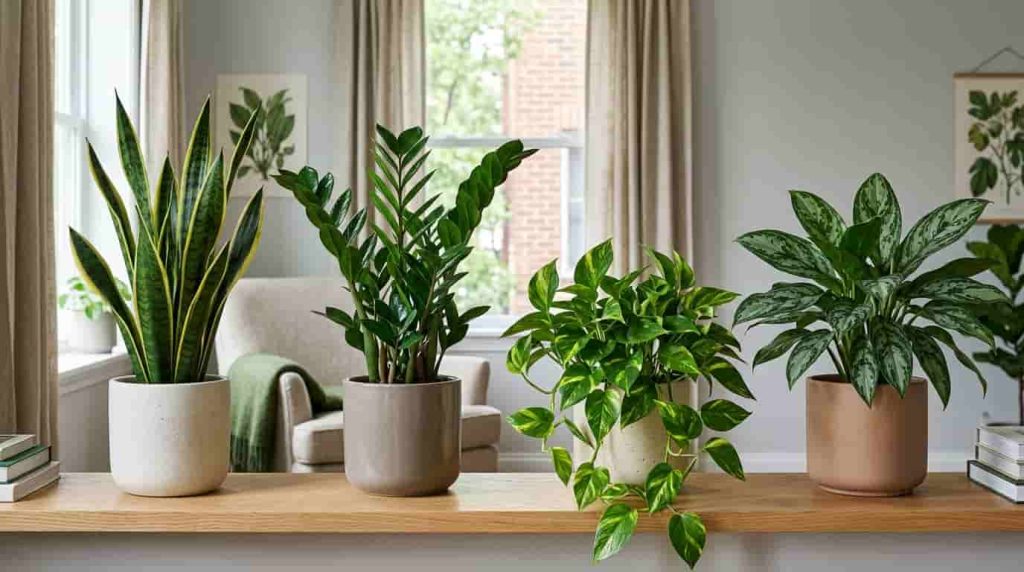
The right plant depends on more than appearance. Consider how much light your room receives, how much space you have, and how often you can care for it.
| Your Situation | Best Starting Choice | Why |
|---|---|---|
| Very busy schedule | ZZ plant | Stores water and tolerates drying |
| Narrow apartment corner | Snake plant | Upright growth saves space |
| Empty bookshelf | Pothos | Trailing stems use vertical space |
| Dim home office | ZZ plant or snake plant | Tolerates lower indirect light |
| Bathroom with daylight | Bird’s nest fern | Appreciates humidity |
| Pet-friendly home | Parlor palm or prayer plant | Generally considered non-toxic |
| Colorful foliage | Chinese evergreen | Patterned leaf options |
| Small desk | Suitable peperomia variety | Compact growth |
Remember that a plant described as low-light tolerant may still need more light than a dark hallway provides. If the location receives almost no daylight, select a suitable grow light rather than expecting the plant to survive on room lighting alone.
4. How to Care for Low Light Indoor Plants
Choosing a tolerant plant is only half the job. Good watering, drainage, and sensible placement are what help it remain healthy.
Step 1: Choose the brightest suitable location
Start by identifying where natural daylight enters your home.
North-facing windows in the Northern Hemisphere often provide less intense direct sunlight, while east-facing windows usually receive gentler morning sun. South- and west-facing windows may provide stronger sunlight, although buildings, trees, curtains, and the season can change the picture.
You don’t need to place every low-light plant beside the window. Instead, use the brightest location that matches the plant’s needs and observe how it responds.
Practical tip: If a plant gradually leans toward the window, rotate it a little every week or two.
Step 2: Water according to the soil, not the calendar
One of the biggest mistakes with low-light houseplants is watering too often.
Plants generally use water more slowly when light levels are lower. Cooler temperatures, smaller plants, larger pots, and dense soil can slow drying even further.
Use this simple method:
- Check the top 1–2 inches of soil with your finger for many foliage plants.
- For snake plants and ZZ plants, check deeper into the pot because they prefer more substantial drying.
- If the soil is still wet, wait and check again.
- When watering is needed, water thoroughly until excess drains from the bottom.
- Empty the saucer or decorative outer pot so the roots are not left sitting in water.
The exact interval varies. One plant might need water every week in summer, while another may go several weeks between waterings in a dim, cool room.
Don’t follow a fixed schedule blindly. Check the soil and the plant’s condition instead.
Step 3: Use pots with drainage holes
A decorative pot without drainage may look tidy, but it can trap excess water around the roots.
For most beginner-friendly foliage plants, choose a container with drainage holes and a potting mix suited to the plant’s moisture needs.
- For snake plants and ZZ plants, use a free-draining mix.
- For peace lilies and bird’s nest ferns, use a mix that retains some moisture without becoming saturated.
- For pothos and heartleaf philodendron, use a general houseplant mix with good drainage.
If you love a decorative cachepot without holes, keep the plant in a nursery pot inside it. Remove the inner pot for watering, allow it to drain, and then return it.
Step 4: Avoid over-fertilizing
Low-light plants often grow more slowly than plants receiving brighter indirect light. Applying large amounts of fertilizer will not compensate for insufficient light.
During active growth, use a balanced houseplant fertilizer according to the product label and the needs of your particular species. Reduce or pause feeding when growth slows, especially in winter.
Excess fertilizer can cause salt buildup, brown leaf tips, or root damage.
Step 5: Keep leaves clean
Dust can collect on broad leaves, making them look dull and reducing the amount of light that reaches the leaf surface.
Gently wipe smooth leaves with a soft, damp cloth. Support delicate foliage while cleaning, and avoid harsh household cleaners or leaf-shine products unless a plant-care specialist confirms they are appropriate.
For plants with delicate or fuzzy leaves, follow species-specific cleaning guidance rather than rubbing the foliage.
Step 6: Check for pests and early signs of stress
Inspect your plants regularly, particularly underneath the leaves and near the stems.
Watch for:
- Fine webbing or tiny moving specks that may indicate spider mites.
- Cottony white clusters that may indicate mealybugs.
- Sticky residue that can accompany some sap-feeding pests.
- Yellowing leaves, soft stems, or a persistent musty smell that may indicate root problems.
Isolate an affected plant when practical. Identify the pest before choosing a treatment, and follow the product label if you use an insecticidal soap or another treatment.
5. Can Indoor Plants Grow Without Sunlight?
No plant can grow indefinitely without a usable source of light. Plants need light for photosynthesis, the process that allows them to produce the sugars they use for growth.
However, plants do not always need direct sunlight. Many houseplants can use indirect natural light, and suitable artificial grow lights can provide the light energy they need indoors.
A dim bathroom or windowless office may look like the perfect place for greenery, but ordinary ceiling lights often do not provide enough suitable light for healthy long-term growth.
How to grow plants in a windowless room
If your room has no window or usable daylight:
- Choose a low-light-tolerant species such as a snake plant or ZZ plant.
- Install a grow light appropriate for foliage plants.
- Follow the manufacturer’s recommended distance and daily lighting duration.
- Use a timer to keep lighting consistent.
- Monitor the leaves and adjust the setup if the plant shows signs of stress.
Many foliage plants do well with a consistent daily light period, often around 10–12 hours under a suitable grow-light setup. The ideal duration depends on light intensity, distance, species, and the plant’s environment.
A regular LED bulb may work in some circumstances if its output and placement are suitable, but not every household bulb provides enough usable light. A purpose-designed grow light is often easier to evaluate.
Insider tip: If you want greenery in a windowless bathroom but don’t want to run a grow light, rotate a plant between the bathroom and a brighter room. Give each plant a suitable period in better light rather than leaving it permanently in darkness.
6. Common Mistakes to Avoid With Low Light Houseplants
Mistake 1: Assuming low light means no light
Low-light tolerance is not the same as the ability to live without light.
Better approach: Provide natural indirect light or an appropriate grow light.
Mistake 2: Overwatering because the plant looks unhappy
Yellow leaves do not automatically mean a plant needs more water. Yellowing can also result from soggy soil, root damage, insufficient light, pests, or normal aging.
Better approach: Check soil moisture, drainage, and roots before watering again.
Mistake 3: Buying a plant based only on its appearance
Some plants marketed as low-light plants actually perform best in medium or bright indirect light.
Better approach: Check the requirements for the exact species or cultivar, particularly if the leaves are highly variegated.
Mistake 4: Using a pot that’s too large
A very large pot can hold more wet soil than a small root system can use. That can make the mix dry slowly and increase the risk of root rot.
Better approach: Choose a container only modestly larger than the root ball and ensure it drains properly.
Mistake 5: Expecting fast growth in a dim room
Low light generally limits the energy available for new growth. A healthy plant in a dimmer location may produce fewer leaves or grow more slowly than the same plant in brighter conditions.
Better approach: Focus on healthy foliage and stable growth rather than speed.
Mistake 6: Ignoring pet safety
Popular houseplants such as pothos, philodendron, ZZ plants, snake plants, dracaenas, and peace lilies can be harmful if chewed or swallowed.
Better approach: Verify the plant’s botanical name and toxicity information before bringing it home. Select non-toxic alternatives when appropriate and contact a veterinarian or animal poison-control service if a pet ingests a potentially toxic plant.
7. Low Light Indoor Plants: A Simple Troubleshooting Guide
| Symptom | Possible Cause | What to Check |
|---|---|---|
| Yellow leaves | Overwatering, poor drainage, low light, or normal aging | Soil moisture, roots, and light exposure |
| Brown, crispy tips | Dry air, inconsistent watering, fertilizer buildup, or water quality | Humidity, watering, and recent feeding |
| Long, sparse stems | Insufficient light | Move toward brighter indirect light |
| No new growth | Low light, seasonal slowdown, or root issues | Light, temperature, and root health |
| Soft or mushy stems | Possible rot | Soil saturation and drainage |
| Pale or fading variegation | Insufficient light in some varieties | Species-specific light requirements |
| Tiny specks or webbing | Possible spider mites | Undersides of leaves and stem joints |
Don’t diagnose a problem from a single symptom. For example, yellow leaves combined with wet soil and a sour smell point toward a different problem than one old yellow leaf on an otherwise healthy plant.
8. Expert Tips for Growing More Greenery in a Small Apartment
You don’t need a large collection to make an apartment feel greener. A few well-chosen plants can add texture and soften a room without creating clutter.
Use vertical space
Trailing pothos and heartleaf philodendron can work well on shelves or in hanging planters. Upright snake plants and dracaenas can occupy narrow corners.
Make sure hanging planters are securely installed and cannot fall onto people or pets.
Group plants with similar needs
Keeping plants with similar watering and light requirements together makes care easier. For example, a group of drought-tolerant ZZ plants and snake plants may be simpler to maintain than a collection mixing those plants with moisture-loving ferns.
Grouping can also increase local humidity slightly, although it will not replace appropriate care for species that require consistently humid conditions.
Buy small plants when space is limited
A young plant may fit comfortably on a desk or shelf while it grows. Check its mature size before purchasing, particularly for larger palms and dracaenas.
Match the plant to your routine
If you travel often or tend to forget watering, prioritize drought-tolerant plants such as ZZ plants and snake plants.
If you enjoy checking your plants regularly and don’t mind paying attention to humidity and moisture, a prayer plant or bird’s nest fern may be more rewarding.
Keep a simple plant-care log
A small notebook or phone note can help you track:
- When you last watered.
- How long the soil took to dry.
- Whether the plant produced new growth.
- Changes in leaf color or texture.
- Any pest treatment or fertilizer application.
This is particularly helpful when seasonal daylight changes affect your indoor plants.
9. Where to Buy Low Light Indoor Plants in the USA
You can often find low-light-tolerant houseplants at local independent nurseries, garden centers, home improvement stores, and reputable online plant shops.
Before buying, inspect the foliage and soil.
Look for:
- Firm stems and leaves without widespread yellowing.
- No obvious webbing, sticky residue, or clusters of insects.
- Soil that is not persistently waterlogged.
- A clear botanical name on the label.
- Care information that matches your home’s lighting conditions.
If buying online, review the seller’s shipping practices, plant size, packaging, and replacement policy.
A plant labeled “low light” is not guaranteed to thrive in every dim room. Start with a species suited to your space, then adjust its placement as you observe its growth.
10. Frequently Asked Questions About Low Light Indoor Plants
1. What is the easiest indoor plant to grow in low light?
The ZZ plant and snake plant are two of the easiest choices for many beginners. Both tolerate lower indirect light and need relatively infrequent watering compared with many tropical foliage plants. They still need adequate light, proper drainage, and protection from overwatering.
2. Which indoor plants can survive in a room without windows?
No living houseplant can thrive indefinitely in complete darkness. Snake plants and ZZ plants tolerate lower light, but a windowless room generally needs an appropriate grow light to support long-term growth. Ordinary room lighting may not provide enough usable light.
3. What are the best low-light indoor plants for apartments with pets?
Parlor palms, prayer plants, spider plants, and bird’s nest ferns are generally considered non-toxic to cats and dogs. Always confirm the botanical identity before purchasing, because common names can refer to different species. Keep in mind that even non-toxic plants can cause stomach upset if an animal eats a large amount.
4. How often should you water low-light indoor plants?
There is no universal watering schedule. Check the soil before watering, because plants in dim rooms often use water more slowly. Snake plants and ZZ plants prefer substantial drying, while peace lilies and bird’s nest ferns generally need more consistent moisture. Always use an appropriate potting mix and a container with drainage.
Final Thoughts: Choose the Right Plant for Your Light
The best low light indoor plants are the ones that suit your space, routine, and expectations. A snake plant or ZZ plant is a sensible starting point if you want minimal maintenance. Pothos and heartleaf philodendron work well when you want trailing greenery, while Chinese evergreens and parlor palms offer a different look.
Start with one or two plants, observe how quickly their soil dries, and pay attention to new growth. If a plant struggles in a dark corner, try moving it closer to a window or adding a suitable grow light.
You don’t need a sunroom or a large backyard to enjoy indoor gardening. With the right plant and a little attention, even a compact apartment can become a greener, more inviting place to live.
Ready to grow your indoor garden? Choose a plant from this list, check your available light, and give it a spot where it has a realistic chance to thrive.
4 thoughts on “15 Best Low Light Indoor Plants for Apartments”