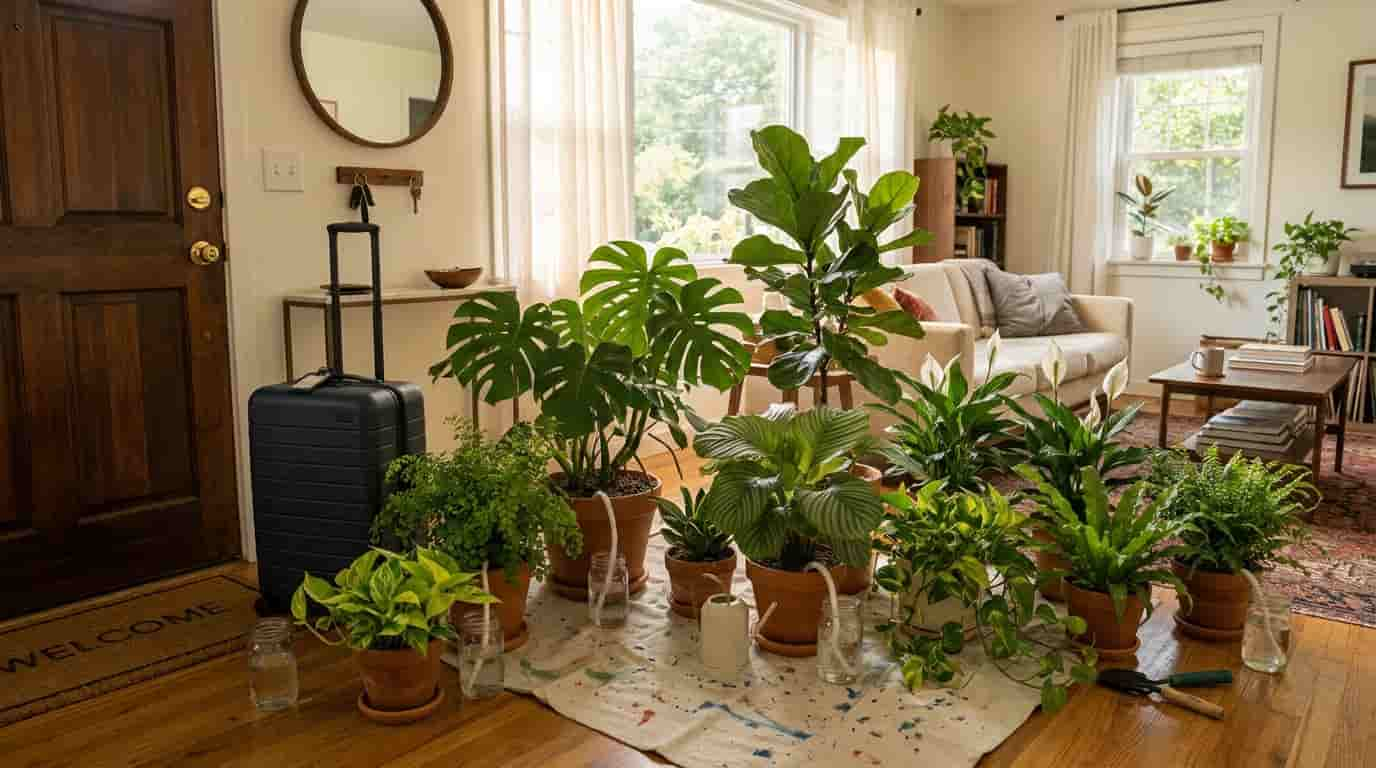
Mastering indoor plant care while on vacation for 2 weeks used to terrify me, especially after coming home in 2022 to a crispy, brown fiddle leaf fig and a flattened calathea. Leaving your houseplants unattended for fourteen days feels like a high-stakes gamble with your wallet and your heart, doesn’t it?
-
Pull plants back from sunny windows: Reducing light intensity by 50 percent drops photosynthesis and cuts water consumption in half.
-
Use capillary wick systems for thirsty tropicals: A simple cotton rope bridging a water jar to your potting mix delivers steady moisture for up to 16 days.
-
Create humidity microclimates: Grouping pots together in a dry bathtub over wet pebble trays slows down leaf transpiration dramatically.
-
Never fertilize before leaving: Feeding pushes tender new growth that demands extra water and attracts sap-sucking pests while your home sits empty.
The 14-Day Reality Check: Why Most Vacation Setups Fail
Seven days? Easy. You drench the soil, walk out the door, and everything looks fine when you get back.
Fourteen days is a completely different beast. Around day ten, standard potting soil crosses the permanent wilting point for most tropical foliage, causing root hairs to die back before the leaves even show a dramatic droop (Source: [Insert Link to University of Georgia Cooperative Extension Study on Soil Moisture Thresholds]).
I learned this the hard way. When you panic-water right before locking the front door, leaving your pots sitting in deep saucers of stagnant water, you aren’t buying time. You’re inviting root rot.
Honestly, successful indoor plant care while on vacation for 2 weeks isn’t about drowning your collection on departure morning. It’s about putting your plants into temporary slow-motion. You want to slow down their metabolism so they barely sip water while you’re out sipping margaritas on a beach somewhere.
Step-by-Step Setup for Indoor Plant Care While on Vacation for 2 Weeks
Look, you cannot throw this together twenty minutes before your Uber arrives for the airport. A solid setup for indoor plant care while on vacation for 2 weeks starts three days before you pack your bags.
Why three days? Because if you set up a DIY watering wick or an upside-down wine bottle spike and the physics go sideways, it will dump an entire gallon of water onto your hardwood floors in four hours flat. Test your gear early.
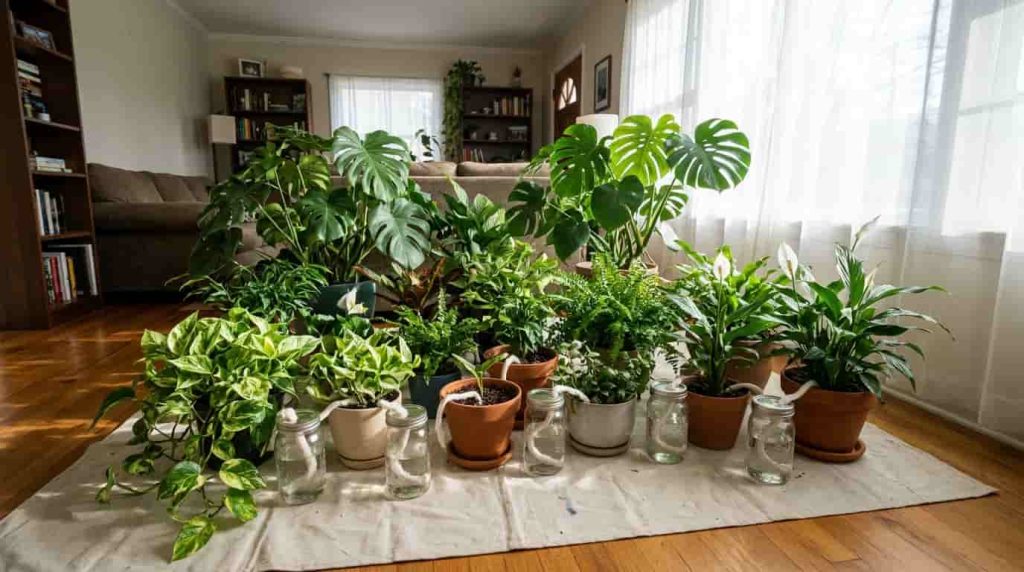
Start by gathering every plant from scattered shelves and bedrooms into two or three central hubs. (And believe me, my dining room looked like a chaotic botanical warehouse the last time we went to Montana, with forty-two pots crammed onto a plastic drop cloth.) Grouping them serves two purposes: it makes setting up shared water reservoirs effortless, and it builds a shared humidity bubble.
Next, grab a clean pair of micro-tip snips. Cut off every yellowing leaf, spent flower bloom, and damaged stem. Flowers and dying foliage are total moisture vampires—they transpire water like crazy while offering zero energy back to the plant.
Pre-Trip Soil Mix Amendments and Pot Adjustments
Let’s talk dirt. If your plants are sitting in pure peat moss that has turned hydrophobic over the last year, water is going to run straight down the sides of the plastic nursery pot and out the bottom without soaking the root ball.
Two weeks before a big trip is the absolute worst time for a full, aggressive repotting session—root shock plus unsupervised neglect equals a dead plant. Not good. However, top-dressing and soil conditioning are fair game.
Here is how I prep my soil mixes before a two-week absence:
-
Deep Bottom-Watering Soak: Twenty-four hours before leaving, set your pots in a sink or storage tote filled with three inches of lukewarm water for 45 minutes. This forces capillary action to saturate every dry pocket inside the root ball.
-
Worm Castings and Coco Coir Top-Dress: Scrape off the top half-inch of crusty old soil and replace it with damp coco coir mixed with a handful of worm castings. Coco coir holds up to eight times its weight in water without suffocating roots.
-
Sphagnum Moss Mulch Layer: Soak long-fiber sphagnum moss in water, squeeze it out lightly, and pack a one-inch blanket over the exposed soil of your thirstiest plants. This simple barrier cuts surface evaporation by nearly 70 percent.
-
The Terracotta Cachepot Trick: Unglazed terracotta breathes, which is great in winter, but terrible when you leave for fourteen days. Slip your terracotta pots directly inside slightly larger plastic or glazed ceramic pots to stop moisture from wicking out through the clay walls.
Never—and I mean never—toss fertilizer into your pre-vacation watering can. Fertilizer salts lower the osmotic potential of the water in the soil, making it harder for roots to drink as the pot dries out. Plus, you don’t want your monstera pushing out a massive, delicate new leaf when nobody is home to keep the humidity up.
Strategic Lighting and Temperature Control While Away
Light drives photosynthesis. Photosynthesis drives transpiration. Think about it.
If a plant sits in a blazing south-facing window for fourteen days, its stomata (the tiny pores on the undersides of leaves) stay wide open, pumping moisture into the room to keep the leaves cool. Pull that exact same plant six feet back into the middle of the room, and its water demand plummets.
You aren’t starving them of light long enough to cause irreversible stretching or etiolation. Two weeks in medium or low-medium ambient light acts like a cloud cover in the rainforest. The plants simply pause active growth and coast.
What about grow lights? If your collection lives in a windowless basement or dark corner, put your LED grow lights on a smart plug or mechanical timer, and cut the photoperiod down to just 6 or 7 hours a day. Dim the intensity to 40 percent if your fixture allows it.
Then there is your thermostat. Most folks crank the air conditioning up to 82°F in the summer or drop the heat down to 55°F in the winter to save on utility bills while traveling.
Don’t go to extremes. Keep your house between 65°F and 74°F while you’re gone. Hot, stagnant air bakes soil dry in five days, while freezing drafts near windows will turn tropical foliage black before your first week is up (Source: [Insert Link to USDA Agricultural Research Service Report on Indoor Microclimates and Transpiration]).
Also, check where your HVAC vents point. A ceiling vent blowing bone-dry air directly onto your plant huddle will shred a Boston fern in seventy-two hours. Close the louvers in your plant room or tape a cardboard deflector over the register.
DIY Watering Routines That Actually Last 14 Days
If you want your indoor plant care while on vacation for 2 weeks to succeed without hiring a pricey house sitter, you need a reliable physical delivery method for moisture. You have four solid options here, and they are not created equal.
Let’s compare the most popular two-week watering setups so you can match the right rig to the right pot size:
-
Cotton Rope Capillary Wicking: Best for small-to-medium pots (4 to 8 inches); holds steady moisture for 10 to 16 days; costs less than $5 for a roll of unbleached cotton macramé cord; zero risk of flooding if the water jar sits lower than the top rim of the plant pot.
-
Terracotta Watering Spikes (Olla Style): Best for medium-to-large floor plants (8 to 14 inches); lasts 10 to 14 days when paired with a 1-liter wine bottle; costs around $15 for a four-pack; moderate risk of emptying too fast if the soil is super loose and chunky.
-
The Clear Plastic Bag Greenhouse: Best for humidity-obsessed drama queens like calatheas, nerve plants, and Rex begonias; lasts a full 14 to 21 days with zero added water; costs pennies using clear dry-cleaning bags; risk of fungal leaf spot if the plastic touches wet leaves directly.
-
Bathtub Capillary Matting: Best for massive collections of 20+ small pots; lasts 12 to 14 days; costs about $20 for a thick felt horticultural mat; requires pots with flat bottoms and flush drainage holes to make direct contact with the wet felt.
How to Build the Foolproof Cotton Wick System
This is my go-to method for indoor plant care while on vacation for 2 weeks, and it hasn’t failed me yet. Do not use synthetic nylon rope or kitchen twine made of polyester. Synthetic fibers repel water. You need 100% natural, unbleached braided cotton rope, about a quarter-inch thick.
Cut a piece of rope two feet long and soak it in a bowl of water until it sinks. If you skip soaking the rope first, the dry cotton won’t start pulling water out of the jar.
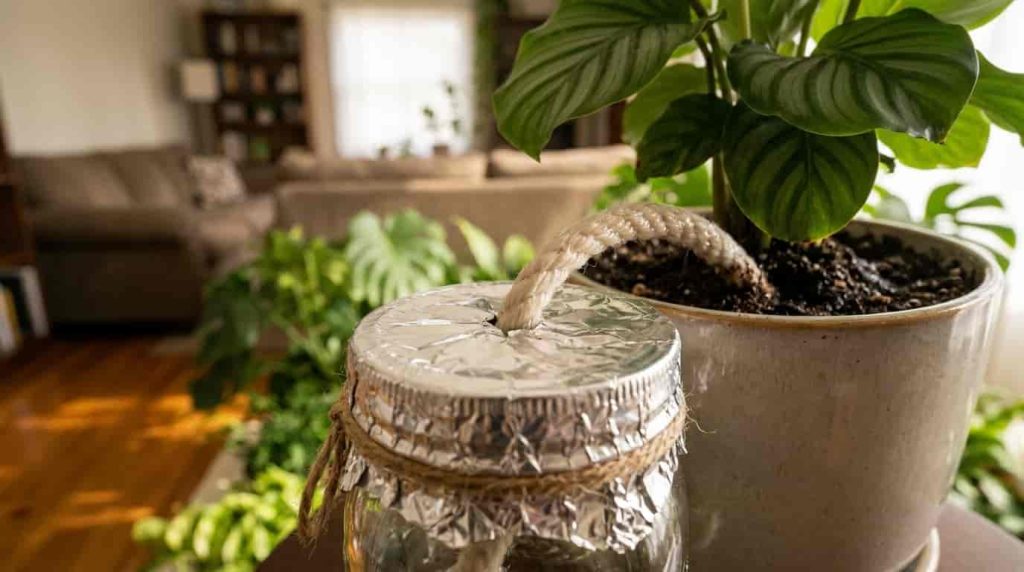
Use a chopstick or knitting needle to poke one end of the wet rope three inches deep into the soil, right near the center of the root ball—being careful not to rip through thick main roots. Drop the other end to the bottom of a wide-mouth quart mason jar filled with water, and cover the top of the jar with aluminum foil (poking the rope through a small hole) so the water doesn’t evaporate into the room air.
One critical rule: keep the water level in the jar lower than the top of your plant’s soil line. If you put a giant gallon jug up on a stack of books above the pot, gravity turns your capillary wick into a continuous siphon. It won’t stop when the soil is damp; it will pump the entire gallon through the pot and onto your carpet. Keep the reservoir level or slightly below the pot so the soil only pulls water as it dries out.
Setting Up the Clear Bag Humidity Tent
Got a maidenhair fern or a sensitive peace lily that wilts if you look at it funny? Use the greenhouse bag trick.
Water the plant thoroughly the day before you leave and let it drain in the sink for two hours so the saucer is completely dry. Stick four bamboo skewers around the inner perimeter of the pot, making sure the tips stand three inches taller than the highest leaf.
Drape a crystal-clear dry-cleaning bag or large clear trash bag over the entire plant and pot, resting the plastic on the bamboo stakes so it doesn’t cling to the foliage. Gather the bottom of the bag underneath the pot and seal it loosely, leaving just a tiny half-inch gap for fresh gas exchange. The water evaporates from the soil, condenses on the bag, and rains right back down onto the roots. Magic.
Pre-Vacation Pest Control and Quarantine Protocols
Here is the thing nobody warns you about until it happens to you: spider mites and thrips love when you go on vacation. Why? Because there is no human misting the leaves, washing foliage in the shower, or opening doors to circulate air.
Warm, still indoor air is a breeding ground for pests. Under optimal dry indoor conditions, a two-spotted spider mite population can go from egg to reproducing adult in less than seven days, meaning a tiny, unnoticeable cluster of five mites can explode into a web-covered nightmare of thousands by day fourteen (Source: [Insert Link to University of California IPM Pest Notes on Spider Mites]).
Three days before your trip, put on a headlamp—yes, a camping headlamp, it reveals tiny webbing you’ll never see under normal lamps—and inspect the undersides of every single leaf.
If you spot even a hint of stippling, sticky honeydew, or black thrips poop, isolate that plant in a completely separate room immediately. Do not put a suspect plant into your central vacation huddle, or your entire collection will be infested by the time you get back.
For clean plants, give them a preventative shower in lukewarm water to wash away dust and stray mite eggs. Once the leaves dry, spray the foliage down with a diluted pure cold-pressed neem oil solution or insecticidal soap. If you grow exclusively indoors and don’t have pets that chew on leaves, applying systemic granules to the topsoil a week before departure provides a solid safety net against fungus gnats and mealybugs.
Crop Choices and Species-Specific Survival Rates
Not every houseplant needs a complicated IV drip while you’re gone. Treating a snake plant the same way you treat a Persian shield will kill one of them. Guaranteed.
You have to divide your indoor jungle into distinct moisture tiers before setting up your room.
Tier 1: The Desert Survivors (Zero Setup Needed)
If you grow ZZ plants, snake plants (Sansevieria), cast iron plants, jade plants, ponytail palms, or desert cacti, step away from the watering wicks. Seriously. Leave them alone.
For these drought-tolerant champs, indoor plant care while on vacation for 2 weeks consists of giving them a normal drink the day before you leave, dumping out the drip tray, and walking away. If it is the middle of winter (November through February), don’t even water them before leaving if the soil still feels cool at the bottom of the pot. They store weeks of water in their rhizomes, stems, and thick leaves.
Tier 2: The Steady Aroids and Vines (Medium Care)
This group includes golden pothos, heartleaf philodendrons, Monstera deliciosa, rubber trees (Ficus elastica), spider plants, and hoyas. They have thick or waxy leaves and fleshy roots that handle a two-week stretch pretty gracefully if you prep them right.
Give these guys a deep bottom-watering soak, pull them five feet back from bright windows, and top-dress their soil with damp sphagnum moss. For smaller 4-inch pots of pothos that dry out quickly, add a single cotton wick into a small cup of water just to keep the lower roots happy.
Tier 3: The Thirsty Drama Queens (High Intervention Required)
We are talking about calatheas, marantas, ferns, peace lilies, alocasias, nerve plants (Fittonia), crotons, and indoor culinary herbs like basil or mint. These thin-leaved plants have high transpiration rates and almost zero internal water storage.
Every single plant in Tier 3 needs either a tested cotton wick system, a terracotta spike, or a clear plastic humidity tent. Put them in your bathroom if it has a window, or cluster them tightly together on a waterproof tray filled with wet leca balls or gravel (making sure the bottoms of the pots sit above the waterline on top of the pebbles, never soaking in the water itself).
Post-Vacation Recovery: What to Do the Minute You Walk In
You drop your suitcases in the hallway, kick off your shoes, and walk into the living room. What now?
First, take your plants out of the dark huddle and put them back in their normal spots—with one huge caveat. If you closed all your blinds and kept a plant in dim light for two weeks, do not shove it straight back against a blazing south-facing window at noon. The leaves have adjusted to low light and can actually sunburn if blasted with direct rays immediately. Move them back over two days.
What if you find a plant completely wilted, crispy on the edges, and bone dry because a wick got pulled out of the jar? Do not panic, and do not dump a gallon of cold tap water combined with liquid fertilizer over its head.
When roots dry out severely, the fine root hairs shrivel up. Flooding a desiccated pot with heavy water and fertilizer salts will rot those damaged roots overnight. Instead, place the bone-dry pot in a shallow dish with just one inch of lukewarm water. Let it drink slowly for twenty minutes, wait two hours for the plant cells to regain turgor pressure, and then lightly water from the top until the soil is evenly moist.
Wait a full week until the plant looks perky and resumes normal leaf posture before trimming away crispy brown edges or adding any plant food. Handling indoor plant care while on vacation for 2 weeks ends with a gentle transition back to normal life, not a stressful overcorrection.
Frequently Asked Questions
How do I handle indoor plant care while on vacation for 2 weeks without buying automatic gadgets?
The most reliable zero-cost method for indoor plant care while on vacation for 2 weeks is combining light reduction with a homemade cotton rope wick. Move your plants several feet away from sunny windows to cut their water use in half, give them a deep soak in the sink before leaving, and run a piece of pre-soaked 100% cotton cord from the bottom of a water-filled mason jar three inches deep into each plant’s soil.
Can I leave my houseplants in a dark room for 2 weeks while I travel?
No, you should never leave plants in total darkness for two weeks, as they still require light to maintain basic cellular respiration and prevent leaf drop. Instead of closing pitch-black blackout curtains, draw sheer curtains or place your plants 5 to 8 feet back from an uncovered window where they can receive gentle, indirect ambient light.
Will putting ice cubes on potting soil keep plants watered for 14 days?
No, ice cubes are ineffective for a two-week trip because they melt within a couple of hours and only release a few tablespoons of water. Worse yet, freezing water shocks tropical root systems and causes cellular damage on contact with stems and surface roots.
Should I leave my ceiling fan running for my plants while on vacation?
Leaving a ceiling fan on its lowest setting helps prevent fungal diseases and mold ONLY if your home stays very humid (above 60% relative humidity). In an average air-conditioned or heated home, a running fan speeds up soil evaporation and leaf transpiration, drying your pots out days faster than normal.
Wrapping Up Your Two-Week Plant Prep
Pulling off flawless indoor plant care while on vacation for 2 weeks doesn’t require an engineering degree or an expensive drip irrigation rig that might flood your downstairs neighbor’s ceiling. It just takes a little respect for plant biology and three days of early prep work.
Pull your greenery back from the bright glass, trim the dead weight, soak the root balls deeply, and rig up simple cotton wicks for your thirsty tropicals. Your plants will barely notice you left—and you’ll actually get to enjoy your trip without worrying about coming home to a botanical graveyard.