Using rubbing alcohol on succulents for mealybugs is the fastest way to melt those disgusting white cottony pests on contact, provided you don’t accidentally fry your plant’s leaves with the wrong bottle from your medicine cabinet. One careless squirt of 91% alcohol under a bright grow light will turn a prized Echeveria into a crispy, scarred mess overnight.
-
Use 70% Isopropyl Alcohol Only: Never spray 91% or 99% straight out of the bottle; 70% rubbing alcohol dissolves the mealybug’s waxy armor while evaporating slowly enough to penetrate hidden egg sacs.
-
Dilute for Full-Plant Sprays: While undiluted 70% alcohol works great on a cotton swab for spot-treating tough stems, diluting it 1:1 or 1:3 with distilled water protects delicate foliage and powdery farina coatings during full-rosette misting.
-
Block Direct Light Immediately: Keep treated succulents in bright shade and switch off overhead LED grow lights for 24 to 48 hours so wet leaves never suffer phototoxic sunburn.
-
Repeat Every 5 to 7 Days: Alcohol only kills on contact, meaning you must repeat treatments for 3 to 4 weeks to catch newly hatched crawlers emerging from tight leaf joints or contaminated soil.
Can I Spray 70 Isopropyl Alcohol Directly on Succulents?
Yes, you can. Mostly.
Look, if you ask ten succulent collectors whether they spray 70% isopropyl alcohol straight from the drugstore bottle onto their plants, eight of them will tell you they do it every week without blinking. And on a thick, glossy Jade plant (Crassula ovata) or a rugged Haworthia, straight 70% alcohol flashes off the leaf surface in seconds without leaving a mark.
I used to blast every single pot in my collection with straight 70% alcohol too. Then I did it to a rare Graptopetalum amethystinum (Lavender Pebbles) and a trailing Senecio rowleyanus (String of Pearls) on a warm Tuesday afternoon.
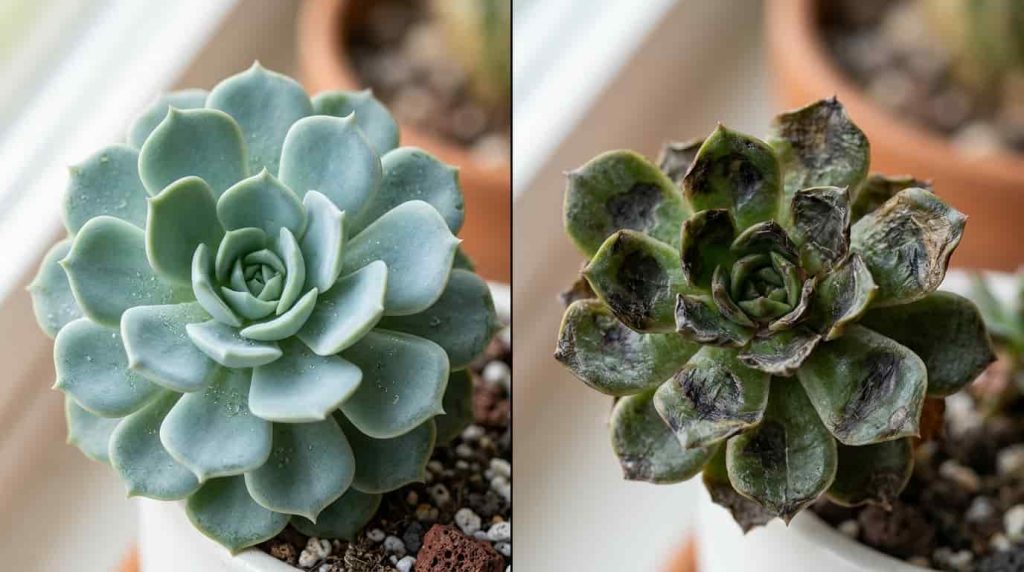
Big mistake. Within thirty-six hours, the plump pearls shriveled into sunken brown raisins, and the chalky pink wax on my Lavender Pebbles looked like someone had dripped battery acid across the rosette.
Here is the thing: whether you should spray undiluted 70% alcohol or dilute it comes down to cuticle thickness, epicuticular wax (farina), and air circulation. University extension researchers note that while 70% isopropyl alcohol is safe for targeted cotton-swab dabbing, reducing the spray concentration to a 10% to 50% alcohol-to-water ratio drastically lowers the risk of epidermal cell rupture on sensitive plants (Source: [USDA/University Study]).
Why Rubbing Alcohol on Succulents for Mealybugs Works (And Why 91% Fails)
Mealybugs (Pseudococcidae) are soft-bodied scale insects wrapped in a hydrophobic, cotton-like wax coat. If you spray plain water or a weak organic mist at them, the droplets just bead up and roll right off their backs.
When you apply rubbing alcohol on succulents for mealybugs, the isopropyl alcohol acts as an immediate lipid solvent. It strips that white waxy armor in less than two seconds, penetrates the insect’s spiracles (breathing tubes), and dehydrates the soft orange-brown body underneath.
Dead on contact. No nerve toxins required.
So why not grab the 91% or 99% bottle under your bathroom sink to kill them even faster? Because stronger is actually worse.
-
91% to 99% Isopropyl Alcohol: Evaporates way too fast to soak through dense cottony egg sacs (ovisacs), while drawing moisture out of the succulent’s own epidermal cells so aggressively that it causes instant chemical scorching.
-
70% Isopropyl Alcohol: Contains 30% purified water, which slows evaporation just enough for the alcohol to wick deep into the fuzzy egg mass and melt the outer shell before flashing off the leaf.
-
Rubbing Alcohol with Wintergreen or Aloe Additives: Never touch these. Scented rubbing alcohols, menthol rubs, or bottles labeled with moisturizing glycerin leave a sticky film that clogs succulent stomata (breathing pores) and suffocates the plant.
Quarantine & Inspection Setup: Building Your Eradication Station
Before you uncork a single bottle, move the infested pot at least ten feet away from your main plant shelf. Adult female mealybugs look sluggish, sure, but newly hatched nymphs—called crawlers—are tiny yellow specks that hitchhike across touching leaves, pot rims, and even air currents from oscillating room fans.
Honestly, my dining table turned into an emergency plant triage ward the first winter I brought home an infested nursery Echeveria (and believe me, my living room looked like a jungle with quarantine trays stacked on every bookshelf). You need a clean, well-lit workspace away from direct sunbeams before you start treatment.
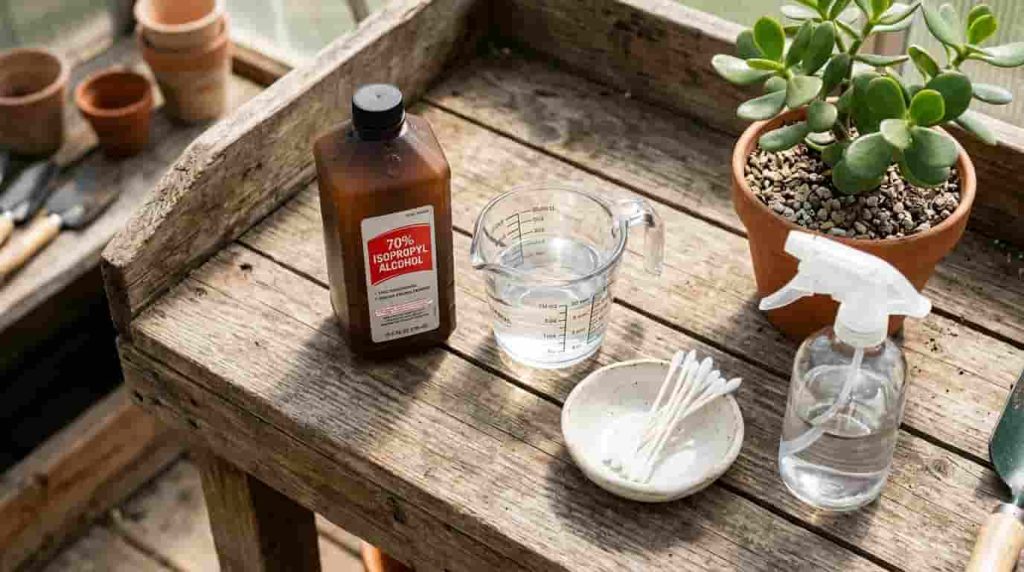
Gather these exact supplies for your setup:
-
One bottle of pure 70% Isopropyl Alcohol: Check the active ingredients label to confirm it lists only isopropyl alcohol and water.
-
Distilled or filtered water: Hard tap water mixed with alcohol leaves ugly white calcium rings on dark green leaves.
-
A continuous fine-mist atomizer bottle: Cheap trigger sprayers shoot heavy streams that pool in the crown and rot the meristem; a 300ml continuous mister creates a fog that reaches tight crevices without drenching the soil.
-
Pointed precision cotton swabs and wooden toothpicks: Standard round Q-tips are too fat to fit between stacked Crassula or Sedum leaves.
-
A 10x jeweler’s loupe or magnifying glass: Essential for spotting pinhead-sized amber crawlers hiding along the stem collar.
-
A small clip-on desk fan: Moving air evaporates leftover moisture trapped deep inside rosette centers within twenty minutes.
Exact Dilution Recipes: Swabbing vs. Spraying
Not every succulent reacts the same way to alcohol. And not every infestation needs the same strength.
If you only see three or four white fuzzballs wedged near a stem node, you don’t need to douse the whole plant. If you pull back the bottom leaves of a Sempervivum (Hens and Chicks) and find fifty cottony clusters packed like snowdrifts, a cotton swab won’t cut it.
Use these tested dilution formulas based on your bottle strength and application method:
-
The Undiluted 70% Spot-Swab Formula: Pour 2 tablespoons of 70% isopropyl alcohol into a shot glass. Dip the tip of a pointed cotton swab in, tap off the excess drip on the rim, and touch it straight onto visible bugs.
-
The 50/50 Hardy Succulent Spray (35% Final Concentration): Mix 1/2 cup (120 ml) of 70% isopropyl alcohol with 1/2 cup (120 ml) of distilled water. Ideal for spraying smooth-leaved succulents like Jade plants, Aloe vera, Haworthia, and Gasteria.
-
The Gentle 1:3 Farina & Delicate Succulent Spray (17.5% Final Concentration): Mix 1/4 cup (60 ml) of 70% isopropyl alcohol with 3/4 cup (180 ml) of distilled water. This matches the University of California Integrated Pest Management (UC IPM) 10% to 25% spray ceiling, killing exposed nymphs while preserving sensitive leaves (Source: [Insert Link to USDA/University Study]).
-
Emergency 91% Bottle Conversion: If you only own 91% alcohol at home, mix 3 parts of 91% alcohol with 1 part distilled water just to bring it down to ~68% for swabbing, or mix 1 part 91% alcohol with 4 parts distilled water (about 18% strength) for misting.
Skip the dish soap. Seriously.
Dozens of generic gardening blogs tell you to squirt a teaspoon of Dawn dish soap into your rubbing alcohol spray. Most liquid dish soaps are synthetic detergents packed with degreasers that strip the natural epicuticular wax right off succulent leaves, leaving them permanently dull and prone to sunburn.
Step-by-Step: How to Treat Mealybugs on Succulents Without Leaf Burn
Knowing how to treat mealybugs on succulents comes down to mechanical removal first and chemical contact second. Follow this exact five-step sequence so you don’t miss a single egg sac.
Step 1: Run the 24-Hour Lower-Leaf Patch Test
Never spray an entire plant blindly. Mist or dab your chosen alcohol dilution onto one single bottom leaf at the back of the succulent, then wait a full 24 hours.
Check that test leaf the next day. If it looks firm and normal, you’re cleared for full treatment; if it turns translucent, mushy, or sunken brown, cut your alcohol mixture with another 50% distilled water before touching the rest of the plant.
Step 2: Swab and Scrape Visible Adults First
Dip your pointed cotton swab into 70% alcohol and press it directly onto each white cottony mass. Watch the white fluff dissolve immediately as the bug underneath turns rusty orange-brown.
Twist the swab gently to lift the dead insect and its sticky honeydew off the plant tissue. Don’t leave dead carcasses sitting in the leaf axils—they hold hidden eggs underneath and invite black sooty mold.
Step 3: Mist the Crevices and Stem Collar
Take your fine-mist spray bottle filled with your 50/50 or 1:3 diluted solution and mist the stem joints, leaf undersides, and the tight V-shaped crevices where leaves meet the main stalk. Hold the nozzle about six inches away so the mist coats the crevices without blasting the soil.
Flip the pot at a 45-degree angle while spraying. Remember to wipe down the underside of the plastic or terracotta pot rim with an alcohol pad too, because pregnant female mealybugs love laying egg sacs right under the lip of the container.
Step 4: Blow Out Standing Crown Water
This is the step almost every blogger forgets. When diluted alcohol pools inside the tight central rosette of an Echeveria or Graptoveria, the alcohol evaporates first and leaves behind a puddle of water trapped in the growth tip.
Use a manual air puffer (the little rubber bulb blower from a succulent tool kit) or set your clip-on fan two feet away on low speed for 30 minutes. Every drop of moisture must evaporate from the center crown before nightfall so stem rot never starts.
Step 5: Execute the 7-Day Repeat Cycle
One round will not cure an infestation. Mealybug eggs tucked deep inside waxy ovisacs or beneath the top layer of pumice take 5 to 10 days to hatch indoors.
Mark your calendar and repeat this exact inspection and treatment every 6 to 7 days for four full weeks. Even when the plant looks 100% clean on week two, keep checking at week three and week four.
Succulent Crop Choices & Variety Sensitivity (Farina vs. Smooth Leaves)
When using rubbing alcohol on succulents for mealybugs, your plant’s surface anatomy dictates your strategy. Treating all indoor succulents identically is why so many beginners end up with scarred collections.
Let’s break down how different succulent groups handle isopropyl alcohol:
-
Heavy Farina Rosettes (Echeveria laui, Pachyphytum oviferum, Graptopetalum, Dudleya): These beauties produce a thick, chalky white or blue epicuticular wax that acts as natural sunscreen. Spraying alcohol dissolves farina instantly, leaving permanent shiny blotches; stick strictly to precision cotton-swab dabbing on the bugs themselves and never rub the leaf blade.
-
Fuzzy & Hairy Succulents (Kalanchoe tomentosa Panda Plant, Echeveria pulvinata, Crassula mesembryanthemoides): Fine leaf hairs trap liquid alcohol against the plant skin and slow evaporation, which causes rapid tissue burn. Use a 1:3 diluted mist very lightly and turn a fan on immediately afterward.
-
Delicate Trailing Varieties (Senecio rowleyanus String of Pearls, Ceropegia woodii String of Hearts, Sedum morganianum Burro’s Tail): Thin epidermal walls and tiny leaf attachments make these super sensitive to dehydration. Use the 1:3 dilution (1 part 70% alcohol to 3 parts water), mist in the evening, and rinse gently with plain distilled water 15 minutes after spraying.
-
Smooth, Tough-Skinned Succulents (Crassula ovata Jade, Haworthia fasciata, Aloe, Gasteria, Sansevieria): Built like tanks. They tolerate 70% alcohol swabs and 50/50 sprays without flinching, making them the easiest indoor crops to rehab after an outbreak.
Read: Castile Soap Recipe for Spider Mites on Plants: The Tested 14-Day Eradication Protocol
Root Mealybugs on Succulents Treatment & Gritty Soil Mix Rehab
What if you swab every week for a month, yet new mealybugs keep marching up the stem like zombies?
Look down. You probably have root mealybugs (Rhizoecus falcifer).
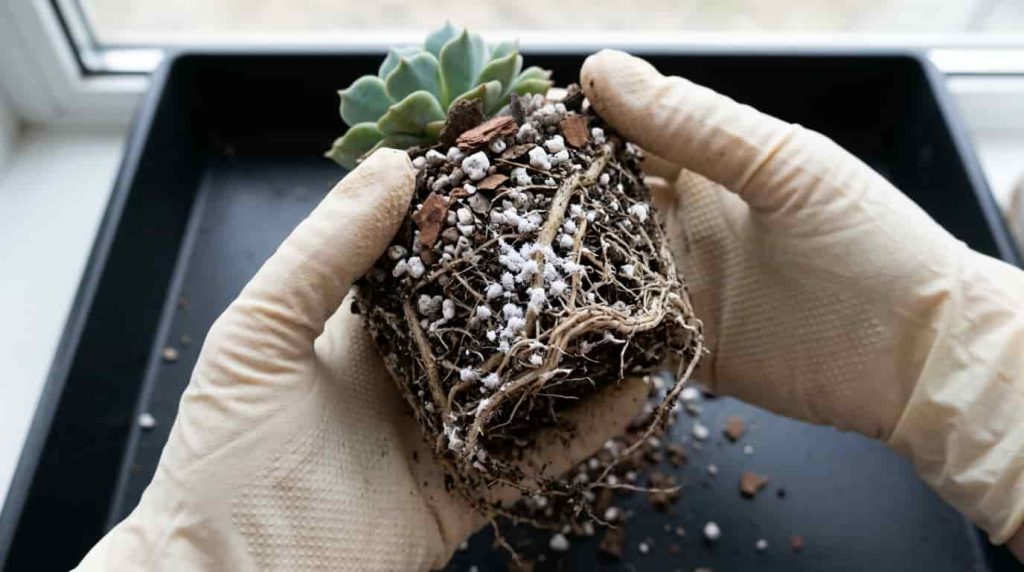
Root mealybugs live entirely underground, sucking sap from your succulent’s fibrous root system and leaving behind white, chalky deposits that look remarkably like perlite dust or harmless pot mold. If your succulent looks wrinkled and thirsty even after watering, pull it out of the pot right now.
Here is how to clean succulent roots after mealybugs and reset your soil mix:
-
Dump the Old Soil Completely: Do not try to save contaminated potting mix. Seal the infested soil in a plastic trash bag and throw it in an outdoor bin, because root mealybug eggs survive for months in dry peat moss.
-
Sterilize the Pot: Wash your terracotta or plastic pot in hot soapy water, then wipe the inside walls and drainage holes thoroughly with straight 70% isopropyl alcohol.
-
Blast the Root Ball Clean: Hold the succulent roots under lukewarm running tap water to wash away every crumb of old peat and perlite.
-
Perform a Diluted Alcohol or Warm Water Root Treatment: Submerge or spray the bare roots thoroughly with a 1:3 solution of 70% isopropyl alcohol and water (or soak the root ball in 115°F / 46°C warm water for 10 minutes), let sit for 5 minutes, and rinse clean with lukewarm water.
-
Dry Bare-Root for 48 Hours: Lay the clean, bare-root succulent on dry paper towels over a shaded wire rack for two full days so microscopic root tears callous over before touching fresh soil.
-
Repot into Fast-Draining Gritty Mix: Root mealybugs thrive in compacted, peat-heavy nursery soil that stays damp at the bottom while pulling away from the pot edges. Repot your clean succulent into an inorganic gritty mix made of 40% pumice or perlite, 40% calcined clay (Turface) or crushed granite, and 20% screened pine bark fines.
University entomologists confirm that switching from heavy peat moss to porous inorganic grit drastically reduces root mealybug survival and makes future root inspections effortless (Source: [USDA/University Study]).
Lighting & Watering Routines During Recovery
Will rubbing alcohol burn succulent leaves even when diluted properly? Yes, if you stick a wet plant straight back under high-output LED grow lights or onto a south-facing windowsill.
Succulents use Crassulacean Acid Metabolism (CAM photosynthesis), meaning they keep their stomata closed during hot daylight hours to conserve water and open them at night when temperatures drop. However, alcohol strips surface oils and temporarily compromises the leaf’s UV reflectivity, creating severe phototoxicity if intense photons hit the wet tissue.
Follow this exact lighting and watering recovery schedule:
-
Spray in the Early Evening: Always apply rubbing alcohol on succulents for mealybugs right as the sun sets or 30 minutes before your indoor grow light timers click off for the night.
-
Enforce a 24-Hour Grow Light Blackout: Leave treated plants in indirect ambient room light (at least 4 feet away from windows or LED bars) for 24 hours after spraying. Once the foliage is bone-dry and a full day has passed, move them back under your lights.
-
Hold Off on Watering for 5 to 7 Days after Root Work: Never water a succulent immediately after unpotting or spraying its root collar. Damaged roots cannot absorb water; wet soil around bruised roots invites Fusarium and Pythium rot within 72 hours.
-
Cut Out High-Nitrogen Fertilizers: Stop feeding infested or recovering succulents. Excess nitrogen pushes out weak, watery, sugar-rich new growth that acts like an all-you-can-eat buffet for sap-sucking mealybugs.
Read: Overwatered vs Underwatered Plant: The Ultimate Rescue Guide
Frequently Asked Questions (FAQs)
Does rubbing alcohol kill mealybug eggs on succulents?
Yes, applying rubbing alcohol on succulents for mealybugs kills eggs if the alcohol physically soaks through the protective white cottony egg sac. Because hidden egg clusters inside tight leaf crevices or beneath the soil rim are easy to miss, you must repeat treatments every 7 days for a month.
Do you rinse rubbing alcohol off succulents after spraying?
For hardy succulents like Jade plants, Aloe, and Haworthia, you do not need to rinse 70% isopropyl alcohol off because it evaporates quickly without residue. For thin-leaved or trailing succulents like String of Pearls, rinsing lightly with distilled water 10 to 15 minutes after spraying prevents dehydration.
Will rubbing alcohol ruin the white powder (farina) on my succulent?
Yes, spraying isopropyl alcohol directly across farina-coated succulents like blue Echeveria, Graptopetalum, or Pachyphytum dissolves their epicuticular wax and leaves dark smudges. On powdery rosettes, skip full-plant sprays and use an alcohol-dipped pointed cotton swab to touch only the bugs.
Can I pour rubbing alcohol into succulent soil to kill pests?
No, never drench potted soil with straight rubbing alcohol. Pouring undiluted alcohol into a container scorches tender root hairs and destroys beneficial soil microbes; instead, unpot the succulent, discard the infested soil, rinse the roots clean, and mist bare roots with a 1:3 diluted alcohol-water solution.
Final Thoughts on Keeping Your Indoor Succulent Shelf Pest-Free
Catching an outbreak early makes all the difference between a ten-minute cotton swab session and an afternoon spent unpotting twenty contaminated containers. Using rubbing alcohol on succulents for mealybugs remains the safest, cheapest, and most reliable eradication method for indoor gardeners—as long as you respect the 70% concentration limit, shield wet leaves from harsh grow lights, and stay consistent with weekly follow-ups.
Grab your 70% bottle, mix up a fresh 1:3 spray or dip a pointed swab, and quarantine every new nursery plant for fourteen days before letting it near your main collection. Your rosettes will stay plump, unblemished, and bug-free all year long.
1 thought on “Rubbing Alcohol on Succulents for Mealybugs: How to Kill Pests Without Burning Leaves”