Dealing with indoor plant pests in a small apartment is an absolute nightmare. You cannot simply toss a bug-infested Monstera into the yard when you live on the third floor. If you constantly see tiny black flies hovering around your favorite houseplants, your potting soil is the root of the problem.
What is the best indoor potting mix to prevent fungus gnats?
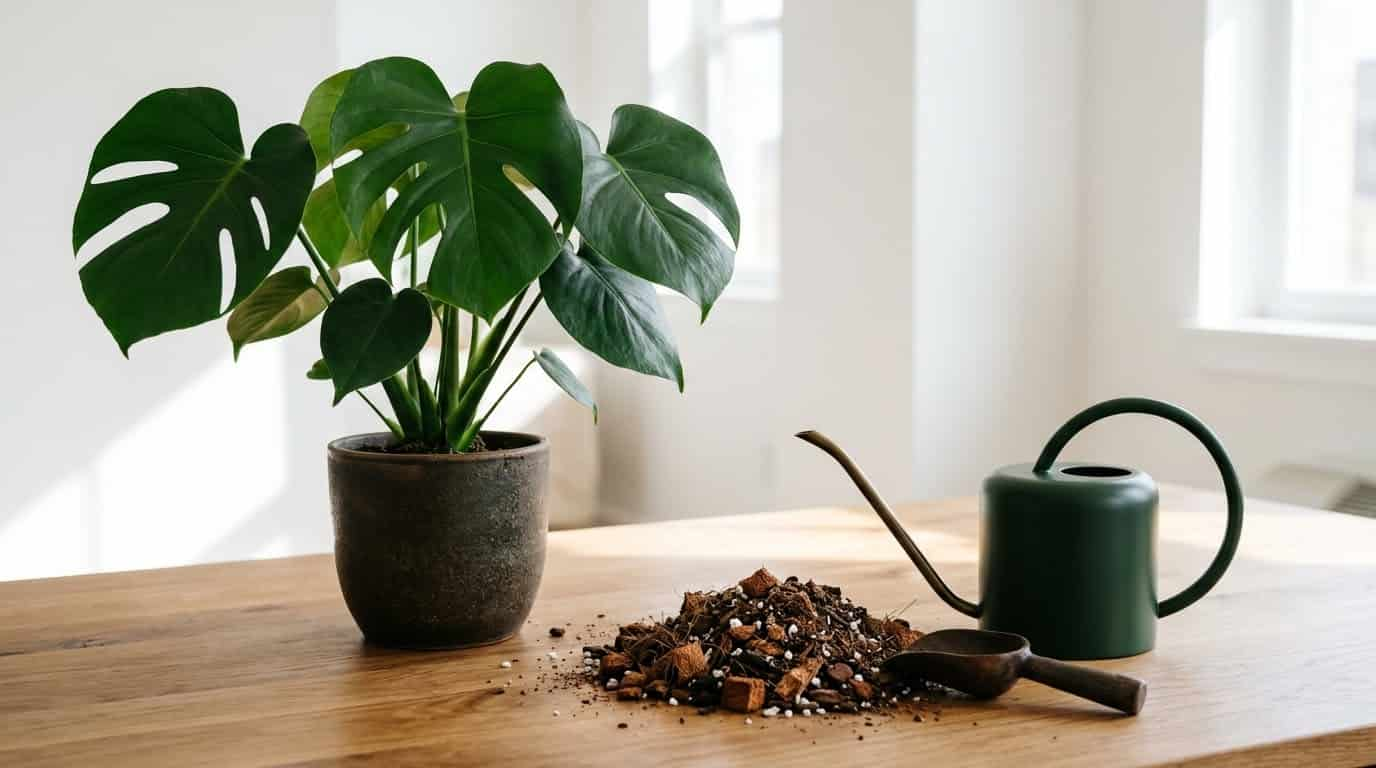
The best indoor potting mix to prevent fungus gnats is a peat-free, fast-draining blend made of 50% coco coir, 30% perlite, and 20% orchid bark. Fungus gnats breed rapidly in soggy, decomposing organic matter like peat moss. Switching to a sterile, soil-less mix permanently removes their preferred breeding environment.
Why Traditional Houseplant Soils Breed Bugs
Most commercial potting soils from big-box stores are built entirely around peat moss and composted forest products. Peat moss acts like a giant sponge. In a typical US apartment with ambient temperatures around 68°F to 72°F and 40% humidity, a peat-based pot takes weeks to dry out.
Fungus gnats (Bradysia species) need two things to reproduce: constant moisture and decaying organic matter. Peat moss provides both of these in abundance. When you water a peat-heavy pot, the top layer stays damp just long enough for an adult gnat to lay hundreds of eggs. Those eggs hatch into larvae that immediately feed on the decaying peat and your plant’s sensitive roots.
Rule of thumb: If your indoor plant soil stays wet to the touch for more than seven days, it lacks adequate aeration and will inevitably attract flying pests.
To stop these pests permanently, you have to remove their food source. You need a completely soil-less mix. This DIY recipe relies on sterile, inert materials that drain fast and dry out evenly.
Ingredients You Will Need:
Coco Coir (50%): A sterile natural fiber made from crushed coconut husks. It holds enough moisture for roots but dries out much faster than peat. It contains zero decaying organic matter, meaning there is nothing for gnat larvae to eat.
Perlite (30%): Puffed volcanic glass that prevents compaction. This creates vital air pockets so excess water drains out the bottom of your pot immediately.
Orchid Bark (20%): Chunky fir bark. This adds structural stability and massive air flow, mimicking the natural epiphytic environment of popular houseplants like Pothos, Monsteras, and Philodendrons.
Mixing Instructions:
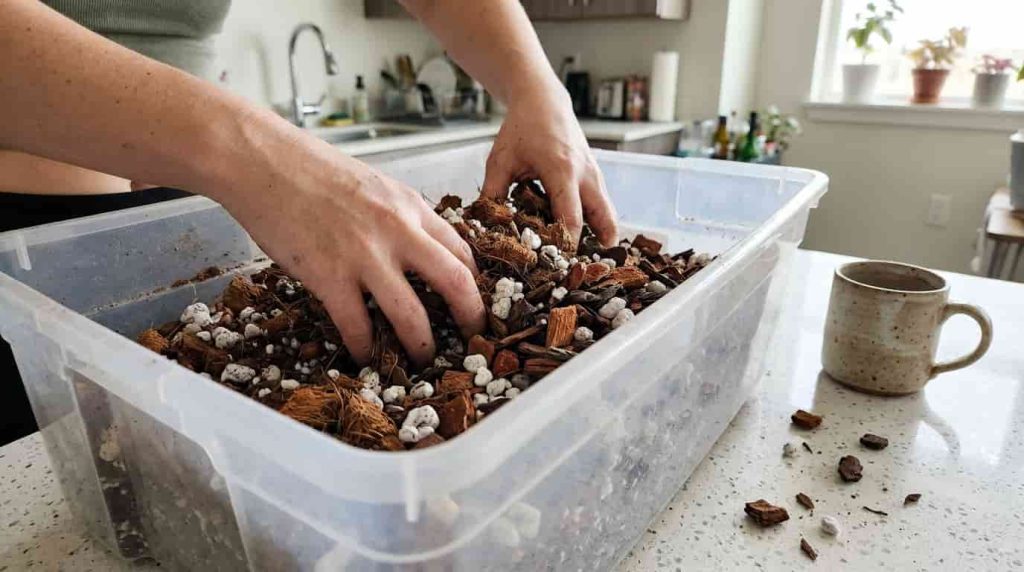
Hydrate your coco coir bricks with warm water in a large plastic tote. Once expanded and fluffy, mix in the perlite and orchid bark. Stir the substrate thoroughly by hand until evenly distributed. Store any unused mix in an airtight container to keep it completely pristine.
Mixing a peat-free, fast-draining substrate is the best way to prevent fungus gnats.
Peat Moss vs. Coco Coir for Indoor Plants
Why swap out the most common commercial soil ingredient? Here is exactly how coco coir beats peat moss for apartment gardening.
Feature
Peat Moss
Coco Coir
Gnat Attraction
High (Decaying organic matter)
Low (Sterile and inert)
Moisture Retention
Very High (Causes root rot indoors)
Moderate (Drains easily)
Sustainability
Poor (Mined from natural bogs)
Excellent (Renewable byproduct)
Rehydration
Becomes hydrophobic when bone dry
Absorbs water instantly
The Sand Top-Dressing Myth (And What Actually Works)
You will often hear that adding a layer of fine sand to the top of your soil stops gnats. This is a dangerous half-truth for indoor gardeners.
While an inch of coarse sand can physically block adults from laying eggs, fine play sand actually traps water underneath. The soil below stays perpetually soggy. This leads directly to root rot, which kills your houseplant much faster than the bugs ever could.
Instead of fine sand, use a top dressing of coarse pumice or LECA (Lightweight Expanded Clay Aggregate). These chunky materials block bugs but still allow the potting mix below to breathe and evaporate moisture properly.
Rule of thumb: Never apply a top-dressing to a houseplant pot without mixing at least 30% perlite into the main root zone to compensate for the restricted surface airflow.
If you already have a severe infestation flying around your living room, just changing the topsoil will not work. The larvae live deep in the root zone. You have to do a complete substrate swap.
Remove the Plant: Pull the plant from its nursery pot. Take it directly to your sink or shower.
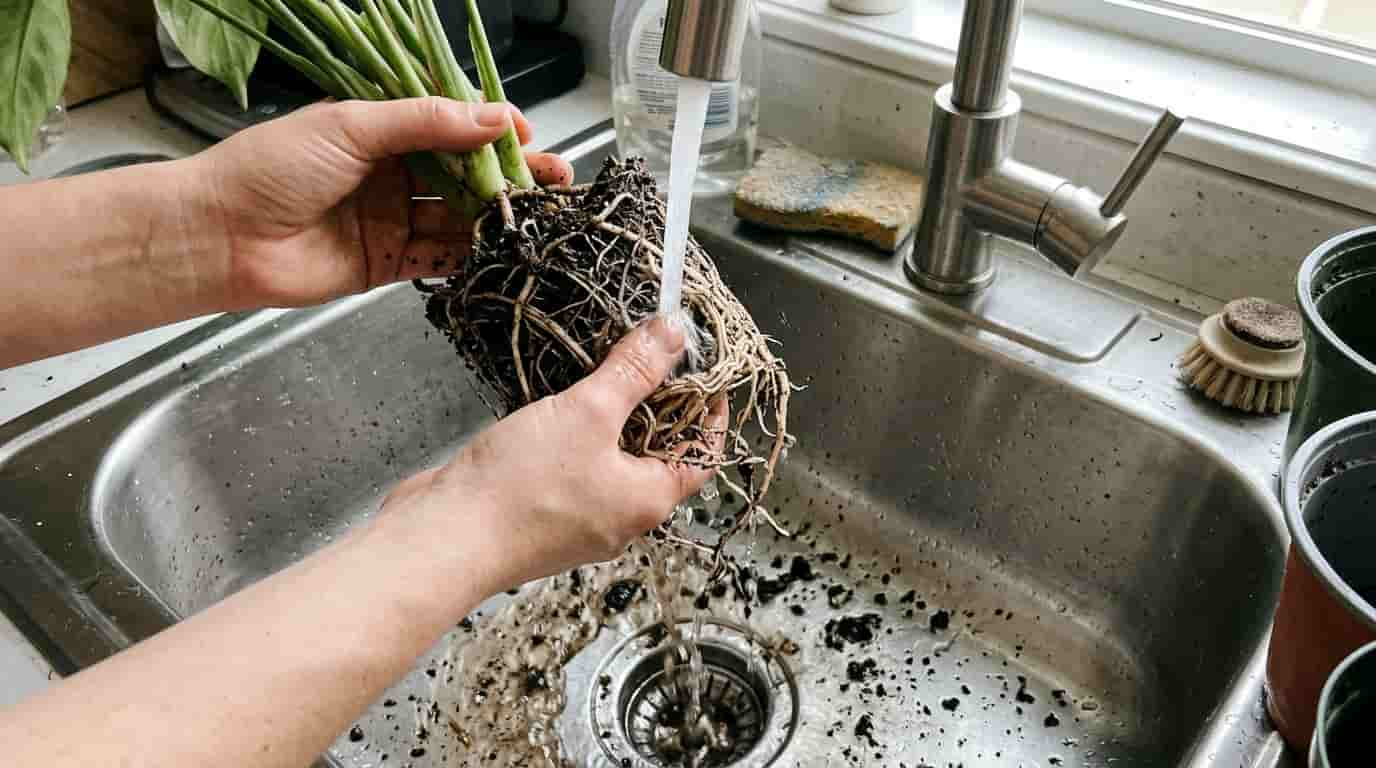
Rinse the Roots: Gently massage the root ball under lukewarm water (around 70°F). Wash away every single clump of the old dirt, as larvae cling tightly to the roots.
Treat the Roots: Spray the bare roots lightly with a mixture of one part 3% hydrogen peroxide to four parts water. This kills any remaining microscopic eggs on contact.
Repot: Place the plant in a clean nursery pot with fresh drainage holes. Fill the pot with your new coco coir mix.
Water Smartly: Water the plant until it runs out the bottom saucer. Do not water again until the top two inches of the new mix feel bone dry.
Thoroughly rinsing roots is essential before repotting a bug-infested plant into gnat-proof soil.
Best Commercial Gnat-Resistant Soils
If you do not want to mix your own substrate, look for commercial blends labeled “Aroid Mix” or “Cactus and Succulent Soil.” These naturally contain high ratios of perlite and pumice for fast drainage.
Brands that specialize in chunky, soil-less indoor mixes are usually safe bets. Always read the ingredient list on the back of the bag. If you see “forest products,” “compost,” or “sphagnum peat moss” listed first, put the bag down. Keep your plants in sterile environments, and you will never need to hang ugly yellow sticky traps in your apartment again.
Do indoor plants need special soil or just regular dirt? Indoor plants require highly aerated, specialized potting mixes. Outdoor garden dirt is incredibly dense, lacks drainage, and often harbors outdoor pests and fungal diseases that will quickly take over an apartment.
Can I microwave potting soil to kill fungus gnats? Yes, you can sterilize small batches of infested soil in your kitchen. Place moist soil in a microwave-safe container and heat it for about 90 seconds per pound. Let it cool completely before using it for your plants.
How do I get rid of fungus gnats in existing indoor potting soil? To treat existing soil, use Mosquito Dunks containing Bacillus thuringiensis israelensis. Soak a quarter of a dunk in your watering can overnight and use that water on your plants to naturally kill the larvae in the root zone.
Does Miracle-Gro indoor potting mix attract gnats? Many standard commercial potting soils, including general-purpose mixes, are heavy in peat moss and compost. These organic ingredients retain high moisture levels and naturally attract fungus gnats when used indoors.
Is cinnamon effective at stopping fungus gnats? Cinnamon has mild anti-fungal properties that can limit the fungus that gnats feed on. However, lightly dusting the soil surface is rarely strong enough to stop a full-blown infestation already established deep in the root zone.
1 thought on “The Best Indoor Potting Mix to Prevent Fungus Gnats in Your Apartment”