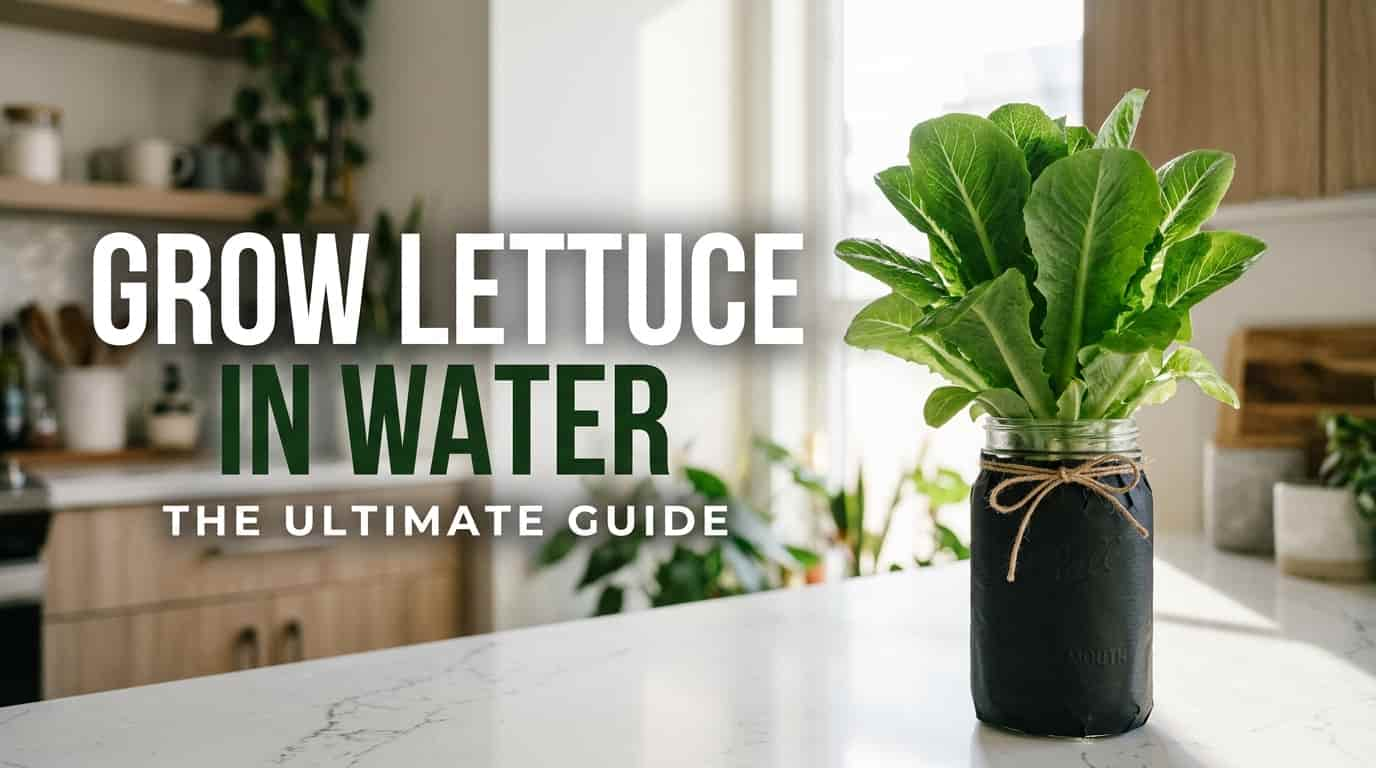
Are you looking into growing lettuce on windowsill in water to secure a fresh, year-round salad supply right inside your apartment? While social media makes it look as easy as dropping a vegetable stump into a shallow dish, achieving a harvestable, nutrient-dense crop requires a precise understanding of passive hydroponics.
Can You Succeed at Growing Lettuce on Windowsill in Water?
Yes, growing lettuce on windowsill in water is highly effective using the passive hydroponic Kratky method. Success requires a south-facing window receiving 6 to 8 hours of sunlight, a maintained water pH of 5.5 to 6.0, and liquid hydroponic nutrients to support continuous, edible leaf production.
The Problem with the Kitchen Scrap Hack
Most apartment dwellers first attempt growing lettuce on windowsill in water by placing a grocery store romaine stump into a shallow bowl of tap water. You will see rapid leaf growth for the first 10 to 14 days. However, this initial burst of growth is entirely fueled by carbohydrates stored in the plant’s basal tissue.
Once those stored energy reserves run out, the growth completely stops. The new leaves will turn pale, stretch desperately for light, and develop a harsh, bitter taste. Plain tap water contains virtually zero macronutrients (Nitrogen, Phosphorus, Potassium) required for sustained plant tissue development.
To achieve a continuous, edible harvest, you must upgrade from a simple dish of water to a passive hydroponic system known as the Kratky method. This setup provides the exact mineral nutrition and oxygenation the root zone requires.
Exact Environmental Setup for Growing Lettuce on Windowsill in Water
Building a productive indoor water garden requires mimicking ideal outdoor spring conditions inside your apartment. You must tightly control your lighting, temperature, and container volume.
Precise Lighting Specifications
Lettuce is a full-sun crop that demands intense light energy to produce crisp, tightly packed leaves. When growing lettuce on windowsill in water, you absolutely need a south-facing window. A south-facing exposure in the US provides the longest duration of direct sunlight throughout the day.
If you only have east or north-facing windows, your plants will suffer from etiolation. This is a botanical condition where the plant stems stretch thinly toward the weak light source. To prevent this, you must supplement with a full-spectrum LED grow light. Aim for a Photosynthetic Photon Flux Density (PPFD) of 200 to 300 µmol/m²/s at the canopy level. Run your grow lights for 12 to 14 hours daily.
Temperature and Humidity Thresholds
Lettuce is a cool-weather crop that rapidly deteriorates in warm environments. Keep your apartment ambient temperature strictly between 60°F and 70°F. If the microclimate right next to your glass window exceeds 75°F during summer afternoons, the plant will “bolt.” Bolting is a stress response where the plant prematurely produces a flower stalk, instantly turning the edible leaves unbearably bitter.
Humidity should hover between 40% and 60%. Most US apartments drop well below 30% humidity in the winter due to indoor heating systems. If the air is too dry, the edges of your lettuce leaves will turn brown and crispy. (Source: [Insert Link to USDA/University Extension])
Container Sizing and Light Blocking
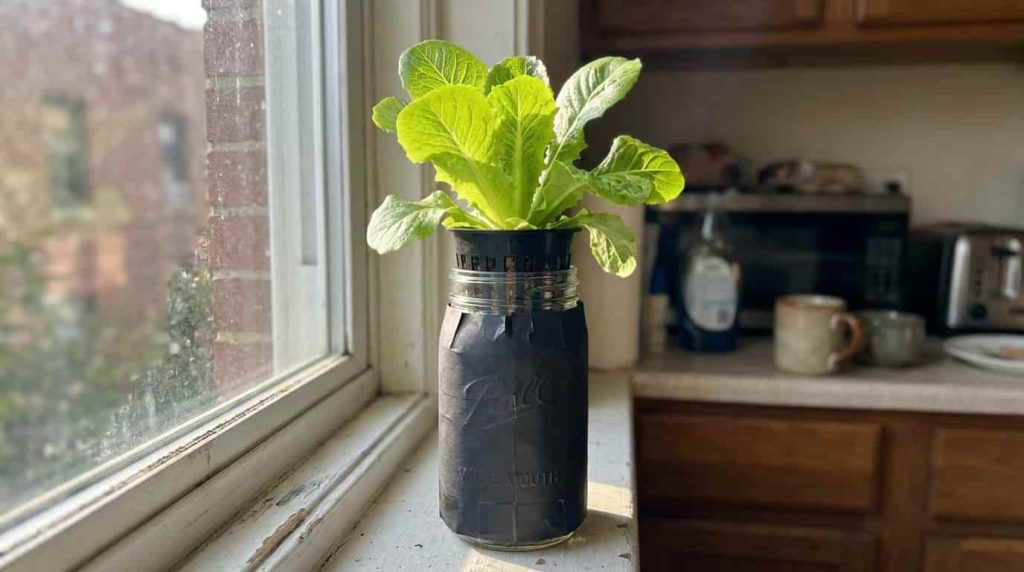
For a single head of lettuce, a 32-ounce wide-mouth glass mason jar is the perfect reservoir size. However, you cannot expose the nutrient water to direct sunlight. Light hitting stagnant, nutrient-rich water will cause a massive algae bloom within 48 hours.
Algae competes with your lettuce for dissolved oxygen and nutrients. You must block all light from entering the jar. Wrap the outside of your glass jar tightly with aluminum foil, thick black construction paper, or slide it into an opaque neoprene sleeve.
Substrates, Support, and Hydroponic Nutrition Masterclass
Because you are eliminating soil entirely, you need a physical structure to hold the plant upright and a precise chemical mixture to feed it.
Net Cups and Clay Pebbles
To support the plant, insert a 2-inch or 3-inch plastic hydroponic net cup into the mouth of your jar. Instead of potting soil, fill the net cup with lightweight expanded clay aggregate (LECA) pebbles. These porous clay balls provide incredible structural support for the stem.
More importantly, LECA pebbles are pH neutral and allow maximum airflow around the crown of the plant. This heavy aeration prevents the stem base from rotting.
Rule of Thumb: Always wash and soak brand-new clay pebbles in plain water for 24 hours to remove the fine, alkaline dust before letting them touch your plant roots.
The Hydroponic Nutrient Schedule
When growing lettuce on windowsill in water, you must use a specialized liquid hydroponic fertilizer. Standard houseplant fertilizers rely on soil microbes to break down their nutrients into a usable form. In a sterile water environment, those traditional fertilizers are completely useless.
Purchase a vegetative hydroponic nutrient blend with a high nitrogen ratio, such as a 10-5-14 NPK formula. Mix exactly 1/2 teaspoon of liquid nutrient per one gallon of water. Stir the solution vigorously to ensure the salts dissolve completely.
Mastering Water pH
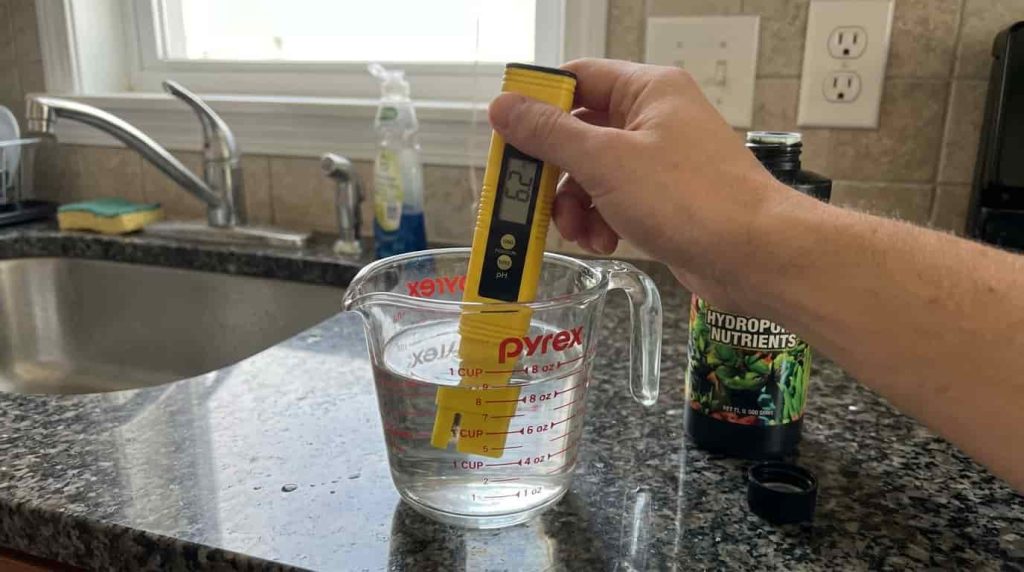
This is the single most vital metric for indoor water gardening. Your nutrient water must maintain a strict pH range of 5.5 to 6.0. If the pH rises above 6.5, the roots physically lose the ability to absorb iron and calcium.
This condition, known as nutrient lockout, causes the new leaves to turn completely yellow while the veins remain green. Buy a cheap digital pH meter or liquid pH test drops. Adjust your water weekly using a commercial “pH Down” solution, as most US municipal tap water runs highly alkaline at a pH of 7.5 to 8.0.
Step-by-Step Care Protocol for Growing Lettuce on Windowsill in Water
Managing a passive water garden requires setting up a routine. Your daily and weekly maintenance will dictate the size and crispness of your final harvest.
The Oxygen Air Gap
When you first place your lettuce scrap or seedling into the net cup, fill the jar so the nutrient water barely touches the bottom 1/4 inch of the net cup. As the roots grow down into the jar, the plant will drink the water, slowly lowering the water level.
Do not constantly top off the jar to the brim. You must maintain a 1-inch to 2-inch “air gap” between the bottom of the net cup and the surface of the water.
Rule of Thumb: Always leave a one-inch to two-inch air gap between your nutrient water line and the bottom of your net cup so the specialized oxygen-absorbing roots can breathe.
If you submerge the entire root mass up to the stem, you will drown the plant. The roots hanging in the air gap adapt to absorb atmospheric oxygen, which keeps the underwater roots healthy and white.
Water Changes and Maintenance
Every 14 days, dump the remaining nutrient water out of the jar completely. Rinse the inside of the jar with hot water to remove any lingering salt buildup or minor algae spores. Refill the jar with a fresh, pH-balanced nutrient solution.
If your tap water smells heavily of chlorine, fill an open jug and let it sit on your counter for 24 hours before mixing your nutrients. The harmful chlorine gas will naturally evaporate out of the water, protecting your delicate root hairs. [Internal Link: Check out our guide on Removing Chlorine from Tap Water for Houseplants]
Comparing Lettuce Varieties for Water Cultivation
Not all greens thrive in an indoor, passive water environment. Certain varieties adapt better to the Kratky method and tolerate indoor apartment temperatures more effectively.
| Lettuce Variety | Days to Harvest (Water Setup) | Ideal Water Temp (°F) | Bolting Resistance |
| Romaine (Cos) | 25-30 Days | 60°F – 65°F | High |
| Buttercrunch | 35-40 Days | 62°F – 68°F | Medium |
| Black-Seeded Simpson | 20-25 Days | 55°F – 65°F | Low |
| Red Sails | 25-30 Days | 60°F – 70°F | Very High |
Loose-leaf varieties like Red Sails and Black-Seeded Simpson are excellent for a “cut-and-come-again” harvest. You can snip the outer leaves with sterile scissors while leaving the center crown intact to push out new growth continuously.
Debunking Apartment Hydroponic Myths
The internet is filled with terrible advice regarding growing lettuce on windowsill in water. It is time to debunk the two most damaging myths spreading on social media.
Myth 1: Kitchen Scraps Grow Forever
Many viral videos claim a single grocery store lettuce base will feed your family indefinitely. This is biologically impossible. A lettuce plant has a finite lifespan determined by its genetics.
Even with perfect hydroponic nutrients and ideal lighting, a regrown scrap will only yield two to three meaningful harvests before the stem turns woody and the leaves turn bitter. For long-term sustainability, you must eventually start fresh seeds in rockwool cubes and transfer them to your water jars.
Myth 2: Root Rot is Caused by Too Much Water
In soil gardening, overwatering suffocates roots and causes rot. Therefore, beginners assume that growing a plant entirely in water will guarantee root rot. This is a fundamental misunderstanding of plant physiology.
Root rot is not caused by water itself; it is caused by a lack of dissolved oxygen in the water. As long as you maintain the crucial air gap at the top of your jar and keep your water temperature below 72°F, your roots will remain bright white, firm, and entirely rot-free. (Source: [USDA/University Extension ])
Rule of Thumb: For every degree your water temperature rises above 72°F, dissolved oxygen drops significantly, heavily inviting root rot pathogens.
Advanced Troubleshooting & Pest Diagnostics
Even with the best setup, indoor water gardening presents unique challenges. Troubleshooting issues while growing lettuce on windowsill in water usually comes down to resolving environmental stress or nutrient imbalances quickly.
Diagnosing Yellowing Leaves
If the lowest, oldest leaves on your lettuce plant are turning yellow and falling off, you are dealing with a nitrogen deficiency. The plant is cannibalizing its oldest leaves to send nitrogen up to the new growth. Immediately dump your water reservoir and mix a slightly stronger batch of your 10-5-14 vegetative nutrient solution.
If the newest, top leaves are turning yellow but the veins stay dark green, you have an iron deficiency caused by high pH. Check your water and use your pH Down solution to bring the acidity back to the 5.5 to 6.0 range.
Fixing Crispy Brown Tips (Tipburn)
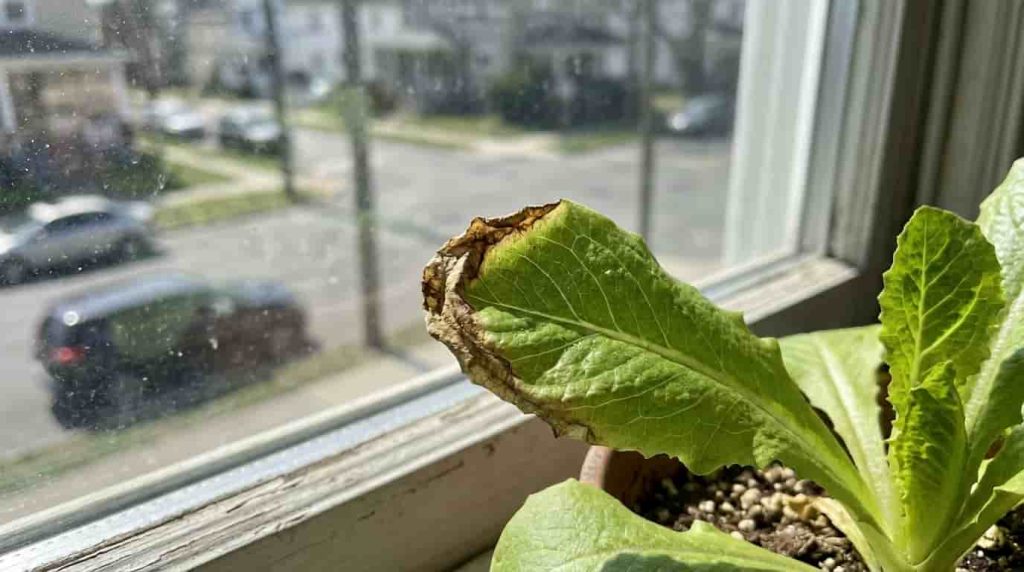
Tipburn is incredibly common in indoor hydroponic lettuce. It manifests as dry, brown, crispy edges on the youngest, innermost leaves. Tipburn is actually a localized calcium deficiency, but it is rarely caused by a lack of calcium in the water.
Instead, it happens because your apartment lacks sufficient airflow. Calcium is a heavy, immobile nutrient. The plant only pulls calcium up to its leaves through transpiration (the evaporation of water from the foliage). Place a small oscillating desk fan near your windowsill to keep a gentle breeze on the leaves, which forces transpiration and cures tipburn.
Battling Fungus Gnats
Fungus gnats are tiny, annoying black flies that buzz around your face and lay eggs in moist environments. While they prefer wet potting soil, they will happily breed in damp clay pebbles at the top of your net cup.
To eradicate fungus gnats without spraying toxic chemicals in your kitchen, add a small piece of a Mosquito Dunk (Bacillus thuringiensis israelensis) directly into your water reservoir. This beneficial bacteria will naturally eliminate the gnat larvae in the water without harming the plant or affecting the safety of your lettuce.
Read More: Best Shelving for Indoor Vegetable Garden: The Ultimate 2026 DIY Wire Rack Blueprint
Frequently Asked Questions (FAQ)
Is growing lettuce on windowsill in water actually safe to eat?
Yes, it is perfectly safe as long as you use clean containers, food-grade plastics, and change the water regularly to prevent bacterial growth. Using a dedicated hydroponic fertilizer ensures the plant has the actual nutritional value needed for human consumption.
How often should I harvest my indoor water lettuce?
You should begin harvesting loose-leaf varieties after 25 to 30 days. Use sterile scissors to snip off the larger, outer leaves first. Leave the inner crown completely intact so the plant can continue generating new foliage for future harvests.
Why does my indoor lettuce taste extremely bitter?
Bitterness is caused by heat stress or the plant entering its flowering phase (bolting). If your windowsill temperature consistently exceeds 75°F, the plant produces bitter compounds. Keep the ambient temperature cool and ensure the plant receives adequate water.
Can I use plain tap water for my windowsill garden?
You can use tap water only if you let it sit out in an open container for 24 hours first. This allows harmful chlorine to evaporate. However, you must still add liquid hydroponic nutrients to the tap water, as municipal water does not contain enough nitrogen or potassium to sustain plant life.
What is the white slime growing on my lettuce roots?
A thick, smelly white or brown slime on the roots indicates Pythium, commonly known as root rot. This occurs when the water temperature is too high, leading to oxygen depletion. You must sanitize the jar, trim the dead roots, and refill with cooler, aerated water.
Do I need an air pump for a mason jar setup?
No, an air pump is not required if you are using the Kratky method. By leaving a 1-inch to 2-inch air gap between the net cup and the water surface, the plant develops specialized oxygen-breathing roots that naturally oxygenate the system without the need for mechanical bubblers.
To wrap up, growing lettuce on windowsill in water is a highly rewarding project that shifts you from a passive grocery shopper to an active urban cultivator. By respecting the strict pH requirements, managing your indoor temperatures, and feeding your plants the exact hydroponic nutrients they require, you will easily produce massive, crisp, healthy greens all year round.
1 thought on “Growing Lettuce on Windowsill in Water: An Exhaustive Guide for Apartment Dwellers”